
Weather
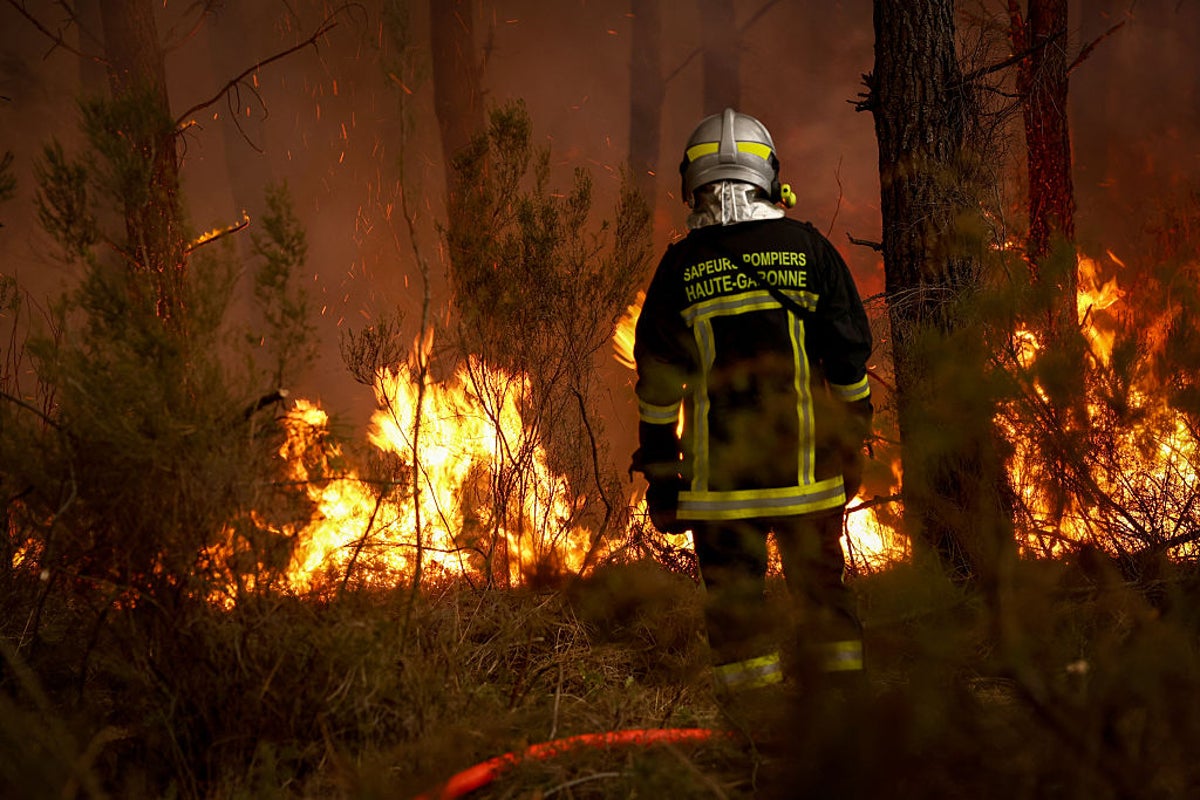
Wildfires burn near France’s Bordeaux as drought puts vineyards under pressure
Key Points
Wildfires burn near France’s Bordeaux as drought puts vineyards under pressure Wildfires raging near Bordeaux are starkly illuminating the profound climate challenges confronting France’s premier wine region - Bookmark - CommentsGo to comments Wildfires raging near Bordeaux are starkly illuminating the profound climate challenges confronting France’s premier wine region, where producers are battling severe drought, escalating temperatures, and a downturn in wine consumption. While growers...
Wildfires burn near France’s Bordeaux as drought puts vineyards under pressure
Wildfires raging near Bordeaux are starkly illuminating the profound climate challenges confronting France’s premier wine region
- Bookmark
- CommentsGo to comments
Wildfires raging near Bordeaux are starkly illuminating the profound climate challenges confronting France’s premier wine region, where producers are battling severe drought, escalating temperatures, and a downturn in wine consumption.
While growers assert that the blazes pose no immediate threat to Bordeaux’s renowned vineyards, nearly two months of relentless drought and successive heatwaves have intensified stress on the vines, precipitating one of the earliest harvests on record.
Thomas Duroux, director general of Chateau Palmer, noted that while the vines in Margaux, a prestigious appellation, remain intact and wine quality is not expected to suffer from the fires, the "warning signs are everywhere." France's scorching summer has exacerbated drought conditions, strained water supplies, and left vegetation dangerously dry, fueling wildfires and imperiling crops nationwide.
This year's events serve as a critical "wake-up call," according to Duroux. "We are facing something we have never seen before. We not only have to limit the damage, but also look to the future," he stated. He emphasized that immediate priorities include securing "water resources — because without water we will no longer be able to plant vines in conditions like these — and adapting our vineyard so it becomes more resilient to these climatic conditions." Young vines, with their shallower root systems, have been the first to succumb to the lack of underground moisture.
Some local wine authorities have sought special exemptions this year to permit irrigation of producing vines, an extraordinary measure in a region where watering has historically been restricted to young and fragile plants.
However, many chateaux lack sufficient water to irrigate their entire vineyards, Duroux explained. While climate change has, in some instances, yielded benefits like riper grapes and richer wines, even producing exceptional quality in hot years such as 2020, 2022, and 2025, growers warn that without rain in the coming weeks, vines could shut down to protect themselves, causing grapes to shrivel.
Such an outcome would jeopardize both yields and quality, pushing harvest dates to unprecedented early periods. Yet, climate change is not the sole adversary facing the industry. Many French producers have grappled for years with depressed prices, a consequence of declining consumption, weaker export demand, and oversupply, forcing some to sell wine at a loss.
This crisis prompted a vine-pull scheme, compensating producers to uproot vineyards to reduce production and help rebalance the market. Even prestigious wines have not been immune to the downturn. The Bordeaux fine wine market has shed nearly a fifth of its value over the past five years, as indicated by the Liv-ex Bordeaux 500 Index. The region's once-thriving en primeur market, where buyers purchase wines still aging in barrels, has also lost momentum, leading several chateaux to reduce prices.
Join our commenting forum
Join thought-provoking conversations, follow other Independent readers and see their replies
Comments
[Image text:] HAUTE-GHONNE
SAPEUR
DOMPIERS