
Politics
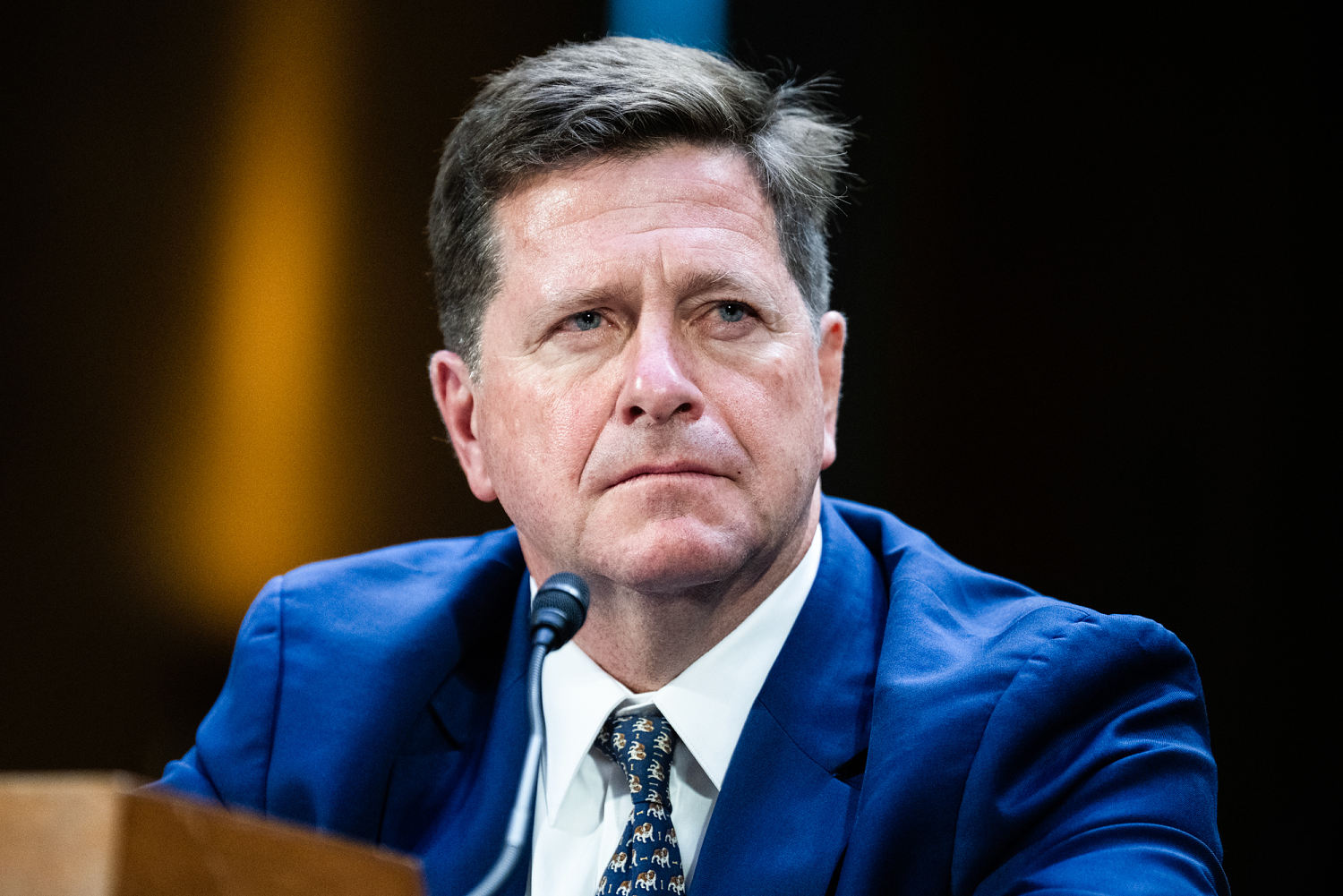
Senate confirms Jay Clayton as new director of intelligence
Key Points
The Senate approved President Donald Trump’s choice to oversee the country’s spy agencies, with the Republican majority voting Tuesday to install top Manhattan federal prosecutor Jay Clayton as the next director of national intelligence. Clayton will be inheriting a much smaller agency after the office’s workforce was cut in a series of firings in recent weeks and months by his predecessors. And his confirmation follows accusations from Democratic lawmakers and former national security...
WASHINGTON — The Senate approved President Donald Trump’s choice to oversee the country’s spy agencies, with the Republican majority voting Tuesday to install top Manhattan federal prosecutor Jay Clayton as the next director of national intelligence.
Clayton will be inheriting a much smaller agency after the office’s workforce was cut in a series of firings in recent weeks and months by his predecessors. And his confirmation follows accusations from Democratic lawmakers and former national security officials that the Trump White House has attempted to use the intelligence agencies to wage partisan political warfare.
The vote was 51-47 along party lines.
After Clayton was confirmed, Sen. Mark Warner, D-Va., issued a statement explaining why he voted against the nomination and expressing hope that Clayton would not cave to possible political pressure from the White House.
“Having known and worked with Jay for years, I was encouraged when he was first nominated for the position of DNI,” Warner said in a statement. “Unfortunately, I came away from his confirmation process with serious reservations about whether he would be willing to stand up to political pressure when it matters most.”
The Republican leader of the Senate Intelligence Committee, Sen. Tom Cotton of Arkansas, welcomed the vote in favor of Clayton.
“Jay Clayton is a highly qualified nominee with a deep experience combatting a wide range of national security threats,” Cotton said. “As U.S. attorney, Mr. Clayton has worked hand in glove with our intelligence agencies and counterterrorism personnel to lock up criminals who threaten our national security.”
Hours earlier, the acting intelligence chief, Bill Pulte, announced in a social media post what he called a fifth round of job cuts at the Office of the Director of National Intelligence (ODNI) since he took office in June. But he did not say how many positions were cut or how many employees were fired or merely reassigned to other intelligence agencies.
Pulte described the move as “an approximately 30% Staff Reduction from Weeks Ago.”
The ODNI had roughly 2,000 employees at the start of Trump’s second term in 2025, and his first director of national intelligence, Tulsi Gabbard, had proposed cuts in the workforce of about 40%. The 30% reduction cited by Pulte could put the current ODNI workforce at about 1,000, former officials said.
The ODNI declined to comment, and the White House declined to comment.
A spokesperson for the ranking Democrat on the Senate Intelligence Committee, Sen. Mark Warner of Virginia, said Pulte has failed to share with lawmakers information about workforce reductions or a rationale for the cuts.
“The Acting DNI has been quick to announce firings and make public claims about them, but has so far declined to provide the Senate Intelligence Committee with the information necessary to assess the accuracy of those statements or the basis for those decisions,” said Rachel Cohen, Warner’s communications director.
Congress created the national intelligence director’s position in the aftermath of the Sept. 11, 2001, terrorist attacks with the aim of ensuring that information was shared across the country’s spy agencies.
But President Trump and some Republican lawmakers have called for scaling back the office, which they say has become a bloated bureaucracy.
Clayton enjoys stronger support among Republican lawmakers than Pulte, a Trump loyalist who came to the job without relevant national security experience.
At his confirmation hearing earlier this month, Clayton refused to say who won the 2020 election, sidestepping questions that could put him at odds with the president. Trump has repeatedly claimed without evidence that the 2020 election, which was won by Joe Biden, was rigged.
Democrats on the intelligence committee said Clayton’s answers raised doubts about whether he would provide accurate information to the president if it was out of line with his views or if Clayton would protect spy agencies from possible political manipulation.
Trump picked Pulte to succeed Tulsi Gabbard after she said she was resigning due to her husband’s cancer diagnosis.
Pulte earned Trump’s approval as head of the Federal Housing Finance Agency, where he launched investigations into the president’s perceived political enemies.