
Politics
Cash grants, enhanced loan scheme part of new S$900m package to help firms manage cashflow pressures
Key Points
Cash grants, enhanced loan scheme part of new S$900m package to help firms manage cashflow pressures Small- and medium-size enterprises with local employees can receive a grant of up to S$2,500. SINGAPORE: From cash grants for small- and medium-size enterprises to easier access to business loans, the government on Wednesday (Jul 29) announced a slew of financial support measures to help firms deal with cost pressures amid the Middle East conflict. This package, which comes on top of measures...
Cash grants, enhanced loan scheme part of new S$900m package to help firms manage cashflow pressures
Small- and medium-size enterprises with local employees can receive a grant of up to S$2,500.
SINGAPORE: From cash grants for small- and medium-size enterprises to easier access to business loans, the government on Wednesday (Jul 29) announced a slew of financial support measures to help firms deal with cost pressures amid the Middle East conflict.
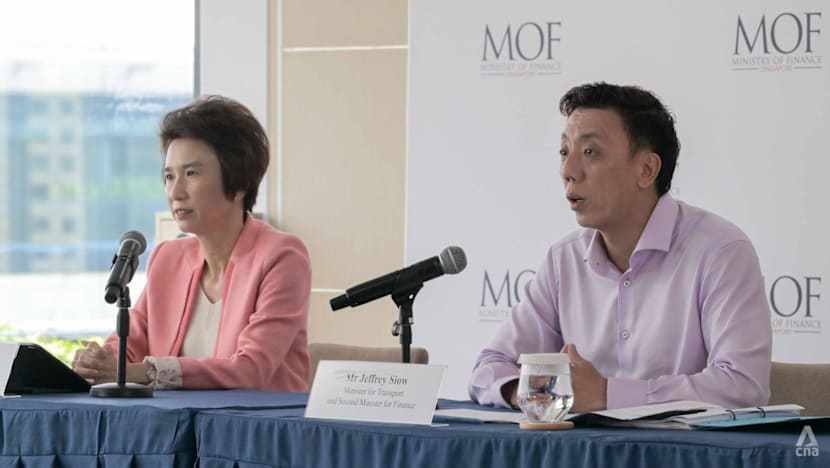
This package, which comes on top of measures announced in April, will cost around S$900 million (US$697 million), said Second Minister for Finance Jeffrey Siow at a press conference.
“We believe this is the right response given the economic conditions today,” he said.
The Ministry of Finance said during a briefing that two-thirds of the S$900 million package will be used to support households, and the remainder will be for helping businesses, which includes rental support for hawkers and market stallholders.
Earlier in April, Singapore had moved quickly to cushion the initial impact of the energy price shock with a S$1 billion support package for households, businesses and affected workers, said Mr Siow.
The April tranche of support measures included bringing forward the 2027 disbursal of Community Development Council (CDC) vouchers to June 2026, as well as enhancing corporate income tax rebates and the Cost-of-Living special payment announced in Budget 2026.
With the second package, the total government support amounts to around S$2 billion, adding on to other measures provided in this year’s government budget.
“For funding, we are expecting at the moment for the ministries and agencies to work within what has already been approved under the Supply Act,” said Mr Siow, adding that a supplementary budget will be sought if needed.
He added that the priority for the April support package was to respond to the situation as quickly as possible to help businesses adjust to the sudden shock.
For the second package, there is an opportunity to be more focused and targeted on companies that are being affected by supply chain disruptions and energy costs, and on smaller companies that have less buffer.
“I think the key is for the government to be responsive to feedback and responsive to changes in the global environment, and we want to be able to do so if there is a need,” he said.
SUPPORT MEASURES FOR BUSINESSES
Senior Minister of State for Trade and Industry Low Yen Ling, who was also at the press conference, said the government understands that businesses are concerned about higher operating costs and cashflow.
“We aim to help them better maintain their costs in the near term, while at the same time giving them the support they need to make business adjustments for the long term,” she said.
To this end, the government will provide a one-off cash grant to small- and medium-size enterprises (SMEs) to support their cashflow needs.
Active SMEs with at least one local employee will be eligible, and the business can receive S$500 per local employee, subject to a cap of S$2,500 per company.
Eligible sole proprietorships, partnerships and limited liability partnerships with at least one local business owner but no local employees will also receive a flat S$500 grant.
These businesses will not need to apply for the grant, which will be disbursed in November this year.
Ms Low said more than 160,000 businesses will benefit from the cash grant, which she said should be adequate for this tranche of measures.
She added that there are other existing efforts to support SMEs, so the cash grant “should not be viewed in silo”.
Apart from the one-off grant, Ms Low said the Enterprise Financing Scheme, which was first launched in Oct 2019, will be enhanced from September this year to March next year.
Under the scheme, if a company defaults on its loan, the lender can recover part of its losses from Enterprise Singapore.
The government’s risk share will be increased from 50 per cent to 70 per cent for the SME Working Capital Loan scheme, which is intended to support the daily operational cashflow of SMEs, as well as for its Project Loan scheme that provides financing for secured overseas projects.
For the Project Loans scheme, coverage will now be expanded to include domestic projects by local construction enterprises.
This will enable local enterprises to better access financing to meet their cashflow needs, said Ms Low.
READY TO RESPOND
On the present conflict, Mr Siow said the “worst case scenario” of severe disruptions in the Persian Gulf has been avoided, though the situation is fragile.
Fighting has flared up again and a durable ceasefire between the US and Iran is proving difficult, he said.
“Uncertainty in the region will persist for some time,” he said, adding that the situation remains fluid.
Mr Siow said Singapore stands ready to respond if circumstances in the Middle East change further, adding that the government is in touch with trade associations and businesses, unions, workers, grassroots leaders and residents.