
Science
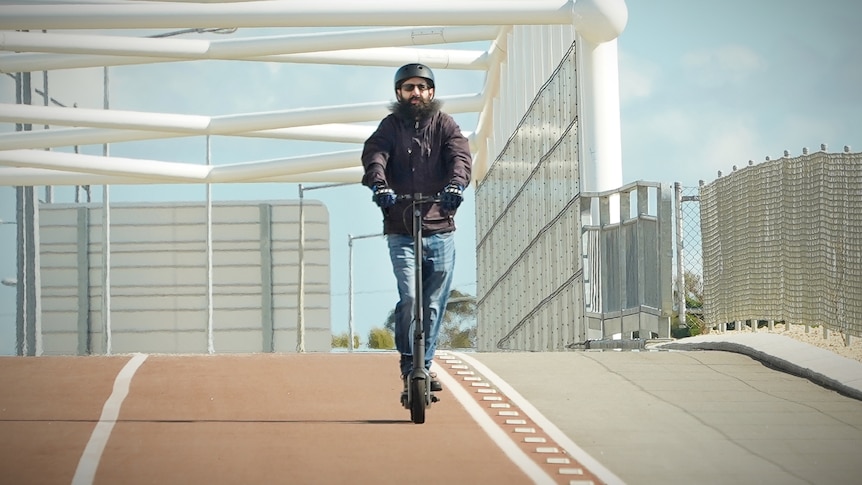
Private e-scooters used to save time and money on commutes, study finds
Key Points
Study finds personal e-scooters have important role in solving traffic and public transport hassles Thu 30 Jul 2026 at 12:00pm The first study of privately owned e-scooter users in Perth has found that e-scooter owners are primarily using them to save time and money commuting to work, and a surprising number are ridden by older people. The study, Impacts of E-rideables on the Transport Task in WA, was undertaken by the Planning and Transport Research Centre (PATREC) based at the University...
Study finds personal e-scooters have important role in solving traffic and public transport hassles
Thu 30 Jul 2026 at 12:00pm
The first study of privately owned e-scooter users in Perth has found that e-scooter owners are primarily using them to save time and money commuting to work, and a surprising number are ridden by older people.
The study, Impacts of E-rideables on the Transport Task in WA, was undertaken by the Planning and Transport Research Centre (PATREC) based at the University of Western Australia and surveyed e-rideable users (excluding e-bikes) over May and April 2025 to find out who was using the devices and why.
The study only looked at people who used privately owned e-scooters. Perth's share schemes for e-scooters were suspended in the city in June 2025 after the death of Thanh Phan, who was hit by an English backpacker riding a rented e-scooter in Perth's CBD.
Researcher Tristan Reed told Mark Gibson on 102.5 ABC Perth that the team spoke to 249 e-rideable users by staking out popular paths in Perth and approaching riders.
"We went all around the CBD trying to get people where they come in on the big cycle paths such as the Narrows Bridge, the Matagarup Bridge. We also looked into the suburbs, Canning Bridge, Scarborough, Murdoch and places like that," Dr Reed said.
"We found the largest group of people using them were men.
"There was still probably about a quarter of people using them who were women and primarily people in their 30s but we also had quite a large contingent, about 15 per cent of our respondents were aged over 50–55 so it's not just young people who are using these [devices]."
Faster, cheaper way to get to work
The study found the primary reason people were using their e-scooters was to escape traffic and make links with public transport easier. Unlike bicycles, e-scooters are allowed on both buses and trains at all times of the day.
"A lot of people who work in the CBD and live close to it also use the e-scooters for similar effects, being able to get quickly to work without having to wait in traffic."
Dr Reed said the cost factor was a big one as well.
"A few people did it for purely environmental reasons too and there are quite a few people who just said they did it for fun,"he said.
Investing in paths
The biggest points of tension were around difficulties in sharing pathways with pedestrians and cyclists.
"There does seem to be a little bit of animosity between different groups there," Dr Reed said.
"Obviously, there's different speeds.
"It probably could be said for a lot of us on the road as well … we just need to take a breath and do our best to be considerate to everyone else.
"We're all trying to get to where we're trying to be. Some of us using devices that make us a bit quicker than others but being courteous and ensuring that that everyone can get where they need to go I think is a lesson for us all."
The report concluded that integrating e-rideables into Perth's urban transport network would make a useful contribution to helping people get around Perth, and that addressing safety, infrastructure and rider education would make this more effective.
In particular, investment in dedicated networks of pathways, like the 4-metre-wide lane-marked principal shared paths that have been built around freeways and train lines, was critical.
"The development of dedicated and well-connected networks that separate e-rideables and motor vehicles should be prioritised, reducing conflict and enhancing safety," the report conclusions state.
"Consideration should be given to how to manage path-user behaviour to support safety for all path users — including pedestrians — in areas of high path use."
In the survey, respondents singled out Boorloo Bridge, which crosses from East Perth to Victoria Park, and has separate paths for pedestrians and users on wheels, as best practice.
The report also found that e-scooters could extend the reach of Perth's public transport network, by targeting areas under-served by buses and trains for the construction of pathway infrastructure that allows people to more readily get to stations, and that adding places to store and charge e-rideables at public transport hubs could also increase use.
Perth (LOCATION)
WA (LOCATION)
the Planning and Transport Research Centre (ORG)
PATREC (ORG)
the University of Western Australia (ORG)
Thanh Phan (PERSON)
Tristan Reed (PERSON)
Mark Gibson (PERSON)
ABC Perth (ORG)
the Narrows Bridge (LOCATION)
the Matagarup Bridge (LOCATION)
Canning Bridge (LOCATION)
Scarborough (LOCATION)
Murdoch (PERSON)
Dr Reed (PERSON)