
Science
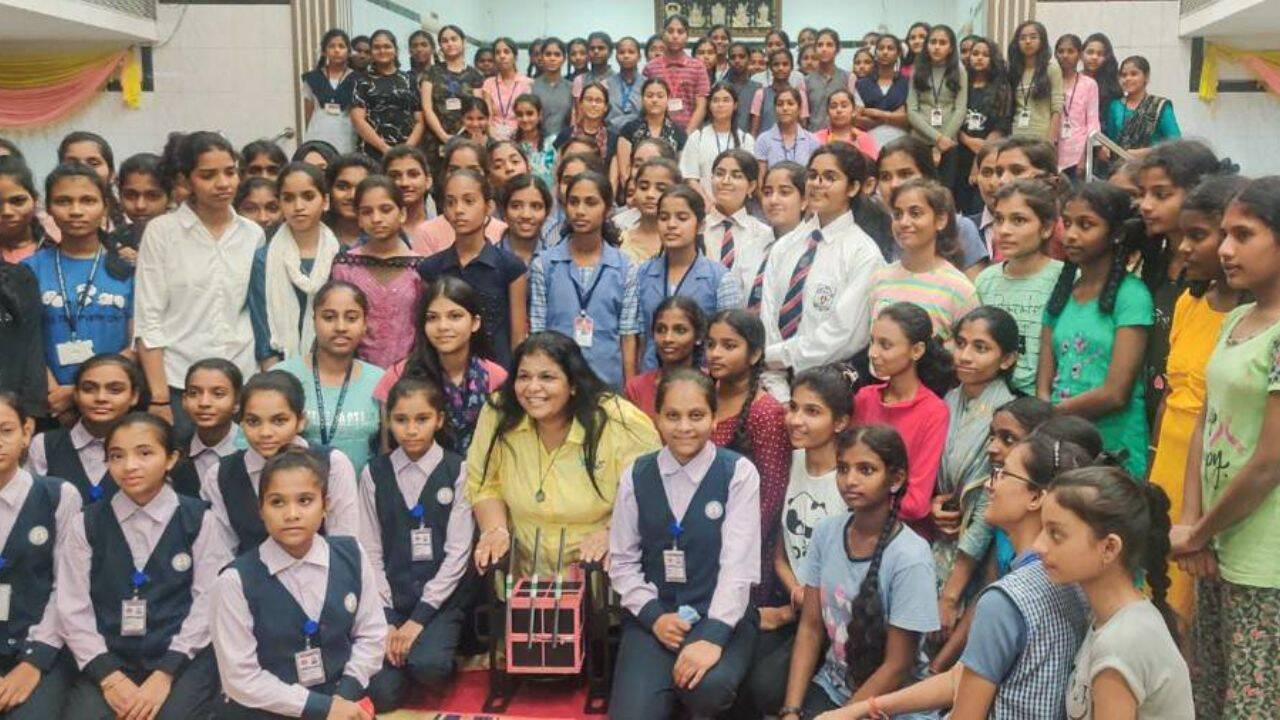
750 Indian girls failed at school experiments; their satellite now orbits Earth
Key Points
The experiments prepared by 750 schoolgirls from India failed on their first try in 2022. But later, it transformed into a space education activity that has a satellite made by them orbiting the planet near the ISS. The information was released by ISRO, the Indian government's space agency.
The experiments prepared by 750 schoolgirls from India failed on their first try in 2022. But later, it transformed into a space education activity that has a satellite made by them orbiting the planet near the ISS. The information was released by
ISRO, the Indian government's space agency.
Under the AzaadiSAT project, 75 schools across the country were brought together with 750 students, including participants from rural areas, with guidance from Space Kidz India. Unlike most space-based projects where kids create models and learning is limited within the walls of a classroom, the components made by the students were installed in a real satellite, subjected to the vibrations of the launch and prepared to send information from space.
First attempt that failed
On August 7, 2022, the inaugural flight of the SSLV rocket departed from the
Satish Dhawan Space Centre in Sriharikota. The vehicle carried the first AzaadiSAT and the EOS 02 satellite. While the launch was successful, the final speed was not sufficient to keep the equipment in the planned orbit. They entered an unstable trajectory and returned to the atmosphere shortly after.
To remain around the Earth, a satellite not only needs to gain altitude but it must also achieve the correct speed and direction.
Otherwise, gravity causes its reentry into the atmosphere. This is how the first unit of AzaadiSAT ended up lost. The failure occurred during orbital placement, without preventing the flight data from being analysed for a new attempt.
Reaching the orbit
The following flight incorporated recommendations made after analysing the failures of the previous mission, detailed ISRO.
The following flight incorporated recommendations made after analysing the failures of the previous mission, detailed ISRO. The changes involved the system that separates the rocket parts, the program responsible for navigation, and the protection of equipment against vibrations. These adjustments were meant to prevent a recurrence of the problem that occurred in 2022.
While the rocket received corrections, the educational experiments were once again prepared for AzaadiSAT 2. Space Kidz India assembled the components and conducted the final integration of the satellite. On February 10, 2023, the new flight placed AzaadiSAT 2, EOS 07, and Janus 1 into the planned orbits. The operation took about 15 minutes.
AzaadiSAT 2 was released into a circular orbit of 450 kilometres altitude. This means the satellite began travelling around the Earth maintaining a more regular distance from the surface. The altitude is close to the region where the International Space Station operates, usually situated near 400 kilometres. The comparison helps visualise the magnitude of the achievement accomplished by the school project.
Space up close
The group consisted of about 750 students from 75 Indian schools with each institution participating in preparing small experiments intended for the satellite. Many students who lived in the rural areas were in contact with space activities through the project. They worked with components, sensors and small systems that were vital parts of a real space mission.
The AzaadiSAT carried 75 small experiments along with equipment intended for communication and information collection. In the space sector, these devices are called payloads. Among the components were a counter prepared to measure radiation, equipment for radio communication, a long-range transmitter, and a self-portrait camera. The communication system would allow the transmission of voice and data over frequencies used by amateur radio operators. A structure installed on the ground would receive the information transmitted by the satellite. The students did not build all the satellite systems by themselves. Their participation was focused on educational experiments, while specialists took care of the main structure, general tests, and integration.
Space Kidz India guided the schools and monitored the preparation of the components. Their team also performed the final integration of the payloads within the AzaadiSAT2. The Indian space agency provided the SSLV rocket and conducted the orbital operation. The students participated in the experiments, Space Kidz India assembled the components, and the agency executed the launch.
The project was created during the celebrations of 75 years of India's independence. One of its purposes was to bring girls closer to activities related to science, technology, engineering and mathematics. Instead of studying satellites only through books, the participants worked first-hand with components and were able to learn about challenges related to sensors, energy, communication and material resistance.