
Science
Commentary: Book clubs tend to be attended by women - here’s why I created one for men
Key Points
Commentary: Book clubs tend to be attended by women - here’s why I created one for men Not only are men willing to attend book clubs - they are up for the challenge of reading books they otherwise would not have, says book club co-founder Isaac Neo. SINGAPORE: “I would like a strong and independent woman as a partner. But if she is already strong and independent, why would she want to date someone like me?”
Commentary: Book clubs tend to be attended by women - here’s why I created one for men
Not only are men willing to attend book clubs - they are up for the challenge of reading books they otherwise would not have, says book club co-founder Isaac Neo.
SINGAPORE: “I would like a strong and independent woman as a partner. But if she is already strong and independent, why would she want to date someone like me?”
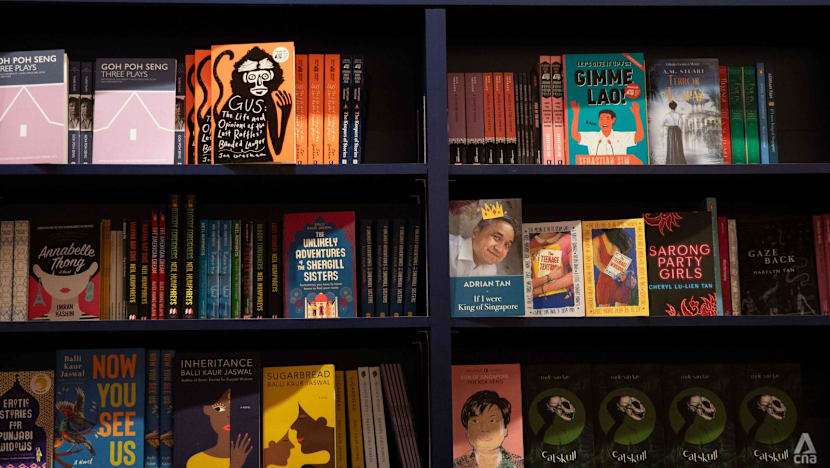
A participant said this at a book club I hosted to about a dozen other men in attendance. We were discussing Inheritance by local author Balli Kaur Jaswal, a decades-spanning story following a Punjabi family as they navigate changing identities and a modernising Singapore.
I was glad that he was honest about his feelings. Many of us would have trouble expressing such private thoughts, especially to people we’re meeting for the first time.
Yet the conversation flowed freely as we used the characters’ experiences as a launchpad into our views on shifting expectations around familial and romantic relationships in Singapore society.
This was a typical session of my men’s book club, which explores depictions of masculinity and male issues such as fatherhood, social isolation and incel culture. I believe such discussions can function as valuable spaces for men, particularly at a time when male mental health is in the spotlight.
THE MALE LONELINESS EPIDEMIC
Much has been made of a “male loneliness epidemic”. A 2020 NUS study showed that elderly men (aged 61 to 96) were twice as likely as women to be “socially disconnected”. A 2023 IPS poll found that youths aged 21 to 34 were more likely to report higher levels of loneliness than other age groups, suggesting that many young men may also be experiencing loneliness.
From 2019 to 2024, male suicide rates in Singapore have consistently been higher than women’s, in line with international trends. Singapore men are also less likely to seek mental health services than women, despite being more likely to experience a mental disorder in their lifetime.
These are occurring against amid debates about toxic masculinity and the “manosphere”, an internet subculture featuring hypermasculine male content creators pushing ideas of traditional gender roles as a route to self-improvement.
Amid a rise in social isolation and harmful online content, there is a need for men to talk about their issues in a healthy way.
THE NEED FOR MEN’S BOOK CLUBS
In late 2025, I co-founded the Modern Man’s Book Club. My co-founder Zubin Jain and I had noticed that book clubs in Singapore were predominantly attended by women. It was not clear to us why this was so - book clubs are open to all, and there isn’t an intuitive reason why men would read less than women.
While there are no conclusive studies on why this happens, one explanation could be that women may view book clubs as a social activity and invite their friends, resulting in book club attendances skewing majority female. These book clubs may then fly under the radar for many men, or those who attend, find that they may not relate to the issues being discussed.
We saw a potentially underserved audience and decided to start a book club for men who may already be reading or want to read more, but lack an outlet to share their thoughts about the books they read.
The response has been heartening. From just a handful in our first two sessions, we now regularly have around 15 to 20 participants at each session, with both returning and first-time attendees. While our book club is open to all genders as we believe everyone is affected by the issues we talk about, men now outnumber women at our sessions.
What has surprised me most is the free-flowing nature of these conversations. While Zubin and I prepare handouts with discussion prompts for participants, on almost every occasion, the discussion takes on a life of its own after our introductory question to the group. So much for the stereotype that men do not talk about themselves.
The conversation tangents that participants embark on are also varied. In our discussion of the 2025 Booker Prize winner Flesh by David Szalay, some shared their frustrations with the protagonist’s portrayal as an emotionally detached character with monosyllable dialogue.
After a while, one of our middle-aged participants interjected, “As someone who is slightly older and comes from the same era as the character, I can tell you this portrayal is entirely realistic of men of that age.”
The conversation then shifted to talking about intergenerational differences in masculinity, as we shared stories about our older male relatives or friends, and how men are expected to express emotions more openly in this day and age.
STEPPING OUT OF ONE’S COMFORT ZONE
Through my experience, I believe that book clubs can function like other male support groups, where men can share about the issues they face without judgment. We are not alone as well - other male-centred book clubs overseas have had success bringing together men who want to talk about books they read.
After a session on Notes From Underground by Fyodor Dostoevsky, one of our participants remarked how the book had been a challenging read, as he did not study literature in school and predominantly reads non-fiction. However, he was glad the book club forced him to step out of his comfort zone, and in so doing, reflect more on his interpersonal relationships.
This was not the only time that a participant mentioned this, which not only affirmed our view that there are men who will participate in book clubs, but that we are motivating more men to read books they otherwise would not have.
For reticent men, a book club discussion is especially useful because they can use the characters as a foil for their own thoughts, before sharing more openly about themselves as they warm up to the group.
As such, book clubs can facilitate self-reflection, which studies show is linked to better decision-making, prosocial behaviour and reduced stress.
But most importantly, book clubs help people connect with each other. The late James Baldwin put it eloquently:
“It was Dostoevsky and Dickens who taught me that the things that tormented me most were the very things that connected me with all the people who were alive, or whoever had been alive. Only if we face these open wounds in ourselves can we understand them in other people.”
Isaac Neo is the co-founder of the Modern Man’s Book Club, which reads and discusses books related to masculinity and male issues. He works as a geopolitical risk analyst in the private sector.
[Image text:] OH POH SENG
REEPLAYS
GOH POH SENG
THREEPDAYS
GUS
GIMME
LAO
Annabelle
Thong
ERPTI
STORIES
FR
UNJABI
JIOPWS
UNLIRELY
ADVENTURES
SHERGILL
SISTERS
INHERITANCE
ALLIKAUR JASWAL
SUGARBREAD
ADRIANTAN
HfIwere
SARONG
PARTY
GIRLS
GAZI
BACK
Ca[skull
Calskull
Catskull
cna