
Weather
Antarctica hits -119.4°F, its coldest temperature in 16 years
Key Points
While much of the Northern Hemisphere grappled with scorching summer temperatures, the interior of Antarctica was experiencing the opposite extreme. According to LiveScience, citing data from the French Polar Institute Paul-Émile Victor (IPEV) and officials at Concordia Research Station, the remote research base recorded a temperature of minus 119.4 degrees Fahrenheit (minus 84.1 degrees Celsius) on July 18, making it the station's coldest reading in 16 years and the lowest temperature...
While much of the Northern Hemisphere grappled with scorching summer temperatures, the interior of Antarctica was experiencing the opposite extreme. According to LiveScience, citing data from the French Polar Institute Paul-Émile Victor (IPEV) and officials at Concordia Research Station, the remote research base recorded a temperature of minus 119.4 degrees Fahrenheit (minus 84.1 degrees Celsius) on July 18, making it the station's coldest reading in 16 years and the lowest temperature officially reported anywhere on Earth since 2012. Scientists say the extraordinary cold was caused by a combination of Antarctica's polar winter, high elevation and exceptionally stable weather conditions.
Why Concordia becomes one of the coldest places on Earth
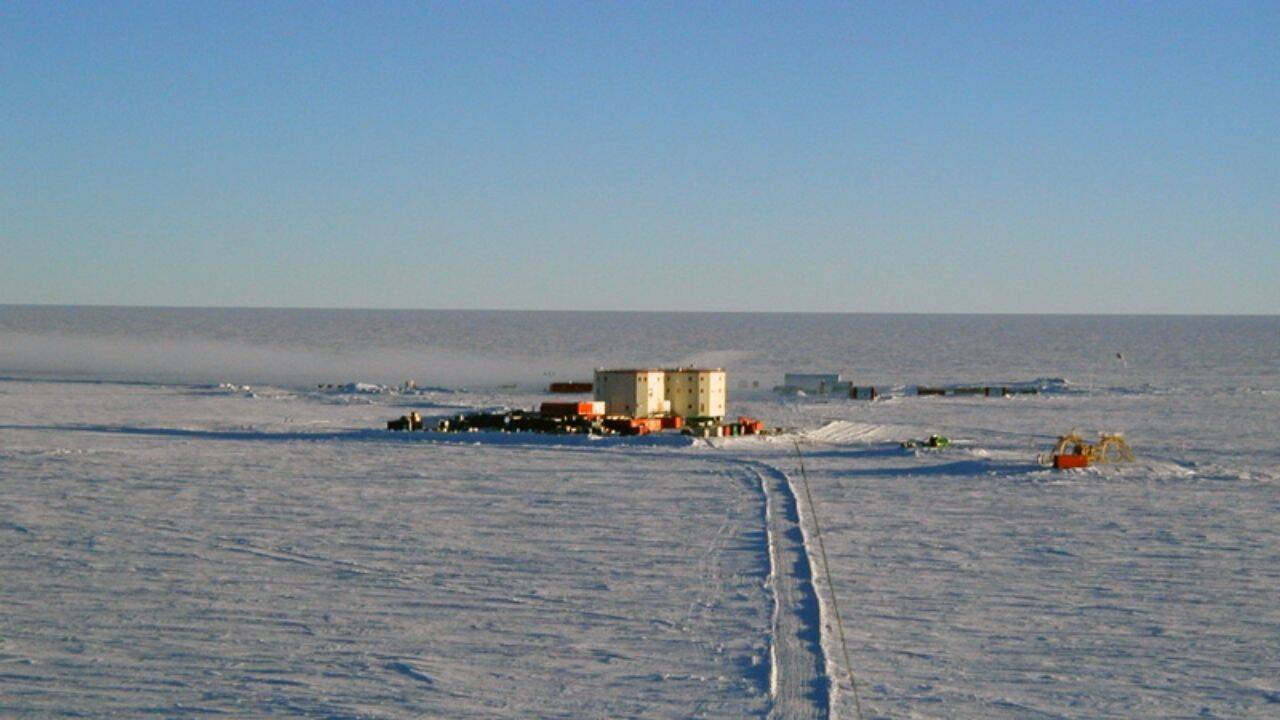
Concordia Research Station is jointly operated by France and Italy and sits atop the East Antarctic Plateau at an elevation of about 3,200 metres (10,500 feet). Its location, hundreds of kilometres from the coast, leaves it largely untouched by the moderating influence of the Southern Ocean.
During the Antarctic winter, the Sun never rises above the horizon for months. Without incoming solar energy, the snow-covered surface continuously radiates heat into space. Fresh snow reflects nearly all available sunlight, while the region's extremely dry atmosphere allows heat to escape efficiently.
These geographical and atmospheric conditions routinely make Concordia one of the coldest inhabited places on the planet.
However, temperatures approaching minus 120°F occur only when several weather factors align, including clear skies, minimal wind and exceptionally dry air.
Although remarkable, the July reading did not surpass the world's all-time cold record of minus 128.6°F (minus 89.2°C), measured at Antarctica's Vostok Station in July 1983.
Image Credit: Facebook/ ESA - European Space Agency
The weather pattern behind the deep freeze
Meteorologists attribute the extreme temperature to an unusually persistent high-pressure system over East Antarctica. High-pressure conditions are generally associated with cloud-free skies, which allow the Earth's surface to lose heat rapidly through infrared radiation.
At the same time, very light winds prevented warmer air from mixing with the dense layer of freezing air that settled near the surface. This process, known as a temperature inversion, is common across Antarctica's high interior during winter and can produce some of the lowest temperatures found anywhere on Earth.
According to data from the French Polar Institute Paul-Émile Victor (IPEV), the minus 84.1°C reading was Concordia's lowest since 2012, underscoring how rare such intense cold has become even in one of Earth's harshest environments.
Scientists also stress that individual weather events should not be confused with long-term climate trends. Antarctica's interior remains capable of producing extreme winter cold despite ongoing global climate change, particularly because of its elevation, isolation and unique atmospheric conditions.
Why these temperatures matter to scientists
Temperature measurements from Antarctica provide valuable insights into the planet's climate system. Researchers use observations from stations like Concordia to improve weather forecasting, refine climate models and better understand how heat and moisture move through Earth's atmosphere.
The station also supports studies in glaciology, atmospheric chemistry, astronomy and human physiology. Because of its extreme isolation, prolonged darkness and hostile environment, Concordia is frequently used as an analogue for long-duration space missions, helping scientists understand how people adapt to living in remote and confined conditions.
The recent cold spell also highlights the dramatic contrast between Earth's hemispheres. While Europe, North America and parts of Asia experienced intense summer heat waves, Antarctica remained locked in the depths of winter, with weeks of continuous darkness allowing temperatures to plunge to extraordinary levels.
According to scientists, such contrasts are entirely consistent with Earth's seasonal cycle. The Northern and Southern Hemispheres experience opposite seasons, meaning periods of exceptional warmth in one hemisphere can coincide with exceptional cold in the other.
Although the minus 119.4°F reading is not a new world record, it stands as one of the coldest officially observed temperatures in recent years. For researchers working at Concordia, it also serves as a reminder of why Antarctica remains one of the most important natural laboratories for studying Earth's climate, atmosphere and polar environment.
Antarctica (LOCATION)
the Northern Hemisphere (LOCATION)
LiveScience (ORG)
the French Polar Institute (ORG)
IPEV (ORG)
Concordia Research Station (ORG)
Earth (LOCATION)
Concordia (PERSON)
Earth Concordia Research Station (ORG)
France (LOCATION)
Italy (LOCATION)
the East Antarctic Plateau (LOCATION)
the Southern Ocean (LOCATION)
Antarctic (LOCATION)
Sun (ORG)