
Education
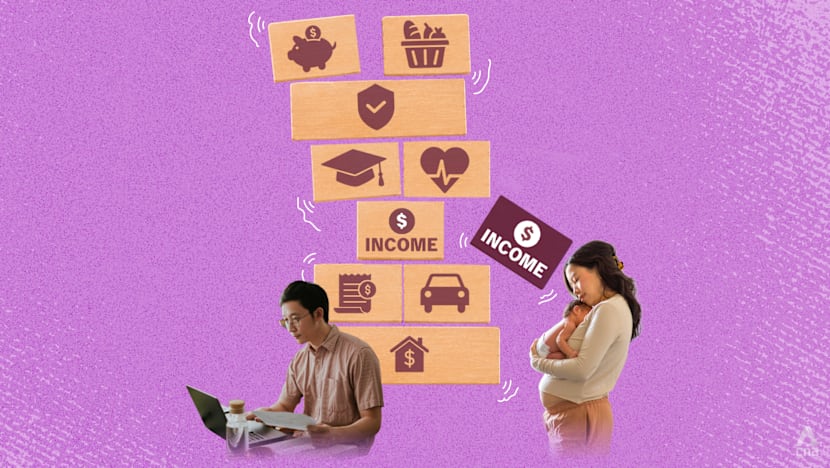
The hidden costs when one partner stops working
Key Points
The hidden costs when one partner stops working Living on one income may be possible, but the biggest costs often aren't the ones that show up in your monthly expenses, says financial blogger Dawn Cher. A friend of mine recently resigned from work because she and her husband had decided their household could survive on his income alone while she stayed home with their newborn. I wasn't too taken aback by her choice, because I made that same decision five years ago.
The hidden costs when one partner stops working
Living on one income may be possible, but the biggest costs often aren't the ones that show up in your monthly expenses, says financial blogger Dawn Cher.
A friend of mine recently resigned from work because she and her husband had decided their household could survive on his income alone while she stayed home with their newborn.
I wasn't too taken aback by her choice, because I made that same decision five years ago.
After giving birth to my second son, I decided to take a step back from work to focus on breastfeeding, as well as regaining my health and figure after two pregnancies.
It wasn't an easy decision, but I had planned for the career break and ensured my finances were in order. Other mothers in a support group I was a part of had done it, so I felt like I could too.
I had decided to keep my decision private, with only my employer and family aware that I was logging off from work for a year. I didn’t expect everyone around me to understand or to be able to relate.
Even today, when I mention to friends that another couple I know has gone down to a single income, their reaction is almost always the same: concern, and occasionally a comment like "that's brave" or "I could never".
But is it financially possible to live as a single-income household?
DUAL INCOME AS THE NORM?
I grew up with both my parents working, and shuttled between nannies, domestic helpers and tuition teachers who “raised” me during my growing-up years.
As a result, a dual-income household feels like the norm to many like me.
Given the rising cost of living today, having two salaries to cover the long list of household expenses seems to be a safer choice – and at times the only way to stay afloat.
In recent years, however, layoffs and hiring freezes have forced some households to rely on a single income.
On the other hand, some households make the choice to forgo one income.
Among my friends, the most common reason is caregiving. One parent may choose to stay home to care for a young child, especially in the early years when infant care, illnesses, school pickups and emotional needs can feel relentless. Others may step back from work to care for ageing parents.
But increasingly, I’ve seen dual-income, no-kids (DINK) couples take a career break for themselves. Some do so because of burnout, while others choose to put their careers on hold to start a business from which they may not draw an income for some time.
The motivations may be different, but the financial considerations are the same – and so are the trade-offs that are forgotten about until much later.
THE HIDDEN COSTS
Most couples I know run their numbers before they decide if they should become a single-income household. They tally up their monthly essential spending, check if the remaining income is enough to cover the mortgage, insurance premiums and fixed expenses.
They also cut down on convenience spending like dining out or hiring a helper.
But instead of just checking whether one income can cover their expenses, a better test is whether one income can cover current spending, savings and unexpected shocks.
After all, a household that can pay its bills but has nothing left over for savings is one day away from financial disaster.
When there are two incomes, the household has a natural buffer. If one person loses their job, one person’s income can buy time while the other looks for another gig.
But in a single-income household, that buffer shrinks. If the sole income earner unexpectedly loses their job, gets hit with a pay cut, falls ill or burns out, the entire household is exposed.
That’s why before making the switch, couples should ask how many months they can survive if the single income stops.
Beyond considering the potential financial shocks, people should consider the cost of the break itself for the partner who steps back.
When one partner stops working, it is easy to describe the decision as a household choice. But the truth is, the career impact is often borne more heavily by one person.
Every month without income is another month without Central Provident Fund (CPF) contributions to grow their retirement funds. It is another month where their salary isn't growing, their skills aren't being tested against a live job market, and it represents a widening gap in their resume that a future employer will likely ask about.
Over the years, these costs will compound. And none of these show up on a household budget spreadsheet.
WHO STEPS DOWN?
However, the financial considerations are just as hard as deciding which partner should put a hold on their career.
On paper, it seems logical that the lower-income party step down so that the household has enough money.
But it is precisely because unpaid caregiving work is not always valued by the labour market that it is even more difficult for the person who made that sacrifice.
In one regional survey of hiring managers by recruitment firm Robert Walters in 2017, close to half of the respondents in Singapore said they hadn't hired a single returning woman in the past year. Today, women still face challenges in returning to the workplace – something the government hopes to address.
The reality is that the individual who leaves the workforce may always carry the longer-term career cost, and will face challenges when they are ready to re-enter the job market.
Many find that job expectations, salaries, industry conditions, or employer perceptions have changed by the time they return, while others may realise their role or career no longer exists, especially because of artificial intelligence.
What seldom gets discussed is how the rest of the household will support that person when they are ready to re-enter the job market.
This is often a burden they have to carry on their own. Go for upskilling courses, speak to career consultants, prepare for multiple job interviews – often while still keeping the household functional.
Couples also need to acknowledge that the relationship dynamics may shift, because the one who steps down will no longer feel the same sense of financial independence.
Their spending may be from their partner's income, and having to ask for money can trigger discomfort, resentment or guilt – unless they discuss how to handle personal spending before things boil over.
These questions may feel premature, especially when the person has not even left work yet. But they are important because re-entry into the workforce is not guaranteed, especially for someone who hasn't been working for an extended period.
WHAT HAPPENS AFTERWARDS?
A single-income household can bring many immeasurable benefits such as allowing couples to better handle caregiving duties or rest from burnout.
But preparing for both the emotional and financial trade-offs is important before making the decision.
In my case, I planned to take a year off work, and set aside a year's worth of expenses
I also made an effort to keep in touch with my bosses, attended the occasional networking event and let my professional contacts know that I would be available soon, which allowed me to re-enter the workforce smoothly.
That is why I encourage my friends to not just think about the immediate financial sacrifices, but also how to bounce back if and when they return to the working world.
That might mean keeping a toe in the workforce through freelance or part-time work. It might mean setting a rough timeline for re-entry rather than leaving it open-ended.
Or it might even mean the working partner topping up the other's CPF account during the break, so the pause doesn't compound into an even bigger gap in retirement savings.
Ultimately, becoming a single-income household isn't just about making sure a single salary covers the bills.
It's also about understanding the sacrifices involved and preparing for the hidden financial costs before they become long-term setbacks.
[Image text:] INCOME
OF
INCOME
S