
Health
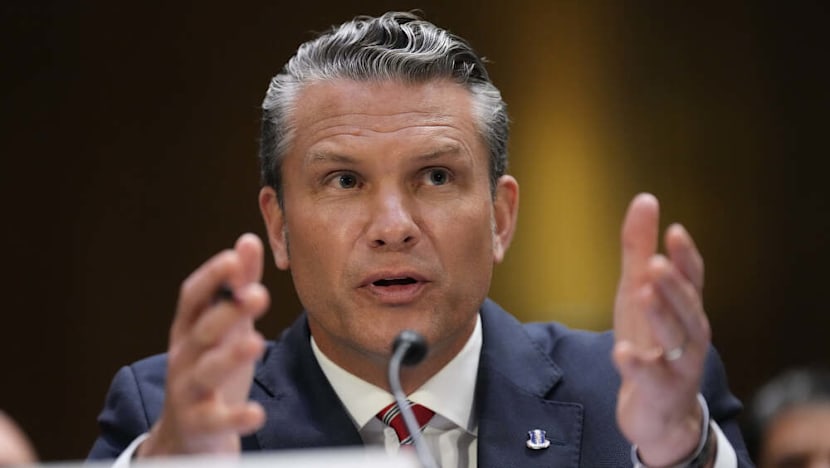
Experts say Hegseth's military testosterone screening may not boost combat performance, warn of health risks
Key Points
Experts say Hegseth's military testosterone screening may not boost combat performance, warn of health risks United States Defense Secretary Pete Hegseth last month unveiled plans for what he called a "High-T Department of War", arguing that screening service members for testosterone deficiency would help keep the US military on the "leading edge of lethality". Medical experts are questioning United States Defense Secretary Pete Hegseth's proposal for mandatory testosterone screening across...
Experts say Hegseth's military testosterone screening may not boost combat performance, warn of health risks
United States Defense Secretary Pete Hegseth last month unveiled plans for what he called a "High-T Department of War", arguing that screening service members for testosterone deficiency would help keep the US military on the "leading edge of lethality".
WASHINGTON: Medical experts are questioning United States Defense Secretary Pete Hegseth's proposal for mandatory testosterone screening across the military, saying there is little evidence it would improve combat performance and warning it could expose troops to unnecessary health risks.
Hegseth last month unveiled plans for what he called a "High-T Department of War", arguing that screening service members for testosterone deficiency would help keep the US military on the "leading edge of lethality".
“I'm authorising a new screening programme for testosterone deficiency for our service members, ensuring you have the right testosterone levels to perform at your absolute best,” he said in a video announcement.
QUESTIONS OVER BENEFITS
Under the new policy, military personnel aged 30 and above would undergo mandatory screening, while those found to have low testosterone levels would be eligible for optional replacement therapy.
Testosterone, the primary male sex hormone, helps regulate muscle mass, bone density and other bodily functions.
Hegseth said the initiative is "not about artificial enhancement".
“It's about restoring and optimising your natural capabilities, protecting your longevity, ensuring you have the biological foundation required to sustain the fight,” he said.
But medical experts are doubtful that it would meaningfully improve military effectiveness.
“It does increase muscle mass, particularly at high doses. There’s very little change at what we would call replacement doses,” said Adrian Dobs, professor of medicine and oncology at the Johns Hopkins University School of Medicine.
“But we don't fight that way anymore. It's not like we have soldiers that go off and they have swords and where muscle mass is the real big determinant.”
The Endocrine Society advises against routine testing for low testosterone in men who do not have symptoms, warning that long-term supplementation could lead to unnecessary treatment.
Experts also caution that testosterone therapy carries potentially significant side effects.
“One of the clear problems with taking testosterone is that it suppresses the man's own testosterone,” said Dobs.
“So it suppresses their level and it suppresses their sperm counts. I think in young men, who are basically sort of at the prime of reproduction, causing a drop in sperm count is not really what we as a society would want.”
BEYOND COMBAT PERFORMANCE
The plan reflects broader debates over masculinity that have become increasingly prominent in American politics.
A report published last year by non-profit organisation Equimundo found that 63 per cent of men wished they were more masculine, driven largely by economic anxiety and societal pressures.
The proposal comes amid growing interest within US defence circles in "operator syndrome", a collection of health issues observed in some special operations veterans that has been linked to hormone deficiencies.
Clinical psychologist Chris Frueh, who has written on the condition, believes these health problems are under-reported due to stigma.
He said testosterone replacement therapy can benefit some patients, but only as part of a broader treatment plan.
“My hope, my optimistic belief, is that focusing on testosterone is part of a much larger picture and approach that will focus not just on testosterone, but hormones more broadly, sleep, diet, brain health, pain management etc,” said the professor of psychology at the University of Hawaii-Hilo.
For now, there is no indication whether the programme would form part of a wider health strategy. It is also unclear how the screening policy would apply to women in the military, who also produce testosterone, albeit at much lower levels.