
Politics
Singapore must prepare workers for more job changes and continuous retraining: Jeffrey Siow
Key Points
Singapore must prepare workers for more job changes and continuous retraining: Jeffrey Siow Younger Singaporeans are unlikely to follow the same career paths as previous generations, where many worked for one organisation for a long time, the transport minister says. SINGAPORE: Singaporeans are likely to change jobs more frequently in future, and the government's focus will have to shift towards continuous retraining to help workers adapt, said Transport Minister Jeffrey Siow on Monday (Aug...
Singapore must prepare workers for more job changes and continuous retraining: Jeffrey Siow
Younger Singaporeans are unlikely to follow the same career paths as previous generations, where many worked for one organisation for a long time, the transport minister says.
SINGAPORE: Singaporeans are likely to change jobs more frequently in future, and the government's focus will have to shift towards continuous retraining to help workers adapt, said Transport Minister Jeffrey Siow on Monday (Aug 3).
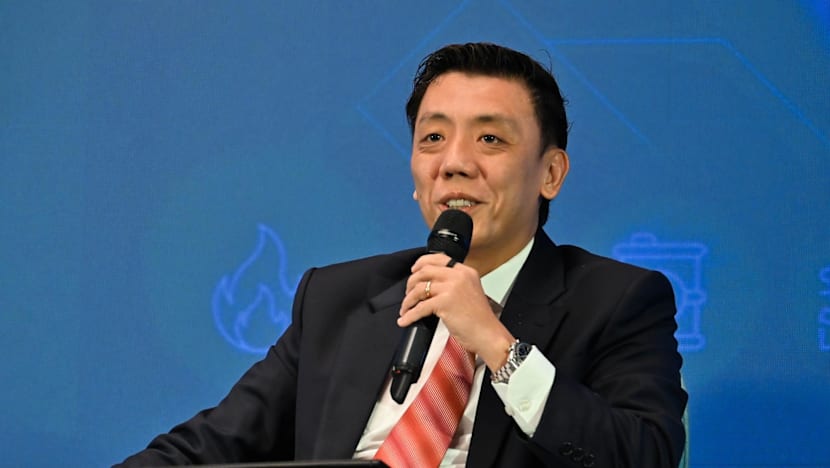
Speaking at a dialogue organised by the Singapore Institute of International Affairs – his first public engagement since being promoted to full minister last month – Mr Siow said younger Singaporeans are unlikely to follow the same career paths as previous generations.
"For many of us … where you work for one organisation and one job for a long time, that's not going to happen for my kid, not going to happen for the next generation of Singaporeans,” said Mr Siow, who is also second minister for finance and co-chairs the Economic Strategy Review committee on global competitiveness.
“It's more likely the case that you will take different jobs, try different things. You may have to change companies very often.”
This means the focus must shift from preparing people before they enter the workforce to helping them acquire new skills throughout their working lives, he added.
"The centre of gravity will shift from the pre-employment stage, away from schools, away from universities, to in-employment – when you are going for retraining more often, or when you are in between jobs, doing more training and reskilling and building up the capabilities to be able to adapt, to take up new jobs and to do new things," Mr Siow said.
He was responding to a question on the trade-offs Singapore would face in implementing the Economic Strategy Review (ESR), released in May with 32 recommendations to drive growth, jobs and resilience.
SMALLER WORKFORCE AS AN ASSET
Singapore's demographic constraints mean the country must place greater emphasis on developing its workforce, said Mr Siow.
"Our population is ageing very quickly. Our (total fertility rate) is abysmal," he said, adding that this would mean "a more highly skilled workforce, but a much smaller one".
Rather than treating this purely as a constraint, Singapore could invest more intensively in each worker, he said.
“With a smaller Singaporean base, actually I can invest more per person, train them more, train them more intensively, build the structure to enable them to get access to reskilling resources more quickly, help companies, incentivise them to retrain Singaporeans and prioritise those efforts.
"That is something not many cities or countries can do."
Singapore already has a headstart with SkillsFuture, Mr Siow said, and doing more in this area would help the country overcome its manpower constraints.
Earlier in the dialogue, Mr Siow said the ESR was launched to examine whether the conditions that had underpinned Singapore's success had changed. It was meant to chart a roadmap for the next five to 10 years in a world that would be geopolitically more fractious and more energy constrained.
More than 7,700 stakeholders, including global and local business leaders, workers, unions, trade associations, SMEs and academics, took part in the consultations.
"The greatest value of the ESR exercise was to bring people together," Mr Siow said, adding that many participants had not previously worked with one another.
Singapore's small size means it must make the most of its ability to bring different parts of society together to tackle economic challenges collectively, he said.
"We have to share responsibility for the economy," he said. "This is a new generation of leaders – political leaders, civil service leaders, business leaders, local and foreign. All of them have this responsibility."