
Education
'Neither officer using excessive force, nor criminal protester should be protected': SC
Key Points
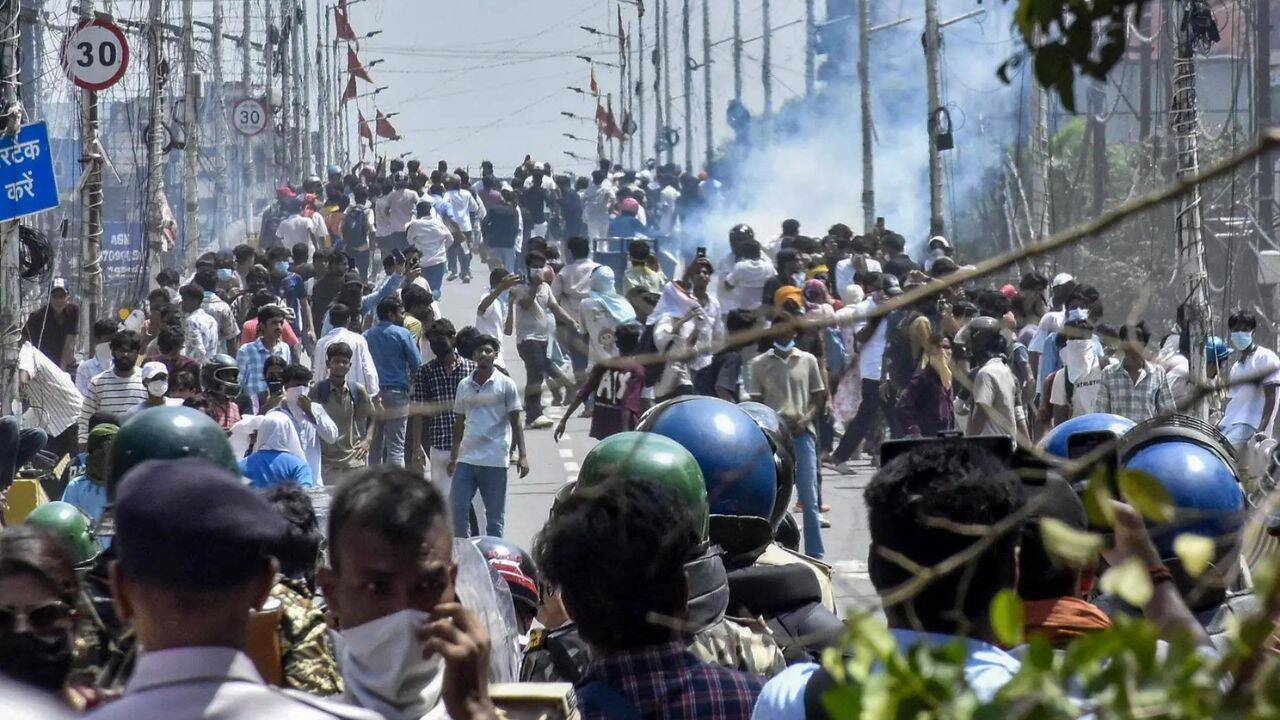
'Neither officer using excessive force, nor criminal protester should be protected': SC Edited by: Kanchan Yadav / TIMESOFINDIA.COM / Updated: Aug 03, 2026, 15:03 IST Comments Share AA Text Size Small Medium Large SC said states can withdraw FIRs against student who participated in NEET protests NEW DELHI: The Supreme Court on Monday observed that "neither a police officer using excessive force nor a hardened criminal under the garb of a student protest should be protected."
'Neither officer using excessive force, nor criminal protester should be protected': SC
Edited by: Kanchan Yadav / TIMESOFINDIA.COM / Updated: Aug 03, 2026, 15:03 IST
Comments
Share
AA
Text Size
Small
Medium
Large
SC said states can withdraw FIRs against student who participated in NEET protests
NEW DELHI: The Supreme Court on Monday observed that "neither a police officer using excessive force nor a hardened criminal under the garb of a student protest should be protected." These remarks came as it heard petitions related to the NEET-UG protest at Jantar Mantar on July 20.The apex court said states are free to close or withdraw FIRs registered against student protesters, provided it is done in accordance with law. The court also indicated that it may lay down guidelines on the use of pellet guns during protests.A bench comprising Chief Justice of India Surya Kant and Justices Joymalya Bagchi and V Mohana clarified that the term "criminal antecedents" refers only to grave and heinous offences, addressing concerns that students booked in minor or political cases could be denied relief.During the hearing, the CJI stressed that the court wanted to strike a balance between protecting peaceful protesters and ensuring accountability for serious offenders."A police officer involved in excessive force should not be unduly protected. And it should not be that a hardened criminal under the garb of student protest is also getting protected," the CJI observed.On allegations that pellet guns were used during the protest, the CJI said the court was considering issuing guidelines.
"We would like to lay down a protocol on how it can be used," he said.The bench noted that petitions had been filed both by protesters alleging excessive police force and by police personnel claiming they were injured during the violence.Appearing for the Centre, Solicitor General Tushar Mehta told the court that the Union government remained committed to its assurance that cases against student protesters would not be pursued, except in cases involving serious criminal offences.He said FIRs against more than 2,700 people with antecedents involving grave and heinous offences would not be withdrawn, according to ANI.Mehta also said there had been a misunderstanding regarding the government's stand on the issue. "Barring those with criminal antecedents, the government is prepared to address the cases against the student protesters. Let them sit with the government. There are some people who want to keep the pot boiling so we have to be cautious about the legal advice," he said.Senior advocate Gopal Sankaranarayanan, appearing for some petitioners, urged the court to examine allegations of police excesses during the protest. He said the petitioners had submitted around 300 videos showing the alleged use of force."The videos are very shocking. We have given 300 videos to the court. Since directions have come from the top, the commissioner of police must look at all this," he said.He further submitted, "Ideally, we have identified un-uniformed individuals committing such police excess. A direction has to go to the Commissioner of Police and the RAF Director as to why police used pellet guns etc."Senior advocate Abhishek Manu Singhvi sought clarification on the expression "criminal antecedents", arguing that it should not include minor offences."These are students, somebody may have a driving violation or a petty offence, or due to a political case. The word criminal antecedent needs to be clarified," Singhvi said, according to Live Law.He urged the court to exclude petty offences and cases arising out of political protests from the definition. Last week, the apex court had indicated that it would constitute a Special Investigation Team (SIT) to investigate the July 20 incident and directed authorities to preserve CCTV footage and other official records related to the protest.
The hearing comes days after the Supreme Court declined an oral plea seeking suo motu cognisance of the police action during the 'Chalo Sansad' protest.The court had earlier observed that police excesses or a lathi charge could not be justified merely because an agitation was taking place and underlined that the right to peaceful protest is "absolutely guaranteed."The matter has now been listed for further hearing on August 18.
Kanchan Yadav is a writer at The Times of India, where she covers business, politics, international affairs and social issues. Her reporting also focuses on policy, governance and economic developments, with a close lens on how decisions in corridors of power affect everyday lives and community well-being.