
Politics
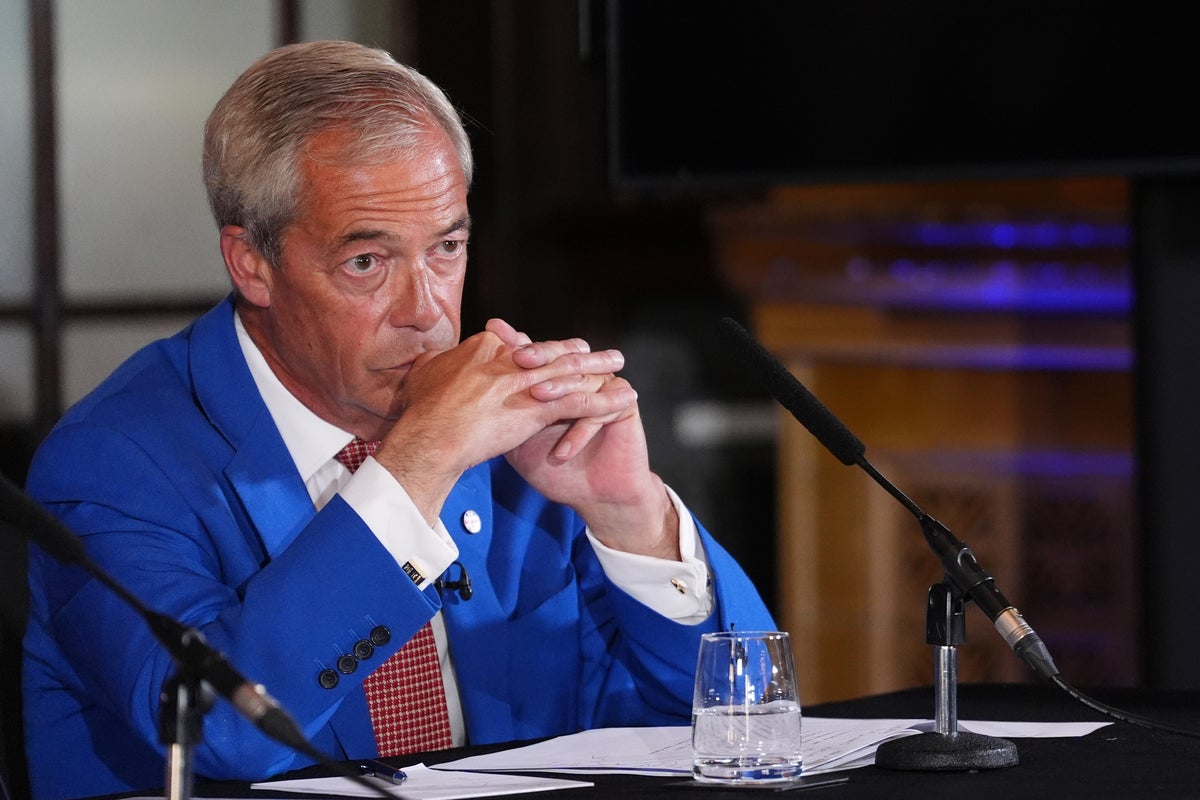
Reform UK under fire over plan to use navy to stop small boat crossings
Key Points
Reform UK under fire over plan to use navy to stop small boat crossings Nigel Farage is facing questions over the legality of the scheme to launch Royal Navy ships to stop small boat arrival - Bookmark - CommentsGo to comments Reform UK has come under fire for its “ridiculous” plans to launch Royal Navy ships to stop small boat arrivals from France. Dubbed “Operation Fortress” by Nigel Farage, his party has pledged to “the largest military operation in the English Channel since World War...
Reform UK under fire over plan to use navy to stop small boat crossings
Nigel Farage is facing questions over the legality of the scheme to launch Royal Navy ships to stop small boat arrival
- Bookmark
- CommentsGo to comments
Reform UK has come under fire for its “ridiculous” plans to launch Royal Navy ships to stop small boat arrivals from France.
Dubbed “Operation Fortress” by Nigel Farage, his party has pledged to “the largest military operation in the English Channel since World War Two” to intercept migrant boats and return them to France or Belgium.
But the plan has sparked criticism from both political opposition and former navy officers, who claimed the plan “lacks quite a lot of substance”.
The party has proposed setting up a joint military command with units from the Royal Navy, Royal Marines, RAF and British Army as well as a surveillance command to track incoming boats.
A billion-pound warship ... is not best used ferrying people around. You’re better off using an actual ferry
The armed forces would intercept any unauthorised boats and detain their occupants, giving them water and food and a medical assessment before returning them to France or Belgium under escort on navy vessels.
But retired Royal Naval commander Tom Sharpe said the navy does not have ships to spare to carry out the operation, and questioned the “substance” of the policy.
“A billion-pound warship that’s configured for anti-air warfare or anti-submarine warfare, which are both threats to the UK, is not best used ferrying people around. You’re better off using an actual ferry,” he told BBC Radio 4’s Today programme.
Downing Street also pointed out that when the Royal Navy had primacy for small boat crossings in 2022 there was no reduction during that period.
No 10 said border patrol officers were the “best suited candidate” to deal with such operations, and the prime minister’s spokesman added: “The Royal Navy is already tackling many threats, including monitoring any Russian warships operating near our shores, protecting our waters and our critical national infrastructure.”
Labour criticised the “reheated” announcement and said “anger and easy answers won’t bring crossings down”.
“Reform have reheated an old announcement in their latest desperate bid to distract from their growing sleaze scandals,” a party spokesperson said.
“Anger and easy answers won’t bring crossings down. The serious action we’ve taken has started to have a real impact and has led to 46,000 attempted crossings stopped, and 70,000 people with no right to be here removed.
“We know there’s more to do on this complex issue.”
Shadow home secretary Chris Philp dismissed the plan as a “gimmick” that Reform have “no detailed plan nor funding” to back up.
“They can’t explain how they will properly fund the military and they can’t explain how they would disembark illegal immigrants in France without French co-operation,” he said.
Meanwhile, former British Army officer and Conservative MP Ben Obese-Jecty MP said: “Reform have announced this ridiculous idea before, except now it’s party policy.”
The party says the plan is in line with international law and that it will both halt small boat arrivals and act as a humanitarian response, but has faced questions over its legality.
In a press conference on Monday, Mr Farage insisted it would comply with international law and said: “It will save lives, it will help the French in fulfilling their job of stopping the boats and it will save a huge amount of money.
“We are very confident that our policy of securely picking people up and safely taking them back to France – we are entirely confident that that falls within other conventions of international law.”
Mr Farage added: “When you think about it, what is the Royal Navy for?
“If the Royal Navy is not there to protect this country from invasion, then, frankly, I can’t see what its purpose is.”
The party said the navy’s River-class offshore patrol vessels would be used for interception.
The ships’ current responsibilities include monitoring Russian naval activity around British waters.
Reform said the plan would not involve the use of so-called “pushbacks” by towing or barging their dinghies away from British waters.
Join our commenting forum
Join thought-provoking conversations, follow other Independent readers and see their replies
Comments