
Science
Ancient bullets reveal where a Roman camp hid in the Pyrenees of Spain before being ambushed
Key Points
Ancient bullets reveal where a Roman camp hid in the Pyrenees of Spain before being ambushed Researchers found the remains of a Roman camp from 39 B.C. that was ambushed by locals in what's now Catalonia, Spain. Ancient slingstones found in northeastern Spain may be evidence of a local uprising against Roman rule in the first century B.C. Archaeologists think the lead sling "bullets" were fired by Roman soldiers after an ambush orchestrated by the local Indigenous Ceretani (also spelled...
Ancient bullets reveal where a Roman camp hid in the Pyrenees of Spain before being ambushed
Researchers found the remains of a Roman camp from 39 B.C. that was ambushed by locals in what's now Catalonia, Spain.
Ancient slingstones found in northeastern Spain may be evidence of a local uprising against Roman rule in the first century B.C.
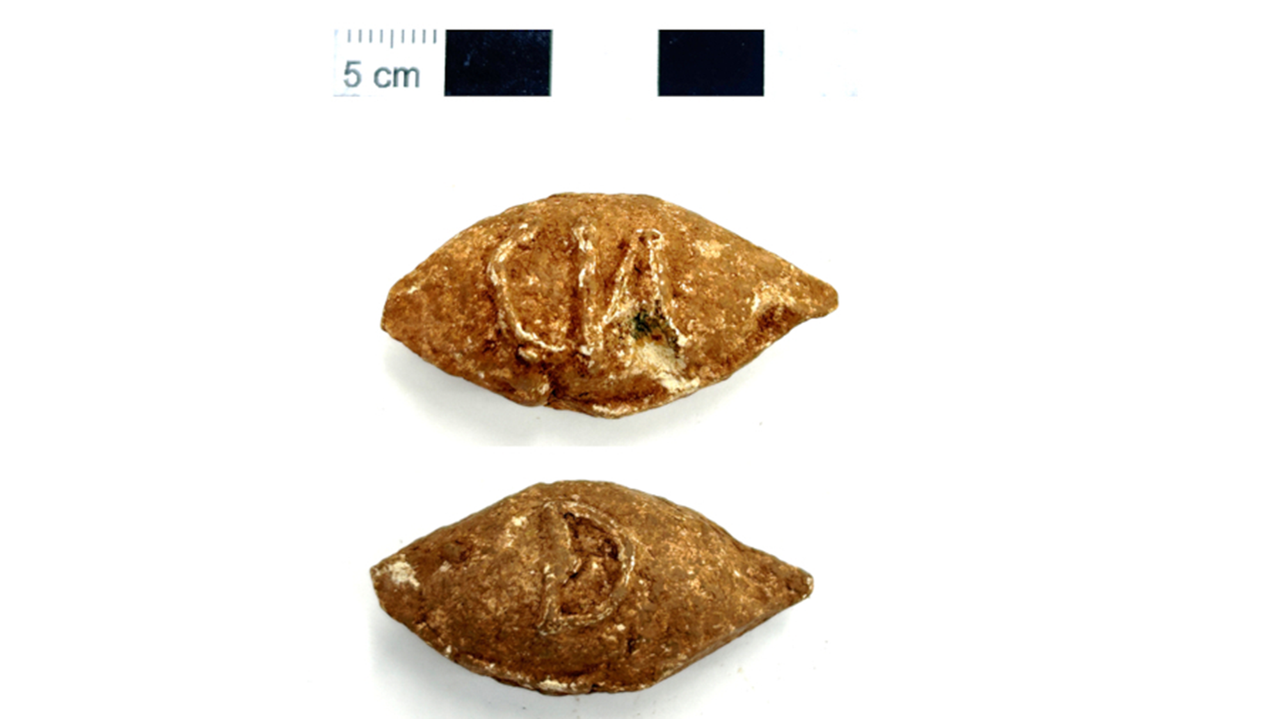
Archaeologists think the lead sling "bullets" were fired by Roman soldiers after an ambush orchestrated by the local Indigenous Ceretani (also spelled Cerretani) people, who by this time had spent almost 200 years resisting Roman expansion in Iberia.
The findings, which were unearthed during an archaeological survey of the area, reinforce that "the Roman conquest of the Iberian Peninsula was neither a brief nor a peaceful process," researchers explained in a statement from the Autonomous University of Barcelona.
The ancient Roman historian Cassius Dio (who lived from around A.D. 150 to 235) wrote that the Ceretani revolt took place in 39 B.C., but it was generally thought to have occurred farther west. The new finds, however, pinpoint an ancient Roman military camp in what's now Cerdanya, a region of the eastern Pyrenees on the Spanish side of the modern border with France. At the time, this location was in Ceretani territory.
Roman expansion
The archaeological team found the sling bullets last year among the remains of the camp at Collet de Jovell, an alpine pass in the region. The bullets were poured from lead (it was easier than collecting stones), and two were emblazoned with the letters CND, which stood for the Roman governor of the province of Hispania at that time, Gnaeus Domitius Calvinus. These letters help date the ambush to exactly 39 B.C., when he was in office.
Related stories
The archaeologists also unearthed the distinctive iron studs that Roman legionaries wore on their sandals, called clavi caligae; Roman fibulae, or brooches for fastening clothing; and several Roman coins that reinforced the team's dating of the site.
The Romans started expanding in Iberia, known to them as Hispania, after first landing on the Mediterranean coast in 218 B.C., during the Second Punic War with Carthage. But they were opposed by the Ceretani and other Indigenous peoples.
Get the world’s most fascinating discoveries delivered straight to your inbox.
The two sides battled for centuries. But the Ceretani revolt in 39 B.C. failed to oust the invaders and was followed by severe Roman repression of the local people, according to the statement.
The Romans suffered, too — the governor ordered that some of his troops be punished for running away when the Ceretani ambushed the camp.
From Augustus to Nero, see how much you know about ancient Rome's famous leaders with our Roman emperor quiz!
Tom Metcalfe is a freelance journalist and regular Live Science contributor who is based in London in the United Kingdom. Tom writes mainly about science, space, archaeology, the Earth and the oceans. He has also written for the BBC, NBC News, National Geographic, Scientific American, Air & Space, and many others.
You must confirm your public display name before commenting
Please logout and then login again, you will then be prompted to enter your display name.
Roman (ORG)
Pyrenees (LOCATION)
Spain (LOCATION)
Ancient (ORG)
B.C. (LOCATION)
Catalonia (LOCATION)
Indigenous Ceretani (ORG)
Cerretani (PERSON)
Iberia (LOCATION)
the Iberian Peninsula (LOCATION)
the Autonomous University of Barcelona (ORG)
Cassius Dio (PERSON)
Ceretani (ORG)
Cerdanya (PERSON)
Spanish (ORG)