
Business & Finance
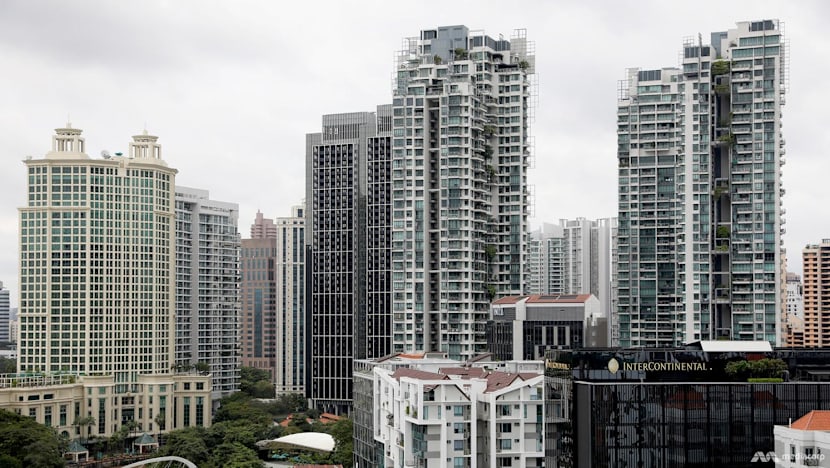
Proposed lower consent thresholds could revive en bloc market, but boom unlikely: Analysts
Key Points
Proposed lower consent thresholds could revive en bloc market, but boom unlikely: Analysts With a shorter time to get the required number of signatures for a collective sale, this might heighten tensions among neighbours who are not keen to sell, said an analyst. Lowering the consent thresholds for collective sales of older condominiums could encourage more ageing developments to test the en bloc market, although this is unlikely to trigger another boom, property analysts said. Developers'...
Proposed lower consent thresholds could revive en bloc market, but boom unlikely: Analysts
With a shorter time to get the required number of signatures for a collective sale, this might heighten tensions among neighbours who are not keen to sell, said an analyst.
SINGAPORE: Lowering the consent thresholds for collective sales of older condominiums could encourage more ageing developments to test the en bloc market, although this is unlikely to trigger another boom, property analysts said.
Developers' appetite, acquisition costs and realistic pricing will continue to determine whether deals go through, they added.
On Tuesday (Aug 4), the Ministry of Law tabled amendments to the law that would lower the required consent for collective sales from 80 per cent to 70 per cent for developments aged between 40 and 59 years, and to 65 per cent for those aged 60 years and above.
The proposed amendments are aimed at facilitating the redevelopment of Singapore's ageing private housing stock while introducing stronger safeguards for minority owners.
SRI head of research and data analytics Mohan Sandrasegeran said the changes could help remove some of the procedural obstacles that have prevented otherwise viable collective sale attempts from progressing.
“In larger or older estates, securing the final portion of consent can be particularly difficult, even where a substantial majority of owners supports redevelopment,” he said.
Singapore's en bloc market has remained subdued since the last property cycle peaked in 2017 and 2018, when 28 and 38 collective sale transactions respectively were completed, according to ERA Research and Market Intelligence.
Activity fell sharply to six transactions in 2019, and has remained relatively muted since, with between four and 12 deals completed annually.
OLDER DEVELOPMENTS
Analysts generally agreed that older developments unlock greater value. Projects with relatively low existing plot ratios, sizeable land parcels, ageing buildings, or locations that have benefited from improved transport links and amenities are likely to attract developer interest, said Mr Sandrasegeran.
Older freehold developments may be especially appealing, although well-located 99-year leasehold projects could also remain viable, he added.
According to official government records, more than 360,000 private non-landed residential units are currently below 40 years, while 20,000 private non-landed residential units are above 40 years.
Huttons Group senior director of data analytics Lee Sze Teck estimated there are around 150 private non-landed developments aged between 40 and 59 years, and fewer than 10 developments aged 60 years and above that could potentially benefit from the revised thresholds.
About 40 per cent of these older developments are located in Districts 9, 10 and 11 in Singapore's core central region, potentially increasing the likelihood of successful en bloc sales in areas with relatively limited Government Land Sales supply, he added.
ERA Singapore chief executive Marcus Chu said the lower thresholds would give more ageing estates the opportunity to enter the collective sale market and could "turn the spotlight back" on en bloc sales, particularly when combined with the recent extension of developers' Additional Buyer's Stamp Duty (ABSD) remission timelines for large projects.
He added that ageing condominiums built to lower plot ratios, particularly those in mature estates with little undeveloped land, could be comprehensively redeveloped to make better use of scarce land.
Commenting on the proposed amendments, PropNex chief executive officer Kelvin Fong said some of the unsuccessful en bloc developments in the past, such as Braddell View, Laguna Park and Pine Grove, could potentially yield significantly more homes if redeveloped under current planning parameters.
EN BLOC BOOM?
Mr Mohan said securing the final tranche of consent can be particularly difficult in larger or older estates, even where a substantial majority of owners supports redevelopment.
The proposed changes could encourage developments whose previous en bloc attempts narrowly missed the required consent level to return to the market, he said.
However, he does not expect the amendments alone to trigger a broad-based en bloc boom.
"Developers will continue to compare collective sale sites against Government Land Sales opportunities," Mr Sandrasegeran said.
"Unlike state land tenders, en bloc acquisitions can involve lease top-up premiums, development charges, demolition costs, complex site conditions and longer transaction timelines.”
He added that developers must also factor in the ABSD obligations imposed on residential land acquisitions.
Last week, it was announced that housing developers taking on large en bloc projects will get more time to complete and sell units under revised ABSD rules. The changes took effect for residential land acquired on or after Jul 29.
While Mr Lee expects more developments to test the market, he said successful sales will ultimately depend on realistic reserve prices and the ownership profile of each development.
Projects with a high proportion of foreign owners or investors may face greater challenges because replacement costs for such owners tend to be higher, he said.
SAFEGUARDS
Analysts were divided on whether the proposed safeguards strike the right balance between facilitating redevelopment and protecting owners who do not wish to sell.
The Bill seeks to raise the minimum support needed to form a collective sale committee to 35 per cent of owners, up from the current requirement of 20 per cent of owners by share value or 25 per cent of the number of units in the development.
Collective sale committees would also have six months instead of 12 months to secure signatures for a collective sale agreement.
The Bill also proposes that the waiting period following a failed en bloc attempt would be extended from two years to three years.
Mr Chu said requiring stronger initial support strikes a balanced approach by reducing the likelihood of collective sale attempts with limited backing, although the shorter signing period could prove more challenging for larger developments.
Mr Lee similarly said the tighter safeguards provide adequate protection for minority owners while still making collective sales more achievable.
Mogul.sg chief research officer Nicholas Mak said that while the stronger safeguards improve checks and balances between owners who support and oppose collective sales, the shorter timeline for collecting signatures could encourage high-pressure tactics by pro-en bloc owners racing to meet the new deadline.
In turn, that could heighten tensions among neighbours despite the additional safeguards, he said.
He said a major obstacle to successful en bloc sales is the rising cost of replacement homes.
"Property owners who are thinking whether to agree to an en bloc sale would have to consider the cost of the replacement homes that they must purchase before they move out of their current homes.
"Some owners, especially those with children or a multi-generational family, would want to buy a replacement home that is the same size or has the same number of bedrooms as their current homes. Hence, downgrading to a smaller dwelling unit is not an option.
"As the prices of new and resale homes continue to rise, these owners would be forced to raise the asking prices for their existing properties, which would pose a challenge to a successful en bloc sale."