
Weather
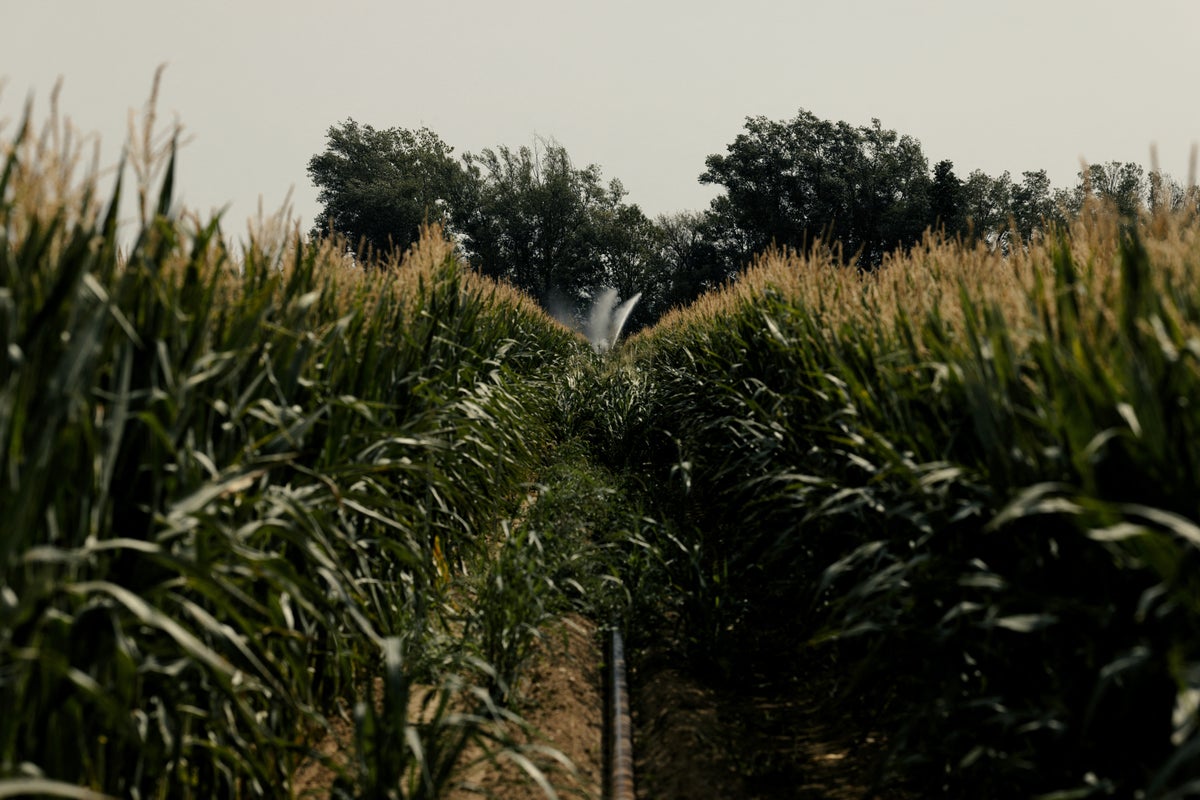
The different fruit and vegetables UK farmers might consider growing due to climate change
Key Points
The different fruit and vegetables UK farmers might consider growing due to climate change Heatwaves could allow farmers to consider new crops that previously ‘we could never imagine’ growing in the UK - Bookmark - CommentsGo to comments With drought conditions declared across half of England, British farmers are continuing to face the extreme effects of climate change. Amid increasing reports of reduced crop yields and predicted food shortages, growers across the country are rushing to...
The different fruit and vegetables UK farmers might consider growing due to climate change
Heatwaves could allow farmers to consider new crops that previously ‘we could never imagine’ growing in the UK
- Bookmark
- CommentsGo to comments
With drought conditions declared across half of England, British farmers are continuing to face the extreme effects of climate change.
Amid increasing reports of reduced crop yields and predicted food shortages, growers across the country are rushing to adapt to what the Met Office has termed the “new normal”.
With several heatwaves and temperature records broken over the last few weeks, these conditions have contributed to what has been recognised as “one of the worst harvests in living memory”.
With typical British produce such as sweetcorn, green beans, garden peas, and broccoli beginning to struggle, some experts have suggested the warmer temperatures are an opportunity for Britain to diversify its fruit and vegetable production.
Here, The Independent finds out what crops could one day be grown in the UK, potentially changing the future of farming in the country.
Fruit
Charlie Taverner, policy lead at the Food, Farming and Countryside Commission, said: “Climate change has become a constant reality that our farmers are grappling with – they’re at the forefront of this all.
“But while we’re seeing an awful lot of apprehension, we have to see the opportunity. Some crops that we could never even imagine growing here are now becoming viable.”
He suggested a wider variety of fruit trees, olives and grapes are starting to become more viable in the UK without the use of polytunnels.
“Things which traditionally grow in warmer, Mediterranean climates are now showing more potential to be grown here,” Mr Taverner said.
Vegetables
For vegetable growers, this summer has been particularly hard, as leafy greens, carrots and pumpkins are among those which have seen large declines in yield.
But Liz Mooney from the Royal Horticultural Society said: “The climate is definitely having a major impact on what agriculture in the UK could look like in the future.
“Sweet potatoes, sweet peppers, artichokes and chillies are all vegetables that are now able to grow here, without the need for greenhouses or extra equipment.”
She added even tomatoes, which used to have to be grown in temperature-controlled conditions, are now showing success being grown outside.
But she emphasised the potential for the success of these crops is not based on warm weather alone.
“If we want to be able to grow anything, we need to ensure we’re doing our best to protect our soil, practice sustainability, and diversify what we’re planting – if we do that, then something will always grow well,” Ms Mooney said.
Legumes
Legumes, which the UK predominantly imports from South America and Asia, are similarly showing viability for growth domestically.
Professor Nichola Cannon at the Royal Agricultural University said: “Soya is something I’m particularly hopeful about.
“It usually does well in warmer weather, so there’s a lot of potential, if we get it right.”
The drier weather has meant that produce like chickpeas and lentils, which had previously never been grown in the country, are now entering small-scale production.
Wine
Grapes are typically grown in sunnier regions of Europe, but as summer temperatures in the UK have remained consistently high in recent years, the British wine sector has benefited significantly.
Adrian Pike, managing director and winemaker at Westwell Wine Estates in Kent, said: “The impact of the warmer, sunnier weather on Westwell has been largely positive for our growing season.
“At the most simple level, heat really helps to ripen the fruit.”
Because of this, these conditions can produce some “fantastic phenolics and flavours” which are set to “certainly boost” the production of British wine, explained Mr Pike.
Caution amid the changing climate
While these developments in British agriculture show promise, experts have warned they should not be used to dismiss the negative impacts of climate change.
Professor Carol Wagstaff, the director of Agrifood Futures at the University of Reading, and co-author of the government’s latest climate change risk assessment, said: “The only real certainty we have is that conditions are only going to get more volatile.”
Highlighting the extreme nature of the UK’s weather patterns, the professor said it is difficult to predict exactly which crops could succeed in Britain in the future.
“We are having the hottest summers, but we’re also having the wettest winters and the latest springs,” she added.
“Because of this, it’s naïve to think that because we’re having temperatures similar to Spain’s right now, that we can now just grow what is grown there – we simply can’t because we won’t have those same year-round temperatures.
“Extreme weather negates the benefits of warmer weather.”
Prof Wagstaff told The Independent a reactive approach to the climate will not be sufficient in the coming years.
Instead, she said climate change should be considered a “complex risk” to improve agricultural infrastructure, labour, and crop diversity.
“Doing this will not just help the planet, but give our citizens a healthier, better life – and who wouldn’t want that?”
The Department for Environment, Food and Rural Affairs has been contacted for comment.
Join our commenting forum
Join thought-provoking conversations, follow other Independent readers and see their replies
Comments
UK (LOCATION)
Heatwaves (ORG)
England (LOCATION)
British (ORG)
the Met Office (ORG)
Britain (LOCATION)
Charlie Taverner (PERSON)
the Food, Farming and Countryside Commission (ORG)
Mediterranean (LOCATION)
Taverner (PERSON)
Liz Mooney (PERSON)
the Royal Horticultural Society (ORG)
Ms Mooney (PERSON)
South America (LOCATION)
Asia (LOCATION)