
World News
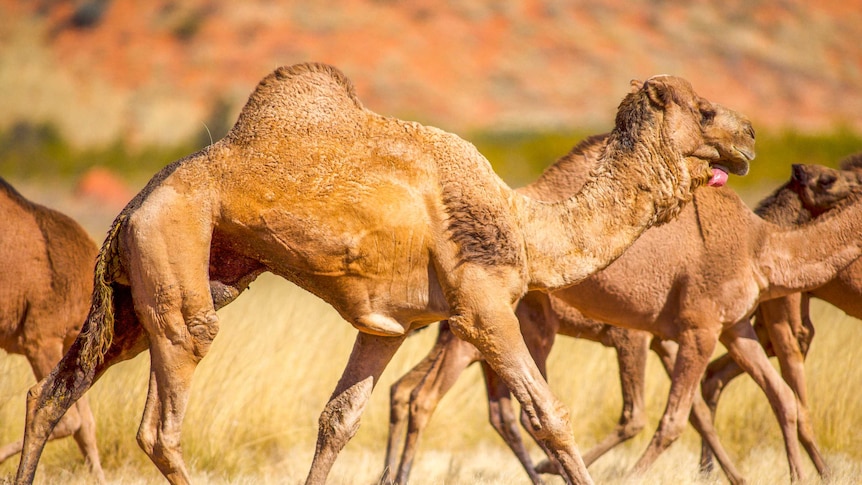
Low-allergenic camel meat helps curb feral population
Key Points
Novel appetite for camel meat helps WA pastoralist fight feral population Wed 5 Aug 2026 at 9:06am In short: Herds of feral camels are a big problem for pastoralists in central Australia and a declared pest nationwide. Prenti Downs station has found a way to reduce feral camels on its property through a partnership with a pet food company.
Novel appetite for camel meat helps WA pastoralist fight feral population
Wed 5 Aug 2026 at 9:06am
In short:
Herds of feral camels are a big problem for pastoralists in central Australia and a declared pest nationwide.
Prenti Downs station has found a way to reduce feral camels on its property through a partnership with a pet food company.
Dog owner Jodie Muir Mahuika Fitzpatrick says the camel meat has helped her pet's allergies go away.
It is no easy feat for Tim Carmody to manage and maintain the feral camel population on his 400,000-hectare property on the edge of Western Australia's Gibson Desert.
Feral camels are a persistent pest on pastoral country in central Australia, destroying cattle water points and other infrastructure, and trampling precious vegetation.
The animal is a nationally declared pest and the Western Australian Department of Primary Industries and Regional Development estimates there to be more than 1 million roaming central Australia.
Prenti Downs pastoralist Mr Carmody said it could cost him between $20,000 and $30,000 a year to manage the fluctuating camel numbers.
"They can eat 80 per cent of the vegetation out here, so they're direct competitors to cattle," he said.
"One camel unit is equal to two cow units, so if you've got 500 camel coming through, that's equal to 1,000 head of cattle wandering through your place and at times we can have several thousand."
Getting value out of feral camels
Mr Carmody engaged a pet food business to kill the camels and use them for meat.
As part of the field operation, Mr Carmody flies his plane to spot camels and guide the shooters in the vehicles on the ground.
"We can take out a mob of 50 or 60 camel in sub an hour," he said.
"We just recover costs. We've been working at and hoping over the years that this will become more of a commercial operation for everyone involved and once it becomes a commercial operation it becomes sustainable, then there's no more problem with camel.
"Long-term it's better for the country if camel are either cleaned out 100 per cent, or they're commercial and have value."
Camel meat low-allergenic
It has become a win-win situation for Prenti Downs and Albany-based Paul's Pet Foods, with the growing demand for camel meat to manage allergies in pets also contributing to reducing feral camel numbers.
Paul's Pet Foods's Ethan Sylvester said his visit to Prenti Downs was his "most successful" camel cull yet, yielding 77 animals.
His production has increased by 20 per cent each year since 2022, when Mr Sylvester first took his mobile slaughter plant on the 3,000-kilometre return journey, to now culling up to 250 camels per year.
"Kangaroo is still top of the list, but camel has pretty much overtaken beef. It's doing incredibly well … it's growing more and more," Mr Sylvester said.
He said an increasing number of customers were requesting camel meat to help manage skin allergies in their dogs.
"It's organic, it has no farm contact in the sense of fertilisers and chemicals and drenches," he said.
"It's a really good low-allergen product. As long as people are slowly introducing it to their dogs, they seem to be doing really well."
Dietary changes to wild harvest camel
Albany dog owner Jodie Muir Mahuika Fitzpatrick says her two-year-old South African mastiff, Hades, has struggled with skin irritations since he was a puppy.
"He had red rash, skin flare-ups and looked like acne around his mouth and paws," Ms Fitzpatrick said.
"We tried steroids and medicated washes and thousands of dollars at vets and he was just in pain and sore."
Veterinarian Shey Rogers recommended a diet change to camel meat, which Hades has been eating exclusively for the past six weeks.
"Now he doesn't have any red rash or and hive-like bumps and his coat is shiny and clear and he looks stunning," she said.
Dr Rogers said she saw a lot of dogs with itching or skin issues.
"To try and work out the source of the inflammation, we often recommend they change to a diet they haven't been exposed to before. For a novel diet in pets, we'll often recommend camel," she said.
A novel diet is a meat or protein source that has never been eaten by that dog before, used by veterinarians as a diagnostic tool to pinpoint what a dog's immune system is reacting to.
"Once they've finished that diet for six weeks, we can reintroduce one thing into their diet at a time so we can figure out what flares their skin up," Dr Rogers said.
"I'm finding really good feedback from these clients with dogs on the camel diet.
"If we're helping solve a feral camel problem and making use of that meat, I think it's fantastic."
WA (LOCATION)
Australia (LOCATION)
Prenti Downs (PERSON)
Jodie Muir Mahuika Fitzpatrick (PERSON)
Tim Carmody (PERSON)
Western Australia's (LOCATION)
Gibson Desert (ORG)
the Western Australian Department of Primary Industries and Regional Development (ORG)
Carmody (PERSON)
Albany (LOCATION)
Paul's Pet Foods (ORG)
Paul's Pet Foods's (ORG)
Ethan Sylvester (PERSON)
Sylvester (PERSON)