
Business & Finance
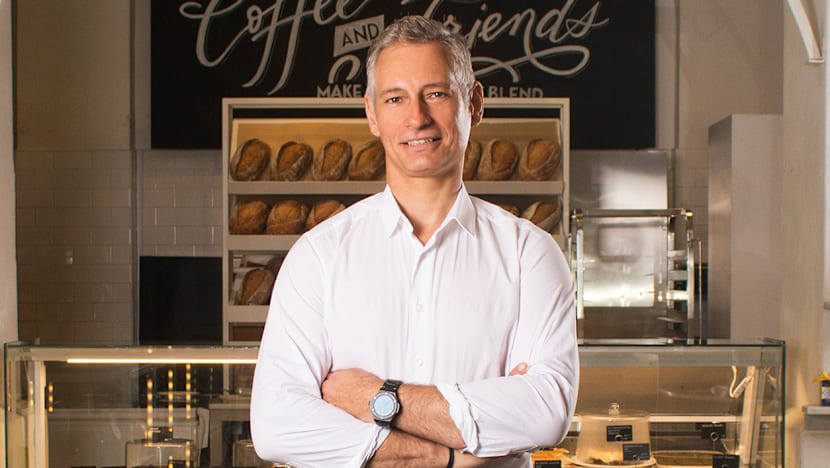
Da Paolo’s next chapter: Fewer outlets, new concepts and a sharper eye on what diners want
Key Points
Da Paolo’s next chapter: Fewer outlets, new concepts and a sharper eye on what diners want After weathering downturns, changing dining habits and the pandemic, Da Paolo CEO Guillaume Pichoir is steering the 37-year-old Singapore F&B group towards its next phase of growth with Tutto and a more selective expansion strategy. Time has taught Guillaume Pichoir a thing or two about the restaurant business. Since this former software development manager took the helm of the Da Paolo Group of...
Da Paolo’s next chapter: Fewer outlets, new concepts and a sharper eye on what diners want
After weathering downturns, changing dining habits and the pandemic, Da Paolo CEO Guillaume Pichoir is steering the 37-year-old Singapore F&B group towards its next phase of growth with Tutto and a more selective expansion strategy.
Time has taught Guillaume Pichoir a thing or two about the restaurant business. Since this former software development manager took the helm of the Da Paolo Group of restaurants as CEO in 2010, he’s steered the company through downturns, fickle markets and the COVID-19 pandemic. So while others may tread cautiously in today’s uncertain economic climate, Pichoir is bullish about his plans to introduce new F&B brands to market.
Last December, he opened Tutto, the group’s first new brand in years. Launching a new F&B concept as the industry grapples with rising rents and more cautious consumer spending may seem poorly timed, but Pichoir thinks otherwise. “We don’t really care about the timing,” he said as we sat down to talk at the brightly appointed Tutto in Jewel Changi Airport. “I mean, the company has been around for 37 years. It’s been through so many lows, so many highs. So for us, it’s more of having something we believe in rather than only looking at the situation right now in the market, which is not great.”
SURFING THE FICKLE TIDES
Da Paolo began in 1989 as a single family-run Italian restaurant founded by Pichoir’s parents-in-law, Paolo and Judie Scarpa. It has since evolved into a diversified food and beverage group spanning full-service restaurants, cafes and delis under the Gastronomia label, catering, retail products, and its own production, warehousing and logistics operations.
When you’ve been around that long, learning to roll with the punches is par for the course. If there’s one lesson Pichoir has learnt, it is that a restaurant group’s survival hinges on remaining relevant. “We’ve been feeling, since COVID, that we needed to work on something other than Gastronomia and the restaurant side,” he mused. “We just weren’t quite sure what.”
The answer turned out to be Tutto, which exists within that easy-to-appreciate space between a cafe and classic Italian restaurant. With a focused menu of fresh pasta, pizzas and gelato, Tutto reflects how diners’ habits have changed. Since it opened at Jewel Changi Airport, Tutto has seen steady queues during weekends and a consistently busy dining room. A second outlet opened at One Holland Village in February this year. “This has been a successful concept because it’s easy for people to understand. They don’t have to think very hard about what they want or what they’re going to get,” he said.
“In a place like Jewel, there are so many options, so trying to do many things [in one restaurant] doesn’t work. Having this variety [of concepts in the mall] means diners can go somewhere for a drink, somewhere else for pasta, and choose another place to have dessert. This is how things have been evolving, from what we’ve observed.”
This shift in dining habits prompted Pichoir to rethink his expansion strategy. Gastronomia has been the group’s strongest brand for many years, but he feels it has reached maturity. “We pretty much know what Gastronomia can be and we’re very happy with it,” he remarked. “But we can’t just be working on that. We needed something newer, a bit different and more in line with where the market is going.”
SIZING DOWN TO SCALE
The group’s latest phase of growth has begun with a contraction. At its peak, the company operated about 14 restaurants and Gastronomia outlets. Today, it has nine. Over the past decade, Pichoir has closed several of its original restaurant concepts after concluding that they no longer reflected market conditions. Competition has intensified dramatically since the company’s early years, when there were far fewer Italian restaurants in Singapore. Rather than continue investing in concepts whose best days might be behind them, the group shifted its attention to Gastronomia, catering and delivery, which Pichoir saw as offering stronger long-term opportunities.
Asked how many Tutto outlets he’d ultimately like to open, Pichoir said, “I don’t really have a number in mind. The question is whether we can find locations that are good for the concept.”
As with any business, the real limiting factor is economics, with rent posing the biggest challenge. “There are a lot of things we can tweak when overall costs rise,” he explained. “But with rental, especially when you have already invested in a location, there's nothing to tweak. It's either you pay what the landlord wants or you're out. And with that means your loyal customers and your investment.” Which brings us back to the point of staying relevant. “If your concept is relevant, landlords want to work with you and customers continue to choose you”.
Pichoir is certain the current downturn will eventually pass. The question is whether, when it does, customers will still choose what you have to offer.