
Entertainment
From faded letters to WeChat: How some Teochew families in Southeast Asia are finding long-lost relatives
Key Points
From faded letters to WeChat: How some Teochew families in Southeast Asia are finding long-lost relatives Following the success of Chinese box office hit Dear You, more Singaporeans and Malaysians of Teochew descent are turning to a volunteer network in China to trace their roots and reconnect with long-lost relatives. Decades ago, Chinese families separated by migration and war relied on handwritten letters that would take weeks, or even months to arrive. Today, instant messages on WeChat...
From faded letters to WeChat: How some Teochew families in Southeast Asia are finding long-lost relatives
Following the success of Chinese box office hit Dear You, more Singaporeans and Malaysians of Teochew descent are turning to a volunteer network in China to trace their roots and reconnect with long-lost relatives.
CHAOSHAN, GUANGDONG: Decades ago, Chinese families separated by migration and war relied on handwritten letters that would take weeks, or even months to arrive.
Today, instant messages on WeChat are helping their descendants to reunite and reconnect with lost relatives in China.
Interest in tracing ancestral roots has surged among Singaporeans and Malaysians of Teochew descent, following the recent success of Chinese box office hit Dear You.
Set against the backdrop of the mass migration of Teochew people from China’s Chaoshan region to Southeast Asia during the 1940s, the film tells the story of a young Chinese villager who travels to Thailand in search of his grandfather, who fled the country to escape conscription during the civil war.
Dear You has become one of China’s highest-grossing films this year, taking in nearly 2 billion yuan (US$296 million) at the domestic box office.
“The film has helped many descendants (of Teochew migrants) understand the journeys of their ancestors, and the family ties they left behind,” said Zeng Jianpeng, co-founder of the Chaozhou Volunteer Association for Reuniting Overseas Chinese Families.
“That emotional connection has made many older people want to reconnect with relatives in their ancestral villages,” he added.
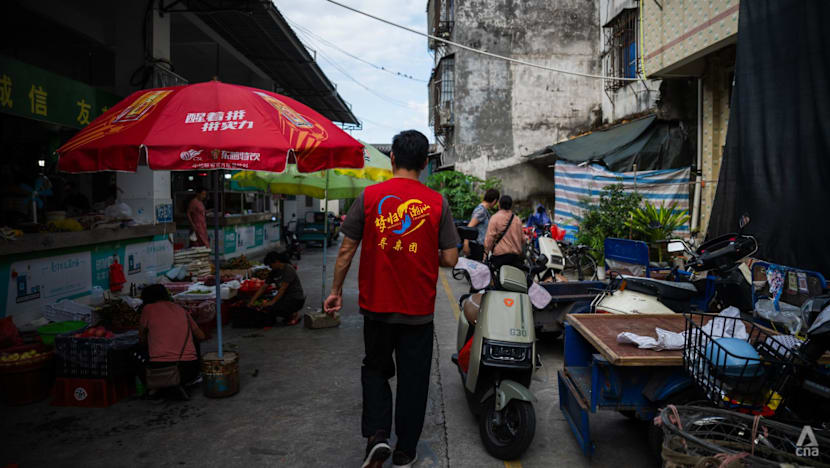
Spread across Guangdong, Fujian and Jiangxi provinces, the more than 3,000 strong volunteer group has been helping overseas Chinese trace their ancestral roots.
Ancestry search enquiries from Singaporeans and Malaysians have surged since the film's regional release in June, Zeng told CNA - from just one or two new requests each month to dozens.
A Thai-dubbed version is set for release on Aug 6.
“Requests suddenly poured in,” Zeng said.
“We were basically overwhelmed with cases.”
Since its founding in May 2016, the group says it has recorded 1,097 successful cases of family reunions - of these, 145 were involving overseas Chinese communities from Southeast Asian countries as well as Canada, France and the United States.
To date, it has recorded 83 successful cases from Malaysia and 22 from Singapore.
Since the release of Dear You, 10 families from Singapore and Malaysia have been reunited, Zeng said.
THE DIGITAL DETECTIVES
WeChat is instrumental to the group’s work, co-founder Zeng said - allowing respondents to send in clues and exchange information - from relaying names and memories to sharing faded photographs, genealogy records and even grave inscriptions.
Information is first organised before likely ancestral areas are identified.
Cases are then assigned to relevant volunteers who verify clues and information on the ground - checking and tracing details like locations and addresses as well as consulting clan elders and reviewing genealogy records.
Once a potential match is verified, they help put both sides in touch often through WeChat groups or phone calls, allowing them to compare details and confirm family connections and ties with each other directly.
The work is entirely voluntary, Zeng said - largely sustained by the efforts of volunteers who contribute their own time and resources.
It also does not charge for cases, and publishes details of any sponsorship received on a monthly basis.
Possible matches are also not treated as final, he added.
There have been a few cases where initial matches turned out to be incorrect after further verification.
Volunteers then continued searching until the right connection was confirmed, Zeng said.
Overseas ancestry searches in the past “relied on letters”, Zeng said - but technology has greatly transformed the speed of searches.
“Now, for a case in Singapore, I can get in touch with them in seconds,” Zeng said.
The fastest searches are completed within half an hour, he adds - while others can take years.
Volunteers are unpaid, with many juggling full-time jobs. Around 200 to 300 are actively involved in ancestry search cases.
Among them is Lu Limiao, 30, a rehabilitation therapist from Jieyang city, and a mother of two.
She spends much of her spare time on WeChat, organising and analysing material from respondents - including old addresses, family photographs and other clues - before passing the cases to volunteers across the network for follow-up.
As new information emerges, photographs, documents and voice messages flow back into the same WeChat group, Lu said, where relatives thousands of kilometres away follow the search in real time.
“Replying to messages, editing information, coordinating with volunteers - time passes very quickly. There's never enough of it,” she added.
“When I first started seeing these family reunions, I would cry,” she recalled.
“Now I’ve seen so many that I’ve become numb,” she said.
“But I’m still happy when someone finds their family - and sometimes, a particularly emotional case moves me. Behind every search is a touching story.”
She once began a search of her own.
Her grandmother, born in Chaoyang city, was sold as a child to a family up north in Jiangxi during the turmoil of the 1940s.
Growing up, Lu often heard stories from her grandmother who spoke about the home she was forced to leave and could never find again.
As a teenager, she began searching for clues. The newly-formed volunteer group in 2016 had helped her grandmother trace her childhood home and reunite with relatives.
When she passed away in 2019, she had “no regrets”, Lu said.
“It was like a huge weight had been lifted.”
Soon after, she joined the group. “I’ve been through this myself. I think it’s a sense of purpose,” Lu said.
“After witnessing so many family reunions over the past 10 years, I feel it’s a sense of mission, and responsibility, as a Teochew person,” she said.
“Perhaps history placed me in this position.”
At Talent Coffee cafe in Chaozhou’s ancient town, Lu Haigan, one of the group's co-founders, is often one of the first points of contact for those overseas searching for their roots.
“If they want to search for their family, they can come here,” he told CNA, adding that he helps "register their information and also connects them with the relevant volunteers".
FOLLOWING THE CLUES
For many Teochew families in Singapore and Malaysia searching for long-lost relatives in China, ancestral halls and genealogy records in the southern Chaoshan region are among the few places with clues about their past.
CNA visited the Li Clan Ancestral Hall in Shantou city, where Zeng has been investigating a request from a Singaporean searching for his ancestral roots.
“His wish was simply to find his ancestral hall so that he could pay his respects,” Zeng said.
Inside, Zeng pointed to a board displaying the clan’s generation sequence - a set of characters passed down through generations that helps descendants trace their place in the family line.
“A person’s name can tell you which generation they belong to. Someone may look younger, but they could actually belong to an older generation in the family line,” Zeng explained.
In a nearby room, clan elders pulled out genealogy record books listing thousands of family names as well as information about descendants.
These books provide important clues for volunteers, so they can compare with information shared by overseas families.
But genealogy records are also often lost “because of history”, said Li Weimin, a clan elder.
The group ruled out thousands of possible matches and eventually confirmed the search - sending photos and findings to a WeChat group with the Singaporean man and other volunteers.
But results “take time to process”, Zeng said.
“This happens all the time - people suddenly receive decades of family history all at once,” he added.
“Our work doesn't end when we find the answer. It ends when we’ve helped them understand it.”
RACE AGAINST TIME
But every successful reunion is also a race against time.
As years pass, villages are renamed, administrative boundaries shift and family memories begin to fade - and often, the people who can still connect those dots are the oldest residents in the village.
Many searches still rely on elderly locals, volunteers said - who can remember names of old places and historical changes that have disappeared from modern maps.
Technology has made some searches easier. DNA testing has also opened a new avenue for some cases, especially when traditional clues are limited.
But it is still the old clues that matter most, volunteers said.
A name. An old address. A letter.
Without them, even modern technology can only do so much.
And time is the biggest challenge.
“By the time younger generations begin searching, much of it may already be gone,” said Lu.
“The earlier people begin searching, the higher their chances of success,” she added - as information “inevitably becomes less complete” when it passed down from one generation to the next.
For Sammi Yeung, a lawyer from Kluang in Johor, her family search came with a reminder that time was running out.
They had spent years approaching various Chinese clan associations in Malaysia for help - without much success.
While scrolling through Xiaohongshu last year, Yeung came across a post and eventually connected with Lu the volunteer.
Armed with little more than the names of her great-grandparents, a relative’s name and an old address, Lu was able to identify possible relatives within a day.
A month later, Yeung travelled to Chaoshan with five family members, including her grandfather, to meet relatives they had only known through family stories.
But the cousin of Yeung’s grandfather, who had once exchanged letters with him for years, fell ill a week before their arrival.
By the time the family arrived in Chaoshan, she could no longer eat or speak.
“If we had booked tickets immediately after finding them, perhaps my grandfather would have been able to have a real conversation with his cousin,” Yeung said.
Yeung now has an important message for others thinking about starting their own ancestry searches.
“If you want to do it, do it quickly,” she said.
Teochew (ORG)
Southeast Asia (LOCATION)
Chinese (ORG)
Singaporeans (ORG)
Malaysians (ORG)
China (LOCATION)
CHAOSHAN (ORG)
GUANGDONG (LOCATION)
Thailand (LOCATION)
the civil war (EVENT)
Zeng Jianpeng (PERSON)
the Chaozhou Volunteer Association for Reuniting Overseas Chinese Families (ORG)
Fujian (LOCATION)
Jiangxi (LOCATION)
Zeng (PERSON)