
Science
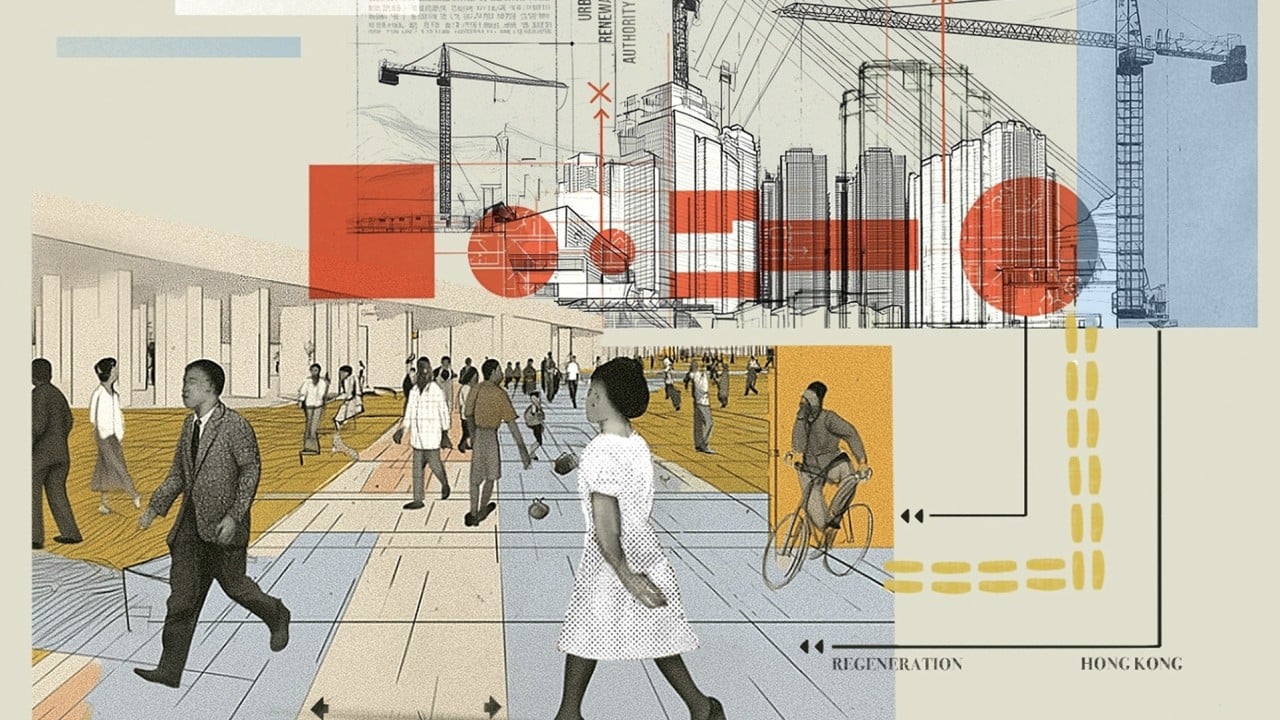
Hong Kong needs regenerated districts, not piecemeal renewal
Key Points
Hong Kong’s redevelopment policy is approaching an institutional turning point. Recent government proposals – pilot schemes for additional plot ratios and cross-district plot ratio transfers – are presented as new instruments to stimulate redevelopment in ageing districts. Yet they extend the same paradigm that shaped policy for decades: incentivising redevelopment through floor-area bonuses, relying on land premium as the financial logic and assuming more buildable area will automatically...
Hong Kong’s redevelopment policy is approaching an institutional turning point. Recent government proposals – pilot schemes for
additional plot ratios and cross-district plot ratio transfers – are presented as new instruments to stimulate redevelopment in ageing districts. Yet they extend the same paradigm that shaped policy for decades: incentivising redevelopment through floor-area bonuses, relying on land premium as the financial logic and assuming more buildable area will automatically trigger renewal.
The problems of old districts, however, have never been about insufficient floor space. They arise from deteriorated urban form, narrow streets, fragmented lots, inadequate public space and limited community capacity. Making the maximising of floor area the central criterion will only produce taller, slimmer towers that intensify congestion and undermine neighbourhood quality.
The real deficit is the absence of an institution capable of orchestrating regeneration at the district scale.
The distinction between renewal and regeneration is fundamental. Renewal remains an engineering concept – renovating buildings, upgrading facilities, repairing streets – that operates at the lot scale and continues the technical logic of the
Urban Renewal Authority (URA). Regeneration, however, is a city-level concept involving reconfigured street networks, integrated blocks, new public spaces and rebuilt community functions. It treats old districts as urban systems requiring redesign and re-governance.
From a governance perspective, renewal patches up; regeneration restructures. Renewal improves buildings; regeneration restores urban functionality. Hong Kong must establish an urban regeneration authority capable of addressing the spatial and institutional issues that cannot be solved through lot-based redevelopment.
Such an authority would shift Hong Kong’s approach from engineering-based building improvement to governance-based urban restructuring. The challenges of
old districts – fragmented building ownership, insufficient public space, outdated street patterns – are regional and structural. A redevelopment model confined to individual lots cannot address street networks, community facilities or land-use reconfiguration.
[Image text:] PUTTTORTT
REGENERATION
HONGKONG