
Science
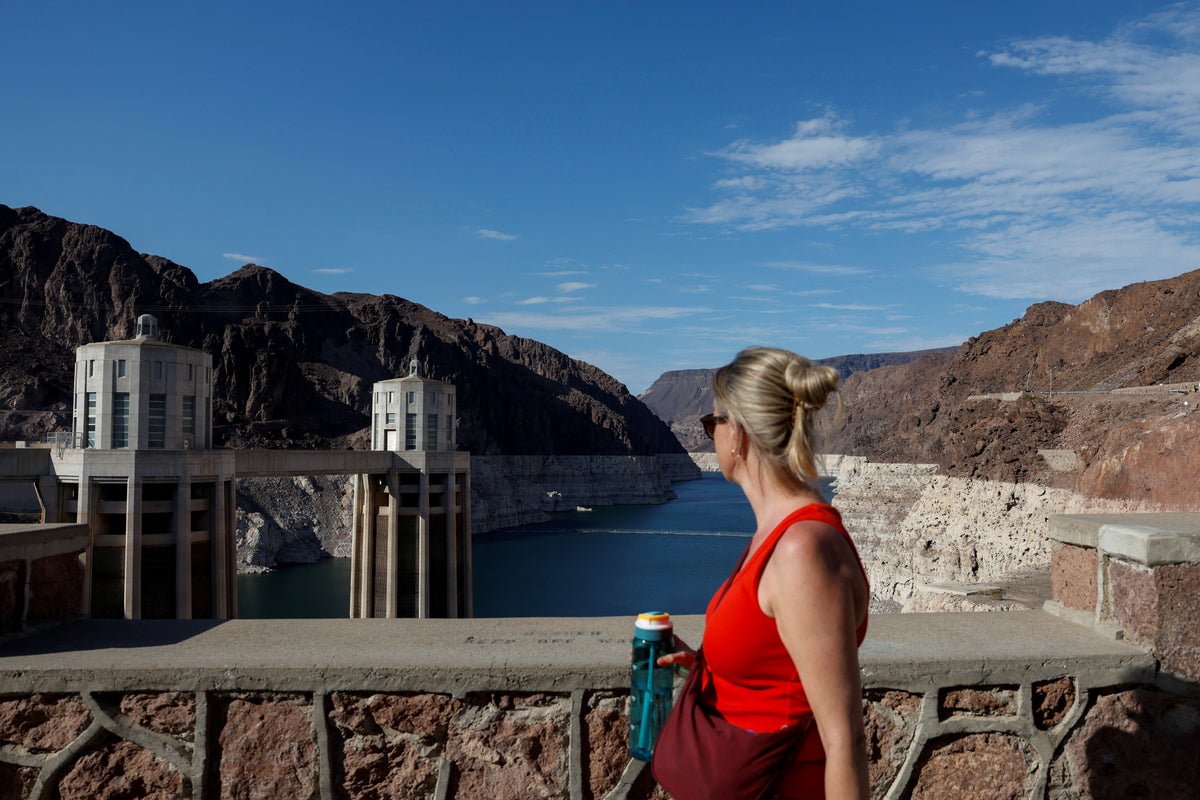
Lake Mead water has hit a new historical low - with no signs of improvement
Key Points
Lake Mead water has hit a new historical low - with no signs of improvement Lake Mead is part of the Colorado River Basin system, which supplies water to around 40 million people across seven states, tribal communities and parts of Mexico - Bookmark - CommentsGo to comments Lake Mead, the largest reservoir in the U.S. that supplies drinking water to more than 20 million people, has hit a record low. The reservoir, located behind Hoover Dam on the Arizona-Nevada border, fell to 1,040.5 feet...
Lake Mead water has hit a new historical low - with no signs of improvement
Lake Mead is part of the Colorado River Basin system, which supplies water to around 40 million people across seven states, tribal communities and parts of Mexico
- Bookmark
- CommentsGo to comments
Lake Mead, the largest reservoir in the U.S. that supplies drinking water to more than 20 million people, has hit a record low.
The reservoir, located behind Hoover Dam on the Arizona-Nevada border, fell to 1,040.5 feet above sea level at 1 a.m. MST on Friday, marking its lowest level since it was first filled in the 1930s, according to data from the U.S. Bureau of Reclamation, CNN reported. The drop surpasses the previous record low of 1,040 feet, set in July 2022.
While water levels climbed slightly above 1,040.50 feet before sunrise Friday, officials say the drop is a sign of the challenges ahead.
"It's grim, and we obviously need to do something – and fast," Brad Udall, a senior climate scientist at Colorado State University's Colorado Water Center, told USA Today.
Lake Mead is a critical water source for the Southwest, providing drinking water for between 20 and 25 million people. It is part of the larger Colorado River Basin system, which supplies water to around 40 million people across seven states, tribal communities and parts of Mexico.
The Colorado River also plays a major role in American agriculture, providing irrigation for about 5 million acres of farmland. That includes farms in California’s agricultural regions that produce a significant portion of the country’s fruits and vegetables.
Because of below-average snowmelt runoff from the Rocky Mountains this year, officials announced a plan in April to keep more water in Lake Powell rather than releasing it downstream to Lake Mead. The move was designed to protect Lake Powell’s water levels during a dry year, but it also means less water is flowing into Lake Mead, contributing to its continued decline.
The Bureau of Reclamation warned at the time that keeping more water in Lake Powell would speed up Lake Mead’s decline and could reduce Hoover Dam’s hydropower capacity by up to 40 percent as early as the fall.
Before the adjustment, Lake Mead was projected to fall to about 1,055.99 feet by the end of September. With less water released from Lake Powell, projections showed it could drop closer to 1,035 feet.
The reservoir’s dramatic decline has reshaped the landscape around Lake Mead. As the water recedes, it has exposed previously submerged shorelines, rocky terrain and areas that have been underwater for decades. The July 2022 record low drew national attention when it exposed a body found inside a barrel, several sunken boats and other remains.
Earlier this week, Colorado officials announced a program aimed at easing the Colorado River water crisis would pay people in Colorado, Utah, Wyoming and New Mexico to use less water. While it could save enough water to supply hundreds of thousands of homes for a year, officials say much larger cuts are needed.
A separate federal plan, announced July 31, could require Arizona, California and Nevada to reduce Colorado River use by up to 3 million acre-feet annually, which is enough water to supply about 6 million households for a year.
Join our commenting forum
Join thought-provoking conversations, follow other Independent readers and see their replies
Comments
Lake Mead (LOCATION)
Colorado River Basin (LOCATION)
Mexico (LOCATION)
U.S. (LOCATION)
Hoover Dam (LOCATION)
Arizona (LOCATION)
Nevada (LOCATION)
the U.S. Bureau of Reclamation (ORG)
CNN (ORG)
Brad Udall (PERSON)
Colorado State University's (ORG)
Colorado Water Center (ORG)
USA Today (ORG)
Southwest (LOCATION)
The Colorado River (LOCATION)