
Business & Finance
India lags behind in race for fifth generation fighter jet; Turkey surges ahead
Key Points
Turkey’s fifth-generation fighter programme has moved into an advanced phase, with the KAAN platform undergoing prototype testing, while India’s Advanced Medium Combat Aircraft (AMCA) remains confined to the design stage. The KAAN, developed under Turkey’s National Combat Aircraft initiative, has already completed powered taxi trials with its P1 prototype at Turkish Aerospace Industries facilities in Ankara. The maiden flight of the P0 demonstrator took place in early 2024, marking a rapid...
Turkey’s fifth-generation fighter programme has moved into an advanced phase, with the KAAN platform undergoing prototype testing, while India’s Advanced Medium Combat Aircraft (AMCA) remains confined to the design stage.
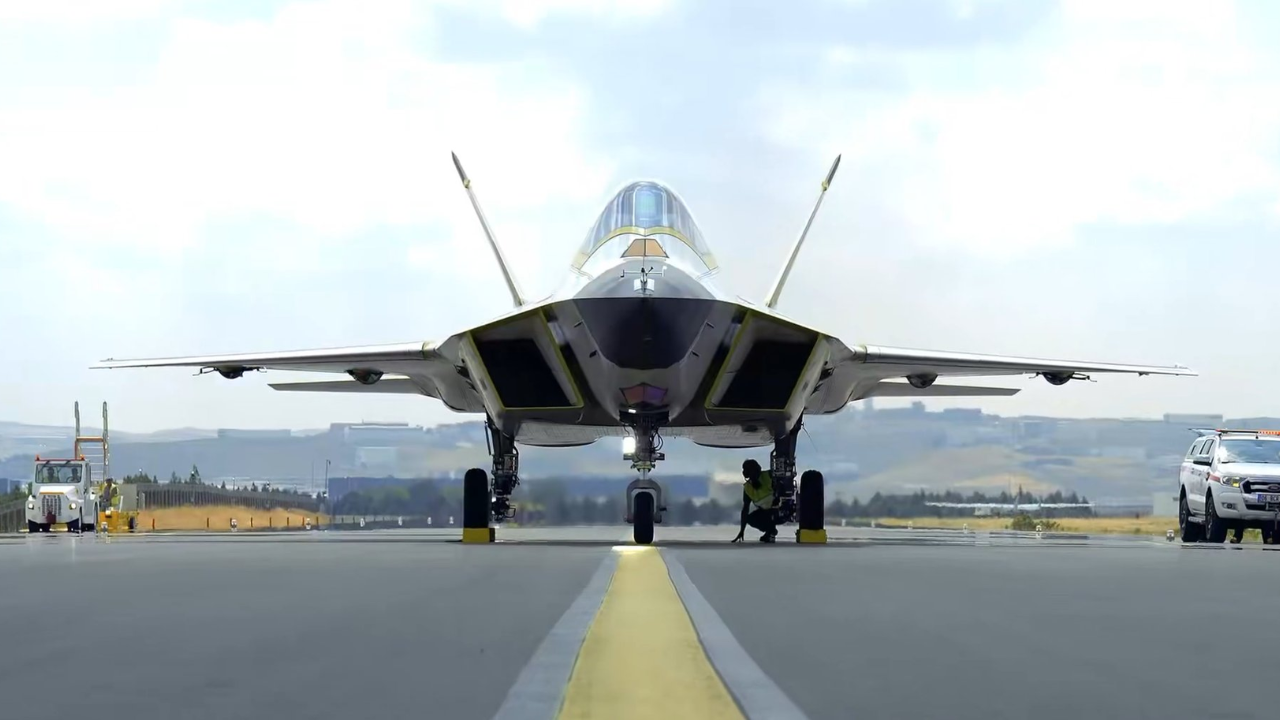
The KAAN, developed under Turkey’s National Combat Aircraft initiative, has already completed powered taxi trials with its P1 prototype at Turkish Aerospace Industries facilities in Ankara.
The maiden flight of the P0 demonstrator took place in early 2024, marking a rapid transition from conceptualisation to flight testing.
The P1 prototype, which has recently undergone taxi trials, incorporates refined aerodynamics, redesigned air intakes, advanced flight control software and an indigenous Turkish radar.
Although it is currently powered by imported General Electric F110 engines—the same engines used on the Turkish F-16—Ankara is developing its own TF35000 engine to ensure long-term self-reliance. Turkey's approach is notable for its multi-prototype testing strategy, with several airframes expected to fly soon, allowing different systems to be validated simultaneously and compressing development timelines.
Initial deliveries are expected to begin in 2028, with full-scale production planned for the early 2030s.
India’s AMCA programme, in contrast, has yet to produce a single prototype. The Aeronautical Development Agency (ADA) and Hindustan Aeronautics Limited (HAL) have completed the design phase and secured funding, but the first flight is unlikely before the early 2030s. Persistent challenges include delays in engine selection, slow progress in stealth material development, and the absence of a parallel prototyping strategy. The prototypes and the initial production variant will be powered by the GE F414 engine, which will also power the LCA Mk-2.
However, little progress has been made on the engine deal despite India and the United States agreeing to an 80% transfer of technology, with cost escalations and other issues delaying the signing of the final agreement.
The AMCA is envisioned as a twin-engine stealth fighter with internal weapons bays and advanced sensors, but tangible progress has remained slow. The deadline for opening bids to select one of the three entities competing for the programme has already been extended to the end of this month, further pushing timelines.
Turkey’s progress with the KAAN demonstrates how aggressive prototyping, indigenous sensor integration and sustained political prioritisation can accelerate development. India’s reliance on prolonged design cycles and foreign partnerships risks widening the gap. Unless timelines are compressed and indigenous capabilities are strengthened, India could fall further behind in the race to field a fifth-generation fighter—at a time when China already operates such aircraft in significant numbers and Pakistan is expected to acquire fifth-generation fighters from Beijing.
India (LOCATION)
Turkey (LOCATION)
KAAN (ORG)
Advanced Medium Combat Aircraft (ORG)
AMCA (ORG)
National Combat Aircraft (ORG)
Turkish Aerospace Industries (ORG)
Ankara (LOCATION)
Turkish (ORG)
General Electric (ORG)
The Aeronautical Development Agency (ORG)
ADA (ORG)
Hindustan Aeronautics Limited (ORG)
GE (ORG)
LCA Mk-2 (ORG)