
UK News
Nearly a fifth of British adults consider avoiding EU summer holiday as a result of border chaos
Key Points
Nearly a fifth of British adults consider avoiding EU summer holiday as a result of border chaos Exclusive: Nearly half of UK adults say the change to the EU border system – which has caused severe bottlenecks at European border checkpoints – has impacted their travel behaviour - Bookmark - CommentsGo to comments Nearly a fifth of UK adults have considered swapping a summer holiday in Europe for a staycation in Britain as a result of border chaos in the bloc, new polling has indicated, amid...
Nearly a fifth of British adults consider avoiding EU summer holiday as a result of border chaos
Exclusive: Nearly half of UK adults say the change to the EU border system – which has caused severe bottlenecks at European border checkpoints – has impacted their travel behaviour
- Bookmark
- CommentsGo to comments
Nearly a fifth of UK adults have considered swapping a summer holiday in Europe for a staycation in Britain as a result of border chaos in the bloc, new polling has indicated, amid growing calls for the new entry-exit system (EES) to be scrapped.
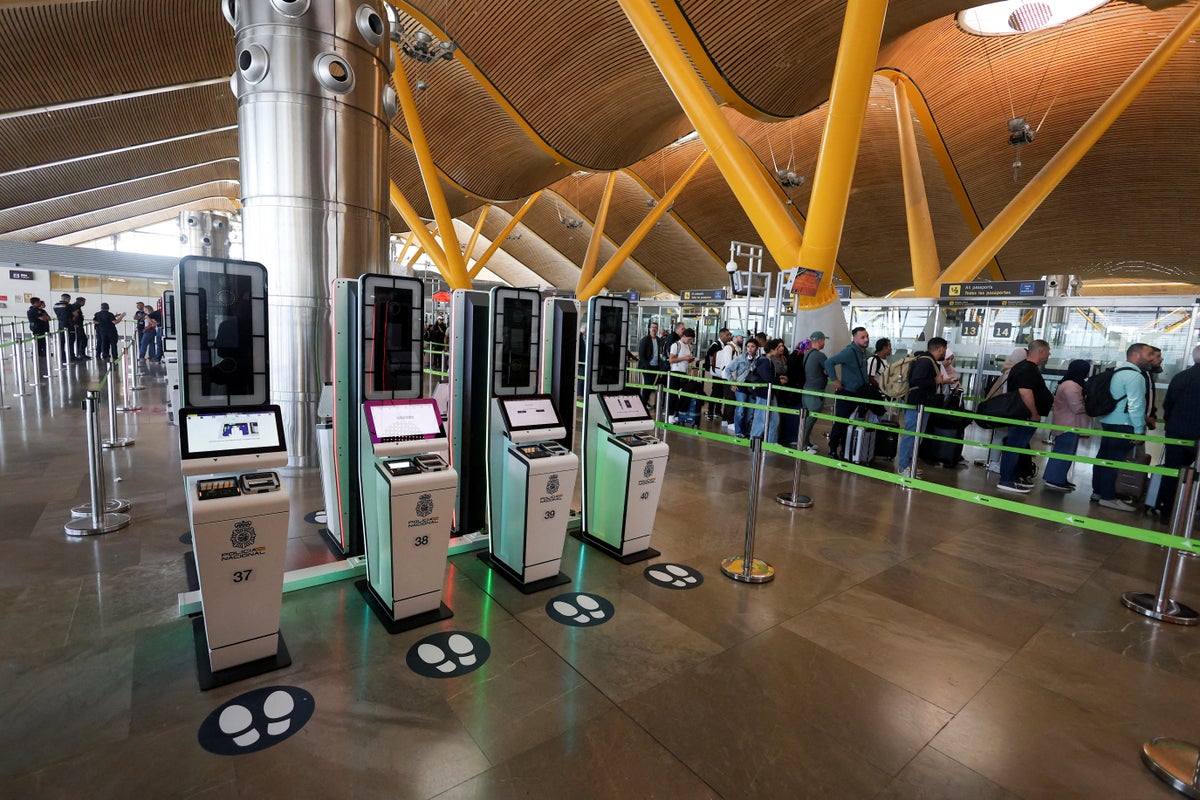
EES checks require travellers to give biometric data, fingerprints and facial scans, as well as registering their passport, when they travel to Europe for the first time.
But the scheme, implemented in late 2025 after a series of delays, has caused severe bottlenecks at European border checkpoints, leaving significant numbers of British holidaymakers and hauliers stranded in hour-long queues, with some missing flights or ferries.
Polling conducted by Savanta shows that 43 per cent of UK adults say they are either changing their travel plans, considering doing so, or feeling more anxious about going abroad.
Some 17 per cent of people said they would consider travelling at quieter times to avoid queues, while 16 per cent said they were feeling more stressed or worried about EU travel. Some 15 per cent said they were considering holidaying in UK instead of an EU trip.
Of the 2,381 UK adults surveyed online between July 17 and July 21 2026, 48 respondents said they have cancelled their trip outright as a result of the change to border rules.
The Chief Aviation Officer at Rome’s Fiumicino Airport revealed that the system has nearly tripled processing times at passport control. With peak-period wait times stretching to five hours, travellers are being forced to arrive abnormally early just to avoid missing their flights or ferries.
In June, the head of Europe’s aviation trade association told EU ministers to “stop pretending” that the region’s new biometric border control system is “working just fine”.
Stefan Schulte, president of ACI Europe, called on the European Commission to deliver a new aviation strategy that restores Europe’s “competitiveness” at ACI Europe’s annual assembly in Prague, saying that the current state of EES is “what keeps me and many other airport CEOs across Europe awake at night”.
Meanwhile, major industry bodies - including Airports Council International Europe, Airlines for Europe, and IATA - have issued a joint warning to the President of the European Commission, declaring that the situation has “reached a critical point” and calling for “immediate intervention before the situation deteriorates further”.
"The current implementation of the EES is creating severe operational consequences disrupting passengers and putting border authorities, airports and airlines under unsustainable pressure”, they wrote in a joint letter to Ursula Von der Leyen.
They continued: "Since the full rollout of the EES in April, waiting times at border control have increased significantly, now reaching up to 5 hours during peak traffic periods.
"These delays are impacting millions of passengers entering the Schengen Area, including families travelling with young children, elderly passengers and persons with reduced mobility. At the same time, airports and airlines are experiencing growing operational disruption, including flight delays and missed connections and increasing pressure on frontline staff.”
Last month, Liberal Democrat Europe Spokesperson Al Pinkerton wrote to former Cabinet Office minister Nick Thomas-Symonds – who has since been repalced by Hamish Falconer – urging the UK government to request an emergency meeting with the European Commission before the summer school holidays began on 20 July. It is udnerstood the government has yet to respond.
Mr Pinkerton told The Independent: “Millions of British families and travellers are facing the threat of travel misery this summer before they have even reached the beach, all because of the severe queues caused by the EU’s dysfunctional Entry/Exit System.
“It is deeply concerning that two in five UK adults are changing their travel plans, considering doing so, or feeling more anxious about going abroad. British families deserve a smooth journey on their holidays, not hours of misery stuck in queues.
“The government cannot simply sit on its hands while wait times stretch to six hours, with ports and airports hitting breaking point. It’s time Andy Burnham gets down to business and works directly with our European partners to secure sensible emergency measures to ease congestion before peak summer travel turns into complete chaos.”
But ABTA - the largest travel trade association in the UK - was more positive, insisting that the new system is "not proving a significant deterrent to travel in practice”.
A spokesperson for the organisation said: “Currently, destinations do appear to be taking a pragmatic approach which is prioritising passenger flow and seeking to minimise disruption.
"We have worked with the European Commission and destinations to encourage wider use of contingency measures to avoid queues, alongside adequate registration facilities, and staffing. The experience of members so far this summer suggests these measures are helping.
"ABTA calls on the Commission to extend contingency arrangements beyond September, and to continue to work closely with member states to ensure the system works properly in the longer term. For example, one area that needs improvement is the triaging of passengers who have already registered and do not need to go through the entire process, which could be delivered through improved signage and separate queues”.
A government spokesperson said: “While the new EES checks are a matter for the EU, we recognise this is a significant change for British travellers and are doing everything we can to get people away on their summer holidays with as little hassle as possible.
“We have provided £10.5 million to improve infrastructure at the Port of Dover, Eurotunnel and Eurostar, a further £20 million to increase passport-checking and vehicle-holding capacity at the Port of Dover and are supporting traffic management measures including, dedicated welfare sites where passengers can safely access food, water and facilities if severe disruption occurs.
“We are grateful to the French authorities for their close collaboration, and their recognition of the need for high levels of border staffing over the summer, and will continue to work closely with our EU, operational and local partners to minimise delays for holidaymakers, hauliers and local communities.”
Join our commenting forum
Join thought-provoking conversations, follow other Independent readers and see their replies
Comments