
Weather
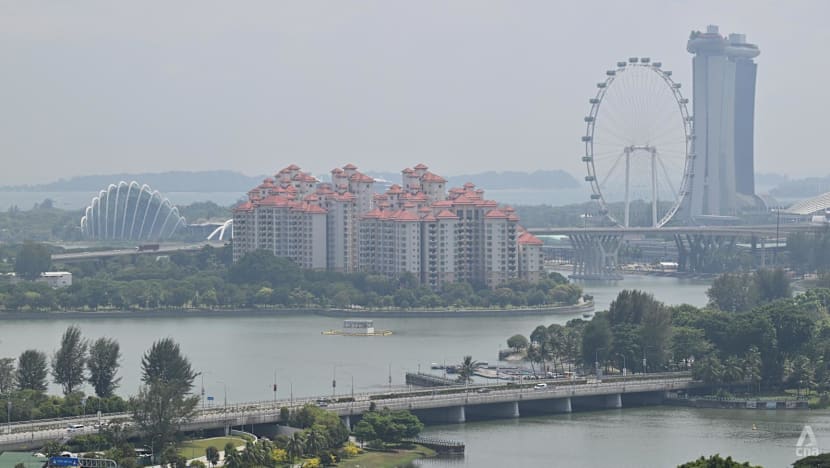
Dry conditions expected to continue next week, raising haze risk if hotspots in the region persist: NEA
Key Points
Dry conditions expected to continue next week, raising haze risk if hotspots in the region persist: NEA The 28 public agencies that make up the Haze Task Force are ready to roll out their respective action plans if air quality deteriorates into the unhealthy range, said the National Environment Agency. Dry conditions are expected to continue in the coming week, which could increase the risk of haze in Singapore if fires in the region persist, the National Environment Agency (NEA) said on...
Dry conditions expected to continue next week, raising haze risk if hotspots in the region persist: NEA
The 28 public agencies that make up the Haze Task Force are ready to roll out their respective action plans if air quality deteriorates into the unhealthy range, said the National Environment Agency.
SINGAPORE: Dry conditions are expected to continue in the coming week, which could increase the risk of haze in Singapore if fires in the region persist, the National Environment Agency (NEA) said on Sunday (Aug 9).
As of 1pm on Sunday, the 24-hour Pollutant Standards Index (PSI) reached 81 in the central region of Singapore, which is within the moderate range.
Recent dry conditions have led to an escalation in the hotspot situation, with hotspots and smoke plumes observed over parts of Sumatra and Kalimantan, NEA said.
"Under prevailing southeasterly winds, smoke haze could be transported towards Singapore, particularly from the hotspots in the southern parts of Sumatra," the agency added.
"NEA will continue to closely monitor the haze situation and provide further updates if the situation changes."
If the 24-hour PSI enters the unhealthy range - where it exceeds 100 - NEA will issue daily haze advisories, including the 24-hour PSI forecast, which the public can use to plan activities and events.
NEA also said the 28 public agencies that make up the government's inter-agency Haze Task Force (HTF) are ready to roll out their respective action plans if air quality deteriorates into the unhealthy range.
Chaired by the NEA, the HTF develops and implements plans to minimise and manage the impact of haze on Singapore, with agencies able to adopt tiered responses based on air quality readings and forecasts.
The task force convenes annually before the start of the dry season in June to update its plans. It has met twice so far this year - once at the end of January following peatland and vegetation fires in east Johor - and again in April.
PUBLIC ADVISED TO MONITOR AIR QUALITY
Members of the public should refer to the current one-hour PM2.5 concentration as an indicator of current air quality, as well as its associated personal guide when planning outdoor or strenuous activities, NEA said.
The reading can fluctuate throughout the day depending on weather conditions, particularly during periods of transboundary haze.
The effects of haze exposure can be reduced by cutting down on outdoor activities and physical exertion and staying hydrated.
Those with chronic heart or lung conditions should ensure that medication is readily available, while vulnerable groups - including the elderly, pregnant women and children - should seek medical attention promptly if they develop symptoms or feel unwell.
ASEAN LEVEL 2 ALERT
NEA's advisory comes after the ASEAN Specialised Meteorological Centre (ASMC) earlier this week raised its alert for the southern ASEAN region to Level 2, the second-highest level, signalling an increasing risk of transboundary haze.
The alert indicates escalating hotspot activity, with moderate to dense smoke haze observed over two or more consecutive days.
On Wednesday, Sustainability and Environment Minister Grace Fu said Singapore was ready to activate its response plans if transboundary haze affected the country's air quality.
She had said that national mask stockpiles were sufficient, while schools, preschools and residential and care facilities were equipped with air purifiers.
“Our priority is to protect the health of the public, particularly vulnerable groups, and to ensure that daily life and essential services can continue as normally as possible,” Ms Fu added.
Members of the public can also access updates via NEA’s website, the haze microsite, the myENV app and the agency's social media channels.