
Science
On this day in space! Aug. 9, 1976: Soviet Luna 24 sample return probe launches to the moon
Key Points
On this day in space! Soviet Luna 24 sample return probe launches to the moon Luna 24 was a robotic sample return mission and the third of its kind. On Aug. 9, 1976, the Soviet space program launched its last moon mission.
On this day in space! Aug. 9, 1976: Soviet Luna 24 sample return probe launches to the moon
Luna 24 was a robotic sample return mission and the third of its kind.
On Aug. 9, 1976, the Soviet space program launched its last moon mission.
Luna 24 was a robotic sample return mission and the third of its kind. It lifted off on a Proton-K rocket from the Baikonur Cosmodrome in Kazakhstan and safely landed on the lunar surface nine days later.
The probe landed in a dark plain of the moon known as Mare Crisium, or the "Sea of Crises" and collected 6 ounces (170.1 grams) of soil samples, which it brought back to Earth on Aug. 22, 1976. Scientists then found that the samples from Luna 24 contained tiny traces of water — about 0.1% by mass.
Why it mattered
The Soviet Union lost the Space Race to land the first humans on the moon, but its Luna program of robotic probes was prolific. The country's Luna 2 was the first spacecraft ever to land on the moon (it slammed into the lunar surface in 1959), with the more advanced Luna 9 making the first-ever soft-landing on the moon in February 1966, beating NASA's Surveyor 1 by about 4 months.
By 1976, 12 NASA astronauts had walked on the moon, the last two on Apollo 17 in 1973 and the Space Race was over. But the Soviet moon program was not, with Luna probes and Lunakhod rovers.
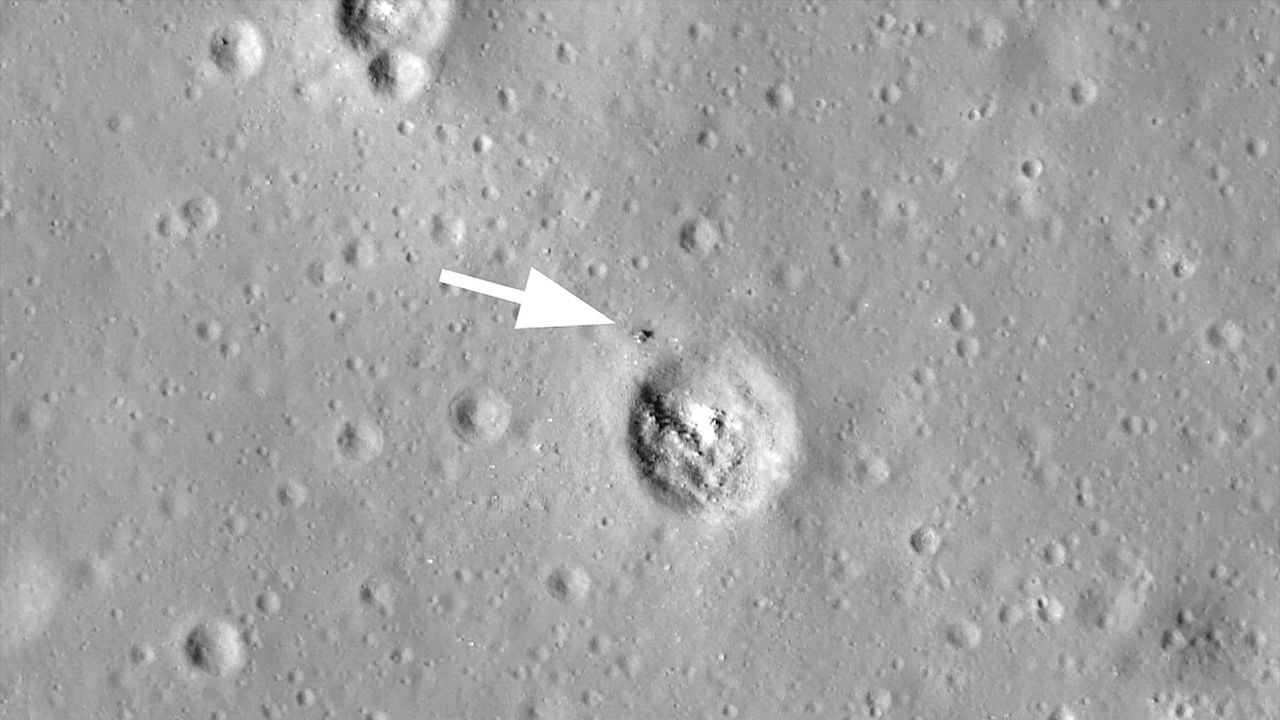
The Luna sample return missions consisted of a lander equipped with a descent stage, ascent stage and Earth return capsule. The probes could collect samples of the moon, place them in the return capsule on the ascent stage, then rocket it from the moon for the trip back to Earth. NASA's Lunar Reconnaissance Orbiter has captured photos of the descent stages of Luna 16, Luna 20 and Luna 24 still on the moon.
The Luna 23 spacecraft remained on the moon entirely, as it was damaged during landing and wasn't able to return a sample. NASA's LRO images later revealed Luna 23 likely fell on its side. But Luna 24, the last of the series, worked as planned, landing on Mare Crisium on Aug. 16, 1976, collecting a sample of the lunar regolith and launching back into space less than 24 hours later.
While Luna 24 was the last Soviet moon sample return mission, it was not the last for Russia.
In August 2023, Russia's Roscosmos space agency launched the Luna 25 mission, its first in 47 years, toward the lunar south pole.
Luna 25 was planned to be the first in a new fleet of moon probes, but ultimately crashed into the moon after an orbital maneuver went wrong.
Want more space history? Check out our full On This Day In Space Story archive and watch our On This Day In Space videos on YouTube.
You must confirm your public display name before commenting
Please logout and then login again, you will then be prompted to enter your display name.
Hanneke Weitering is a multimedia journalist in the Pacific Northwest reporting on the future of aviation at FutureFlight.aero and Aviation International News and was previously the Editor for Spaceflight and Astronomy news here at Space.com. As an editor with over 10 years of experience in science journalism she has previously written for Scholastic Classroom Magazines, MedPage Today and The Joint Institute for Computational Sciences at Oak Ridge National Laboratory. After studying physics at the University of Tennessee in her hometown of Knoxville, she earned her graduate degree in Science, Health and Environmental Reporting (SHERP) from New York University. Hanneke joined the Space.com team in 2016 as a staff writer and producer, covering topics including spaceflight and astronomy. She currently lives in Seattle, home of the Space Needle, with her cat and two snakes. In her spare time, Hanneke enjoys exploring the Rocky Mountains, basking in nature and looking for dark skies to gaze at the cosmos.
- Tariq MalikEditor-in-Chief
Soviet (ORG)
Luna (ORG)
Luna 24 (PERSON)
last moon (LOCATION)
the Baikonur Cosmodrome (LOCATION)
Kazakhstan (LOCATION)
Mare Crisium (PERSON)
the "Sea of Crises (EVENT)
Earth (LOCATION)
The Soviet Union (LOCATION)
the Space Race (ORG)
NASA (ORG)
Apollo (ORG)
Lunar Reconnaissance Orbiter (ORG)
LRO (ORG)