
Technology
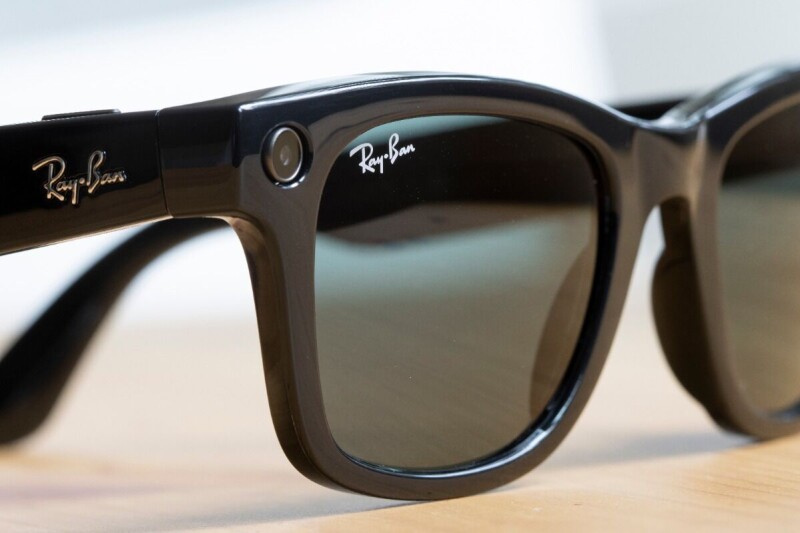
Smart glasses are only smart if we train them to be good. Then they'll be fantastic
Key Points
The most sobering observation in tech is not how much AI is taking on the appearance of the human mind. It's how much the human mind increasingly resembles Windows – not in functionality, although we all know that person, but in the way it crufts up and loses compatibility after years without an upgrade or reboot. We start shiny and new, with everything around us equally exciting, yet end up cursing all these damn changes and godawful broccoli-haired vibe coders.
The most sobering observation in tech is not how much AI is taking on the appearance of the human mind. It's how much the human mind increasingly resembles Windows – not in functionality, although we all know that person, but in the way it crufts up and loses compatibility after years without an upgrade or reboot. We start shiny and new, with everything around us equally exciting, yet end up cursing all these damn changes and godawful broccoli-haired vibe coders. AI has turned many of the finest minds of their generation into Luddites, fearful for their jobs, status, and dignity. Augmented reality pushes people back even further. With its ability to record, recognize, and categorize all that it sees, it is the silent, invisible spirit in a demonic pact with its users. We no longer fear for our jobs; we fear for our souls. Hence the reflexive bans on Meta-style sin-oculars, everywhere from cafes in Seattle to DEF CON, where tech provocations to the status quo are normally welcome. The reasons for such bans are obvious, evidence-backed, and seemingly inarguable. Security, privacy, and dignity are all poisoned and traduced by always-on 21st century audio, video, and who knows what other sensors disguised as everyday human objects with an 800-year history. Ban the buggers. Nobody would argue with that. There are, as always, counterarguments, although they lack the emotional force of an instinctive recoil. The logic is there nonetheless. Banning a technology rarely achieves its aims without collateral damage. Clandestine wireless bugs are frowned upon everywhere, obtainable everywhere, and used everywhere. Radio itself exists on a continuum of utility, from the dark side of bugging and jamming and spoofing and soft rock broadcasters, to the lovely light of Wi-Fi and mobile and the whispers of creation caught in giant telescopes. Augmented reality has its own spectrum, from the ghastly to the essential, even when you peel back the techbro hype. Very little of the good stuff requires covert live video recording. Put simply, people with GoPros on gimbals, strapped to their hats, or worn as conspicuous bodycams behave much better than people with spycams while retaining most of the useful applications. For others, smart glasses have the potential – if not yet quite the reality – of being life-changing. If you can't see well, but your AI companion can, and if the world isn't built to be visually accessible to your personal peculiarities, but your AI companion is… well, making the blind see has a decent track record of divine approval. DEF CON is great if you can see the screens and navigate the crowds. It's rubbish otherwise. Here is technology that could give all that back to you, only to be told you cannot have it. Imagine smart glasses as dogs. If by dog you mean aggressive wolf-derived predator, the preferred weapon of drug lords, with a track record of mauling babies and defecating in your dahlias, then it is a terrible thing. If by dog you mean an intelligent helper, loving companion, and loyal protector capable of guiding its human safely through danger, it is an indispensable, life-enhancing thing that should not be denied to those who need it. Both are true, and society has developed workable ways of accommodating one while controlling the other. Nobody would ever allow a Doberman in an operating theater (if you have counter-examples, please keep them to yourself). Likewise, few complain at "no dogs except guide dogs" policies at venues. We know their behavior, we know what they look like with white harnesses and reflective tabards. That's where we can and should go with smart glasses. Agree on acceptable behavior and a way to signal it to everyone within eyeshot. Allow accommodations where necessary. Develop the wherewithal – wear-with-all? – to find and control transgressors, creeps, and predators. The protocols will vary: few complain when asked to surrender electronic devices before entering a secure area, but a pub trying the same thing would get short shrift. It has the same shape as the path humans and dogs have followed since wolves first circled our campfires. Humans ran that show, and the outcome beat hunting the creatures to extinction. Domestication took many thousands of years, while we probably have five at most to work things out with smart glasses. On the plus side, even the worst-engineered pair cannot rip out our throats while we sleep (see above with what to do with counter-examples, thanks). It's best not to wait for unguided evolution to take its course. There is the possibility that smart glasses will follow the example of smartphones and sprout enough lenses that they grow to resemble the compound eyes of a mutant insect alien brain-hugger, in which case the problems will solve themselves. But while the industry remains determined to disguise its technology as ordinary fashionable eyewear, manufacturers must be pressed to show and tell. No, Meta, a small red light that can't be masked, honest, is not going to save you. Color-coding the frames to disclose capabilities, compulsory QR codes that ID what the glasses are and who's wearing them? Now you're talking. It'll kill the market? Find another way to tame your dogs, then. But they do need to be trained. Doubtless there were many around those campfires who had lived long enough to fully fear the encroachment of wolves. A long investment in the way things are makes change expensive, especially when the dangers are real and the benefits still theoretical. Yet change happened, and the descendants of those wolves helped the descendants of those humans to gain virtual sight. The rest of us did quite well out of it too. "No" is not the answer. The answer is "Yes, if." Good dog. ®