
Politics
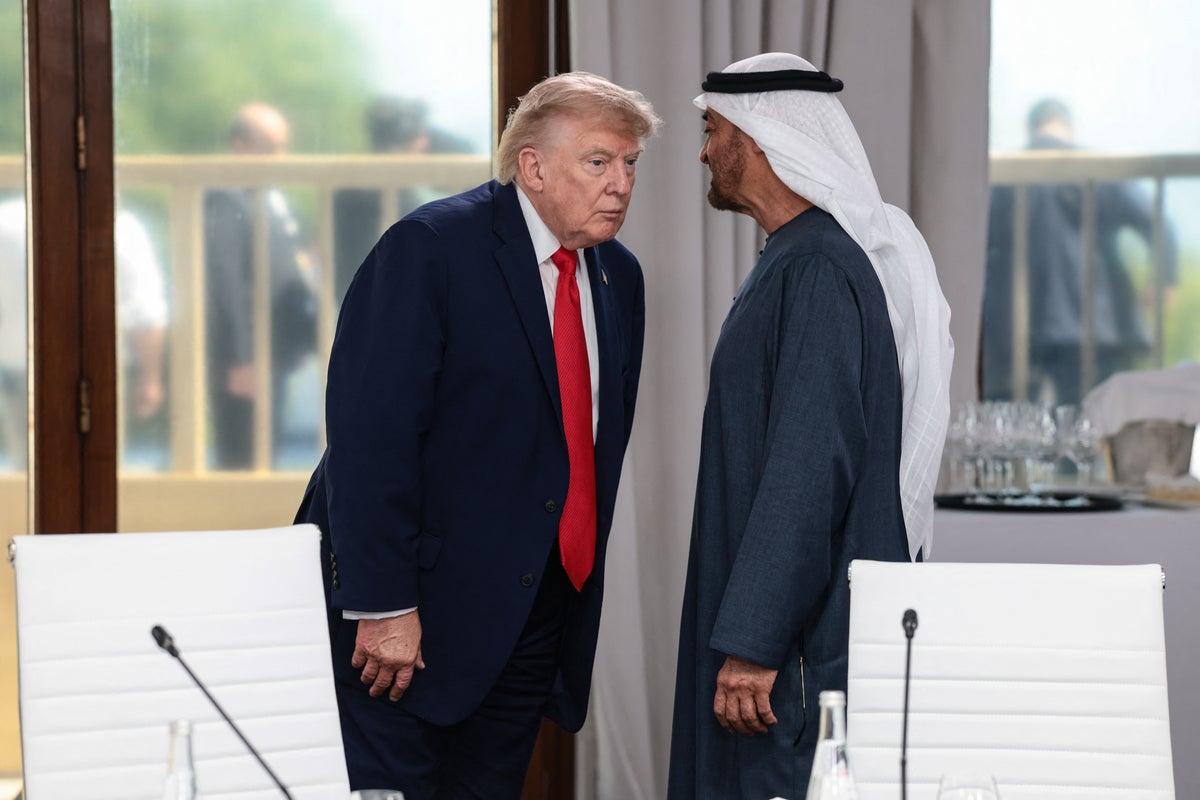
Trump generated $59.5M in his first year back in office by licensing his brand overseas
Key Points
Trump generated $59.5M in his first year back in office by licensing his brand overseas Foreign governments are putting money directly ‘into the sitting president’s pocket,’ one critic says - Bookmark - CommentsGo to comments President Donald Trump made a staggering $59.5 million last year by licensing his name overseas — after abandoning a first-term pledge against cutting foreign business deals while he's in the White House, according to a new report. The windfall came from agreements with...
Trump generated $59.5M in his first year back in office by licensing his brand overseas
Foreign governments are putting money directly ‘into the sitting president’s pocket,’ one critic says
- Bookmark
- CommentsGo to comments
President Donald Trump made a staggering $59.5 million last year by licensing his name overseas — after abandoning a first-term pledge against cutting foreign business deals while he's in the White House, according to a new report.
The windfall came from agreements with overseas developers to slap the Trump brand on luxury skyscrapers, golf courses and coastal resorts, CNBC said Monday, citing an analysis of Trump's latest financial disclosure filing.
Trump's haul reportedly increased 71 percent from 2024 and nearly 10 times what he raked in during 2023, helping boost a personal fortune that Forbes now pegs at $6.4 billion, up more than 25 percent since last year.
By comparison, the latest Census Bureau estimates show that median U.S. household income was $83,730 in 2024, up less than 1.3 percent from 2023, which the bureau called "not statistically different."
“Foreign governments and politically connected businesses now have a direct, incredibly visible way to put money into the sitting president’s pocket,” Scott Greytak of anti-corruption watchdog Transparency International U.S. told CNBC.
Ben Freeman of the Quincy Institute for Responsible Statecraft, a think tank that favors U.S. military restraint, also said, “Is this an America First foreign policy, or is this a Trump First foreign policy?”
CNBC said it didn't find any evidence that the licensing payments — 60 percent of which came from developers in oil-rich Gulf states — had influenced administration decisions, resulted in special treatment or led Trump to intervene on a company's behalf.
In response to an inquiry from The Independent, the White House referred questions to the Trump Organization, which didn't immediately respond.
CNBC quoted an unidentified White House spokesperson as saying the “only special interest” that guided Trump was “the best interest of the American people,” and highlighting more than $2 trillion in investment commitments and other deals announced during the president’s May 2025 trip to the Gulf region.
The Trump Organization also told CNBC that it operated “completely separate from the presidency," complied with all ethics and conflict-of-interest laws, and sought guidance from an outside ethics adviser.
During Trump's first term in office, his namesake company said it would pursue "no new foreign deals whatsoever" as sons Donald Trump Jr. and Eric Trump ran it for their dad, who declined to divest from it.
But earlier this year, Trump told The New York Times that the restriction was "really unfair to them" and that he "got absolutely no credit for it.”
“I found out that nobody cared, and I’m allowed to,” he said of the overseas business deals.
Eric Trump earlier told the Times that his family “did everything imaginable to avoid any appearance of impropriety” and “got crushed anyway.”
“We can’t just sit out in perpetuity, and I won’t,” he added.
The bulk of last year's foreign licensing income — about $22 million — came from projects linked to the United Arab Emirates, followed by $9 million tied to Saudi Arabia and $5 million involving Qatar, which has served as a mediator in failed negotiations to end Trump's war against Iran.
The UAE-backed Damac development company paid $11.3 million, including two $5 million payments tied to projects in Abu Dhabi, even though the Trump Organization has no active developments there, according to CNBC.
The money may cover contractual rights to use the Trump brand in the future or milestone-based fees, CNBC said.
Damac's CEO, billionaire Hussain Sajwani, is reportedly a longtime Trump friend, and he joined the then-president-elect at a January 2025 news conference to announce a planned $20 billion investment in U.S. data centers.
At the time, Damac owned the only Trump-branded golf course in the Middle East, which opened in 2027 in Dubai, according to Reuters.
Two days after their joint announcement, Sajwani told CNBC that he might pour additional funds into the U.S., saying, “Well I mean, the sky is the limit, we can invest more, as much as the market takes.”
Join our commenting forum
Join thought-provoking conversations, follow other Independent readers and see their replies
Comments
Trump (ORG)
- Bookmark - CommentsGo (PERSON)
Donald Trump (PERSON)
the White House (ORG)
CNBC (ORG)
Forbes (ORG)
Census Bureau (ORG)
U.S. (LOCATION)
Scott Greytak (PERSON)
Transparency International U.S. (ORG)
Ben Freeman (PERSON)
the Quincy Institute for Responsible Statecraft (ORG)
Trump First (ORG)
Gulf (LOCATION)
The Independent (ORG)