
Business & Finance
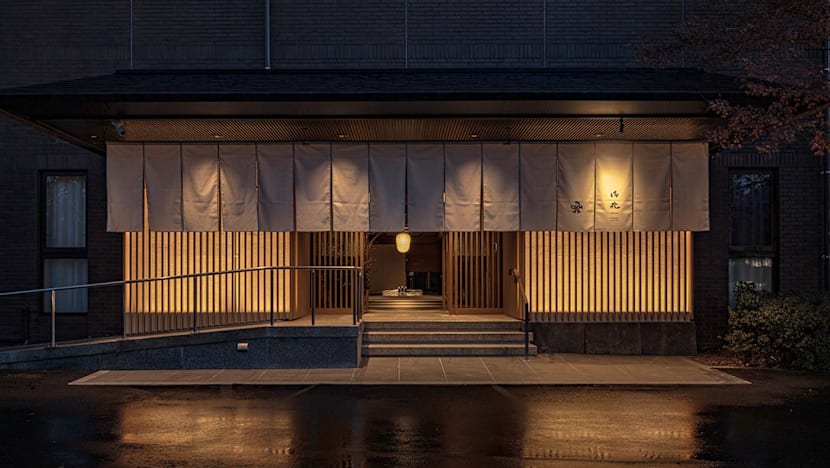
How a samurai family estate in Yanagawa became one of Japan’s most unusual ryokan stays
Key Points
How a samurai family estate in Yanagawa became one of Japan’s most unusual ryokan stays Ohana Ryokan survived post-war upheaval to become a living record of the Tachibana family, complete with historic rooms, a pine garden and canal-side experiences. Yanagawa is located an hour’s drive from Fukuoka city in Japan. One of its many charms is Ohana Ryokan, known for its historic architecture and the Shoto-en Garden with some 150 pine trees, many of which are estimated to be between 150 and 200...
How a samurai family estate in Yanagawa became one of Japan’s most unusual ryokan stays
Ohana Ryokan survived post-war upheaval to become a living record of the Tachibana family, complete with historic rooms, a pine garden and canal-side experiences.
Yanagawa is located an hour’s drive from Fukuoka city in Japan. One of its many charms is Ohana Ryokan, known for its historic architecture and the Shoto-en Garden with some 150 pine trees, many of which are estimated to be between 150 and 200 years old.The estate is nationally designated as a Place of Scenic Beauty – a category that also includes celebrated landscapes such as Arashiyama Bamboo Grove in Kyoto, and Mount Fuji and The Five Lakes. Ohana is the only property on this list where guests can stay within the grounds of a nationally designated Place of Scenic Beauty.
Spending several nights at Ohana allows visitors to experience the estate after day-trippers have left. Its history is intertwined with that of the Tachibana clan, which stretches back more than 400 years. Tachibana Muneshige, a celebrated warrior, became the first lord of the Yanagawa Domain in the early 17th century.
“Many samurai lived here. Alongside them, merchants and townspeople thrived, thanks to water transport via the Ariake Sea and the canals that shaped Yanagawa’s distinctive waterside scenery,” said Chizuka Tachibana, an 18th-generation descendant of the Tachibana family and CEO of Ohana, who took over the management of the property from her father in 2015.
The Ariake Sea has Japan’s largest tidal range, at approximately 6m, and at low tide, vast tidal flats extend between 5km and seven 7km offshore. Residents began reclaiming land for agriculture around 2,000 years ago. Over time, a 930km network of waterways developed, serving as irrigation channels, castle moats, flood-control infrastructure and a source of water for daily life.
OHANA RYOKAN’S BEGINNINGS
In 1738, the sixth-generation clan head, Sadayoshi Tachibana, established a residence on the site now occupied by Ohana Ryokan’s for his concubine and children. It remained in the family for generations. Chizuka’s grandmother, Ayako Tachibana, grew up on the estate as the daughter of Count Akinori Tachibana, during a period when Japan’s former feudal families had been incorporated into the modern peerage.
Ayako studied in Tokyo and accompanied her father on duck-hunting trips to the Ariake Sea. She also learnt to ski and play tennis, eventually winning the women’s doubles title at the 1933 All Japan Women’s Tennis Tournament with her partner. When she was 20, her father built her a tennis court in the garden, where she later held a reception when she married Kazuo Shimamura, a descendant of a samurai family. From the Mikan Suite, where I stayed last autumn, the former court was still clearly visible.
After World War II, Ayako converted the 23,000 sq m estate into a ryotei-ryokan – a traditional restaurant with accommodation – as a way to preserve the property. Japan’s post-war reforms had abolished the peerage, while agrarian reform and heavy inheritance and estate taxes eroded the fortunes of many former aristocratic families. Ayako relinquished the family’s Tokyo residence to retain the estate in Yanagawa, and Ohana opened as a business in 1950.
TRACES OF THE PAST
The family’s change in circumstances forced Ayako to build a new life around the estate. “They had no money – only this house. If my grandmother didn’t start Ohana Ryokan, the building wouldn’t be here. She was raised as a princess but after the war, became a commoner. But she was touch, charming and positive,” said Chizuka.
When she became the CEO, Chizuka embarked on a major restoration and renovation process that included seismic reinforcements to preserve the structures “for the next 100 years”. Original features were retained so that the ryokan would remain familiar to returning guests. Ohana reopened on Jan 11, 2025, as it marked its 75th anniversary as a hospitality business.
Today, walking through Ohana Ryokan is a journey through Japan’s history. ts most recent addition is a brick guest-room wing completed about 40 years ago and designed by Fuji Architectural Design. Several of the other historic buildingswere built in 1910 by Ayako’s grandfather, Count Tomoharu Tachibana.
Among the surviving structures is the Japanese-style kasei-kyoku, or household management office, which the ryokan says is the only building of its kind in Japan preserved in its original form. Now used for events, it is connected to the Grand Hall and Shotokan. Parts of these former family quarters have been repurposed as private dining rooms for Ryotei Shukeitei. Carved transoms bearing the Tachibana crest and original metal fittings offer glimpses of domestic life on the estate.
Right behind the main gates is a gleaming white, two-storey seiyo-kan or Western-style building, designed by Japanese architect Kichijiro Nishihara. He was also the man behind the Fukuoka Prefectural Office. With electric lighting, large glass windows, imported furnishings and chandeliers, it reflected Count Tomoharu’s interest in Western architecture and modern technology.
PLACES OF SCENIC BEAUTY
“Looking at the photos from 1910, you can see that many things have not changed. At that time, my great grandfather who was a feudal lord would let the locals come in to see the residence,” Chizuka said, recalling the estate’s occasional open days for the community.
I asked whether she had played in the garden as a child. “Not just the garden – everywhere!” she laughed, pointing to a balustrade that had once doubled as a slide.
In 1910, Count Tomoharu created the Shoto-en Garden as an expression of his appreciation for agriculture and nature. Unlike many Japanese gardens of its era, which were designed around changing seasonal flowers and foliage, Shoto-en is distinguished by a landscape composed almost entirely of pine trees. Designed as a viewing garden to be appreciated from the residence, its pond, rocks and approximately 150 black and red pines create a tranquil landscape that continues to convey Count Tomoharu’s aesthetic vision and relationship with nature.
From October to March, about 100 migratory ducks arrive at the pond from Siberia. “They stay for six months!” enthused Chizuka.
The Grand Hall’s engawa, or covered veranda, overlooks the garden, and overnight guests can linger there until 11pm with cups of Yame sencha. One evening, we watched spiders spin broad webs between the pine branches.
The next morning, these silvery artworks were gone after an overnight storm.
LOOKING TO THE FUTURE
We also admired the garden over kaiseki in one of Ryotei Shukeitei’s private dining rooms. Among the dishes was Yanagawa’s speciality, unagi seiro-mushi – grilled eel and rice steamed together in a bamboo container. “In the past, you could fish eel from the canals,” Chizuka said.
Children are offered smaller portions of the local eel dish, as well as more familiar options such as clubhouse sandwiches.
The 20 guestrooms were renovated to focus on the grand views and cater to different guest profiles. Three of its eight room categories were reconfigured, while existing architectural details – including tokobashira (alcove pillars), kamoi (lintels), shikii (thresholds) – were retained.The interiors also incorporate regional materials and craftsmanship, from Yame lanterns and stone to igusa tatami and black plaster.
The on-site Tachibana Museum houses approximately 50,000 works of art, craft objects and historical documents inherited by the Tachibana family, including one National Treasure and three Important Cultural Properties. Some of the artefacts include suits of armour from the 1600s carved with dragons, Muneshige’s war fan and helmet, and finely painted seashells used for games. There is also Raikirimaru (‘Lightning Cutter’), which is associated with the legend of the warrior Tachibana Dosetsu cutting through a bolt of lightning with his sword.
YANAGAWA’S SECRETS – FLOWERS, CRAFT AND FIREWORKS
Most websites suggest staying only a night or making a daytrip to Yanagawa. “If you stay longer, you can feel Ohana more,” Chizuka said. Like the feudal family of yore, embark on the historic dock in front of the guestroom wing to have breakfast on a donkobune, steered by rowers wearing pointy ajiro-gasa down the scenic canal.
Every season offers a different way to experience Yanagawa. Wisteria blooms in spring, summer evenings are illuminated by fireworks enjoyed from boats on the canals, autumn brings fields of sunflowers and during winter, guests can enjoy dumplings while riding a heated kotatsu boat.
In February 2025, Chizuka worked with Danish furniture company Fritz Hansen on an exhibition intended to draw new visitors to Yanagawa. Ohana Ryokan’s historic rooms were decked with colourful Danish furniture, whose craft sensibility felt at home in the storied spaces. Chizuka liked the pieces so much that she retained some chairs by the late Danish designer Poul Kjaerholm in one of the suites.
One morning, I asked Chizuka for some ideas on how to explore her hometown. Her suggestions led us to lunch at Cafe Feuille located within the Yama no Ie inn in a converted 199-year-old house. Its owners, Ryota Tsutsui and his wife, Kyoko, are also third-generation owners of Tsutsui Tokimasa Toy Fireworks Factory. It is only one of three factories left in Japan that still makes senko hanabi sparklers, which are popular during Japan’s summer festivals.
This was how we found ourselves scooping gunpowder into the tip of a piece of rainbow-coloured washi paper one afternoon, twisting them and then lighting them in a dedicated room. We stood transfixed each time we lit one, watching quietly as the coloured strings scattered delicate sparks of golden ohana.
HOW TO GET TO OHANA RYOKAN
By train
- From Fukuoka Airport, take the subway from Fukuokakuko Station to Tenjin Station. The journey takes about 10 minutes.
- Walk approximately 10 minutes to Nishitetsu Fukuoka (Tenjin) Station, then take a limited express train towards Omuta to Nishitetsu Yanagawa Station. The rail journey takes about 50 minutes.
- From Nishitetsu Yanagawa Station, Ohana is about 10 minutes away by taxi or ride-hailing car.
By car
- The drive from Fukuoka Airport or or Tenjin Station in Fukuoka cityto Ohana takes approximately 90 minutes, depending on traffic. Rental cars and taxis are available.
Yanagawa (LOCATION)
Japan (LOCATION)
Ohana Ryokan (PERSON)
Tachibana (PERSON)
Fukuoka (LOCATION)
Arashiyama Bamboo Grove (PERSON)
Kyoto (LOCATION)
Mount Fuji (LOCATION)
The Five Lakes (LOCATION)
Ohana (ORG)
Place of Scenic Beauty (ORG)
Tachibana Muneshige (PERSON)
the Yanagawa Domain (ORG)
the Ariake Sea (LOCATION)
Chizuka Tachibana (PERSON)