
World News
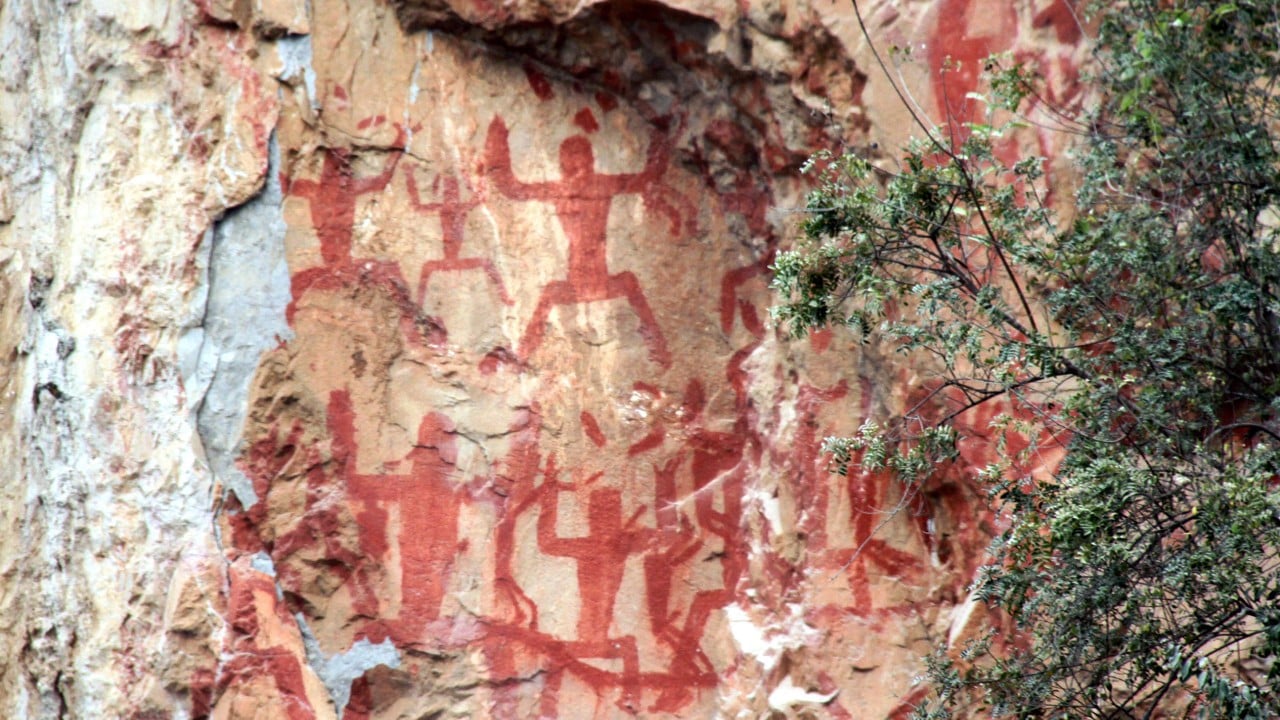
Despite extreme climate, China’s 2,000-year-old rock art owes survival to post-partum blood
Key Points
Despite extreme climate, China’s 2,000-year-old rock art owes survival to post-partum blood New study finds Huashan rock art formations were made using a mix of lime, red clay and blood On the southern edge of China, near the border with Vietnam, a breathtaking array of wall art stretches 260km and is over 2,000 years old. This extraordinary collection, known as Huashan rock art after its most notable site, is celebrated for its vivid imagery depicting humans, animals, boats, weapons, and...
Despite extreme climate, China’s 2,000-year-old rock art owes survival to post-partum blood
New study finds Huashan rock art formations were made using a mix of lime, red clay and blood
On the southern edge of China, near the border with Vietnam, a breathtaking array of wall art stretches 260km and is over 2,000 years old.
This extraordinary collection, known as Huashan rock art after its most notable site, is celebrated for its vivid imagery depicting humans, animals, boats, weapons, and musical instruments.
Located in Guangxi autonomous region, the site was designated as China’s 49th Unesco World Heritage site in 2016. Scholars believe these paintings illustrate the daily lives of the Luoyue people, an ancient ethnic group that once inhabited the borderlands of modern-day Vietnam and China.
Remarkably, the artwork has withstood the test of time despite the region’s relentless heat, humidity, torrential rains, and frequent typhoons. Its preservation has long intrigued scientists, considering its exposure to such harsh natural conditions.
Researchers may have uncovered the key to its longevity in a fundamental aspect of human existence.