
Business & Finance
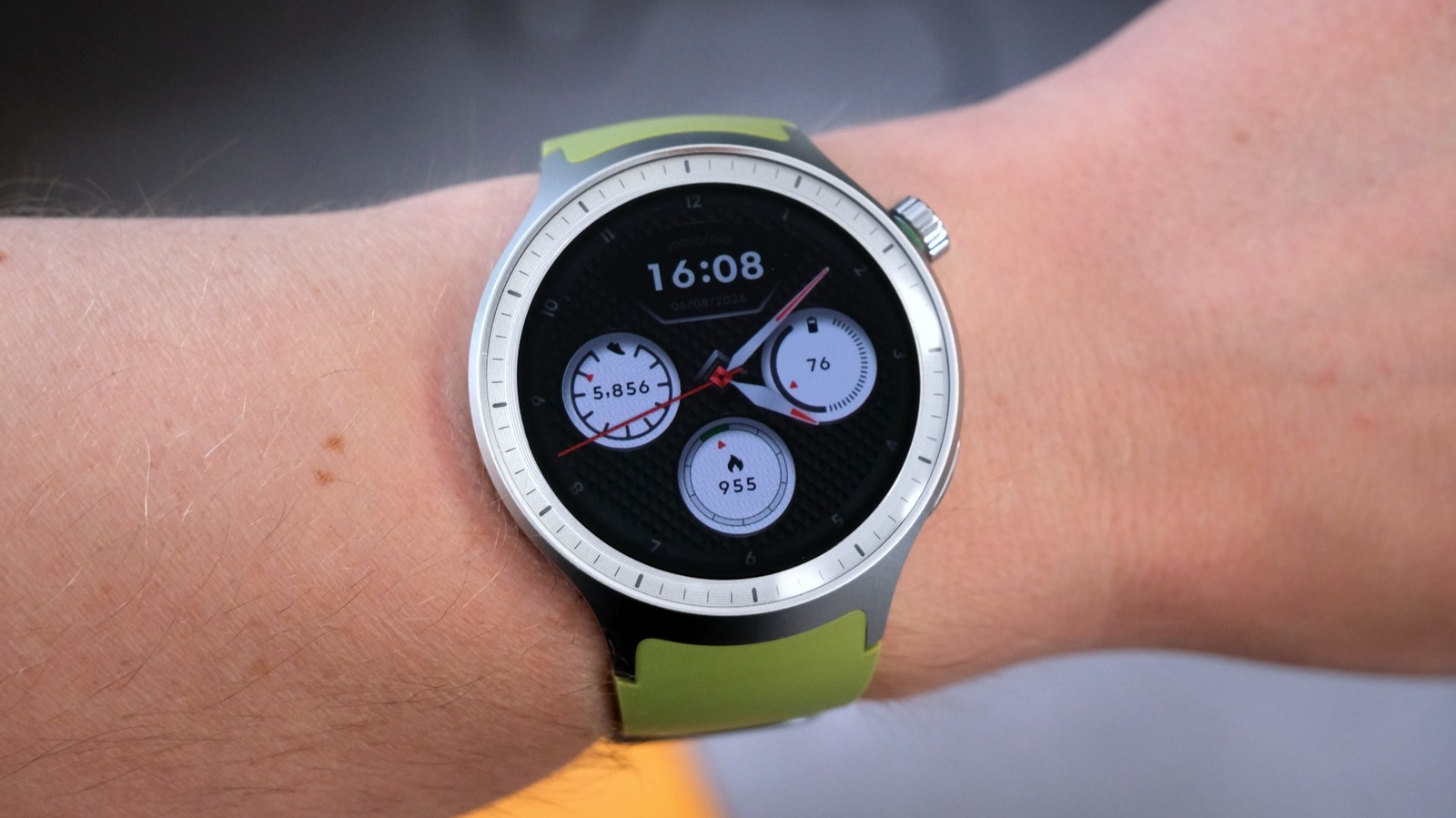
Motorola Moto Watch (2026) review: Looks can be deceiving
Key Points
Motorola Moto Watch (2026) review: Looks can be deceiving It has the heft of a quality watch, but it isn’t a quality watch. When I took the Moto Watch out of its box, I was instantly baffled as to how the company could sell it for just $150. After all, it's a good-looking timepiece, with the weight and heft of a watch that costs at least twice the price.
Motorola Moto Watch (2026) review: Looks can be deceiving
It has the heft of a quality watch, but it isn’t a quality watch.
When I took the Moto Watch out of its box, I was instantly baffled as to how the company could sell it for just $150. After all, it's a good-looking timepiece, with the weight and heft of a watch that costs at least twice the price. When you consider the other devices in this price range, like the Fitbit Charge 6, many of them are just fitness trackers rather than full-blown watches. I was hopeful that Motorola had found a way to produce a stylish and affordable wearable that was easy to recommend in these cash-strapped times. Thankfully, there's an easy explanation as to why it's on sale for so little money: It's not very good and while it looks like a Wear OS watch, it isn't.
Point of origin: Unknown
There's a question as to the provenance of the watch, and I think it helps to further explain some of the issues I have with it. Motorola is releasing the product through its own channels beside its own phones, and there's a Designed by Motorola slogan engraved on the underside. The retail box even lists Motorola Mobility as both the manufacturer and importer of the product, at least here in the UK.
The issue is that Motorola's last few watches were produced by CE Brands/Vitalist, a Canadian white-label manufacturer that licensed the Moto brand in 2023. CE Brands is also listed as the official licensee (and point of contact) when you go to the About page on the Moto Watch website. When I asked Motorola's representatives if they could tell me who made the Moto Watch, they said they did not have the information and were "unable to provide more details." It wouldn't be the first time Motorola has done this — the 2019 revival of the glorious and wonderful Moto 360 was made by a licensee.
Hardware
The Moto Watch may look and feel the part, but the illusion of quality fades as soon as you start handling it. Motorola sent me the special edition of the watch, which ships with both a steel link band and a green silicon sports strap, (in Pantone's Herbal Garden, color fans). When I tried to swap the steel band for the silicon, the retaining pins in the former slid out onto the floor. It's not uncommon on some cheap link bands, but it set the tone for what followed.
It has a 47mm aluminum case, a material likely to pick up scratches and dents over time. The crown, which has a lovely machined-in Motorola logo on its side, is made of stainless steel, which should be a lot hardier. It's got a 1.43-inch round OLED display protected by a Corning Gorilla Glass 3 crystal, and is IP68 rated. So far, it's much like so many Wear OS watches I could mention.
I can't find any details as to what system-on-chip is nestled inside the Moto Watch, and the company, similarly, said it couldn't respond to my queries on the matter. I suspect it's because the silicon inside isn't up to much, since whatever lurks below the display runs Real Time OS (RTOS). That's a low-power option better designed for embedded systems, giving you some clue as to the water "Motorola" is paddling in here. There's a battery (of unspecified size) with a rated life of up to 13 days, or a full week with the always-on display.
Rounding out the spec list is Bluetooth 5.3+ LE, a built-in speaker and microphone, dual band GPS and a 4GB eMMC card for media storage.
In-use
From this point on, every gripe I have with this device can be traced back to the fact that the Moto Watch does not run Google's Wear OS. It sure as hell looks like it does, and the UI is close enough that you could be fooled into thinking "Motorola" just skinned it. But it's not, and Real Time OS has enough limitations that you'll soon find yourself running into walls. I did wonder if this is part of why I've been so disappointed by this thing: The similar iconography raised my expectations beyond the point where they could have ever been met.
Even setting up the watch wasn't without its hiccups, for which you'll need to download the Moto Watch app. Two restarts later, I was able to get into the setup screen, which gives you the impression you can activate the watch without setting up a Motorola account. But, if you don't set up an account, the app will just freeze until you restart (again) and hand over your email. Then you're met with the tutorial, guiding you through the basics of the UI, where the animations and transitions all stuttered and froze while I was working through them.
There are several things the watch does that are baffling because they demand you make more effort than you should expect. Take notifications — most watches will default to relaying the notifications you get on your phone and let you pick and choose any differences manually. That's not an option here, and so you'll have to scrub through the list selecting only what you think deserves to reach your wrist. I get the logic, but the fact it's this way by default means it's too easy not to activate, for instance, Google Calendar reminders.
The watch will do plenty of the basics, including telling the time, while also tracking your heart rate, steps and calories burned. It offers stopwatches, timers, dashboards for your sleep tracking, a compass and remote camera shutter. You will be able to make calls from your wrist, when tethered to your phone, and there's even a dialer app inside the watch itself.
But because this isn't a Wear OS device, you don't get third-party apps. When it comes to adding music to the watch, you'll only be able to do so via whatever you have stored on your device. Not to mention there's no access to Google apps, no mobile payments and the manufacturer hasn't made any attempt to remedy that omission. The more you go looking for reasons to use this thing, the more reasons you find to not even try.
To burnish its fitness-tracking bona fides, "Motorola" paired up with Polar on the health and fitness features. There's Polar branding on the packaging, and on the health pane in the app, but not on the watch itself. Open the health tab and you'll instantly see some beautifully presented data to help you understand your vital statistics. Up top, you'll get the now industry-standard three rings denoting your steps, calories burned and active minutes. From there, you'll get dedicated sections covering activity, sleep, recovery, a log of your recent workouts, heart rate and physical stress levels.
Given the Polar tie-up, I hoped the Moto Watch would redeem itself with its health and fitness tracking prowess. Unfortunately, it fails to do the things even basic wearables from a decade or more were managing, such as automatic activity detection. If you go for a walk or a run, this thing isn't going to start automatically logging what you're doing. Maybe the watch is targeted toward people who are so obsessed with tracking their stats that they'll always start their watch before a workout. But, if that was the case, why are so many of the promotional images people wearing the Moto Watch in civilian clothes, rather than head-to-toe Gymshark?
At the very least, the list of exercises you can add to the quick shortcut menu is so vast you'll probably find your sport of choice. It's not just the standard ones like running and outdoor cycling, but things as diverse as boxing, jazz dancing, zumba, judo, kabaddi and hula-hooping. The options broaden out to include kite flying, tug of war and even darts.. Just don't forget to set the watch to record because even if you've sweat yourself inside out for 90 minutes, it's not going to notice unless you do.
And despite the promise of dual-frequency GPS, I actually found its performance here to be a little less than perfect. At times, I'd be outdoors and the watch couldn't find a signal, even without any tall buildings around — in areas where I've never had a problem before. This became more vexing when the outage was temporary, meaning you'd regularly have to deal with the watch's pre-recorded voice warnings.
If there's one area I cannot fault the company, it's in the battery life, which lasted longer than the promises. Even with the always-on display active, I was able to stretch this to eight days before I had to drop it on its charging puck. Although the less charitable explanation for that is that it was such a bad experience I had to force myself to make an effort to use the damn thing.
Wrap-up
The one word I've been unable to get out of my mind the entire time I've tested the Moto Watch is "fake." Not because it's (probably) a Motorola-branded timepiece produced by a third party licensee, and not to cast aspersions on the motives of the people who made it. But that the device on my wrist feels more like a fake Wear OS watch than a timepiece of their own creation. It doesn't help that, like so many fakes you see your friends brandishing after returning from a holiday, the appeal is only skin deep. From a distance, it looks like a compelling wearable, but up close and personal, it's anything but that.
[Image text:] 16:08
5.856
76
A
955