
Weather
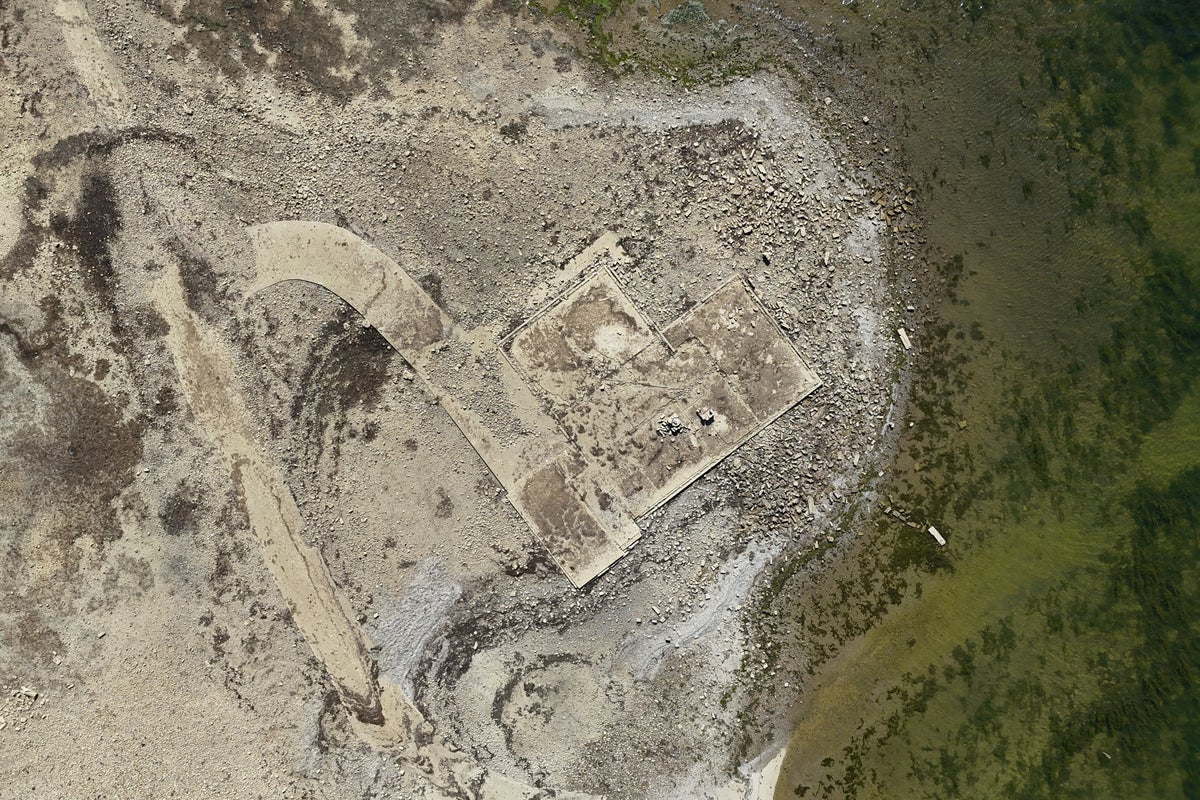
Remains of lost village uncovered as drought lowers reservoir levels in record-breaking heatwave
Key Points
Remains of lost village uncovered as drought lowers reservoir levels in record-breaking heatwave The hamlet was submerged to create a reservoir half a century ago - Bookmark - CommentsGo to comments The remains of a lost village demolished and flooded over 50 years ago have been resurfaced as England’s back-to-back heatwaves and dry weather continue to affect water levels. Nether Hambleton, in the East Midlands, was submerged to create Rutland Water reservoir in the 1970s. It became Europe’s...
Remains of lost village uncovered as drought lowers reservoir levels in record-breaking heatwave
The hamlet was submerged to create a reservoir half a century ago
- Bookmark
- CommentsGo to comments
The remains of a lost village demolished and flooded over 50 years ago have been resurfaced as England’s back-to-back heatwaves and dry weather continue to affect water levels.
Nether Hambleton, in the East Midlands, was submerged to create Rutland Water reservoir in the 1970s. It became Europe’s largest man-made lake at the time, with over 3,000 acres of land flooded.
Exceptionally low water levels in the reservoir have now revealed stonework and foundations of the lost buildings, around half a century after they were demolished.
The village was part of the wider parish of Hambleton, which now exists only as Upper Hambleton in the heart of the peninsula at the centre of the reservoir.
The creation of the reservoir, which involved damming the Gwash valley near Empingham, was finished in 1976 and flooding took a further three years, Leicestershire and Rutland Wildlife Trust said.
Residents of Nether Hambleton were relocated to surrounding areas when Rutland Water was created. The development was designed to meet the growing water needs of the East Midlands at the time.
At its maximum, the reservoir is 34 metres deep, but the extremely dry conditions has revealed the stonework left behind after the demolition of Nether Hambleton.
England reservoir levels fell 16 per cent during July according to the Environment Agency, marking the biggest reduction in the month for at least 30 years.
Around three-quarters of the country and the entirety of Wales is now living in official drought conditions as high temperatures and severely low rainfall continues to affect water levels.
Rainfall across the East Midlands has been below average for the past five consecutive months, the Environment Agency said, with the spring and summer period the driest since 1995 and July being the driest on record.
Rainfall totals for July were classed as exceptionally low across all English regions according to the agency, and the driest July on record for all regions except the north-west, where it was the second driest.
In the south-east, rainfall totals were at just one per cent of the expected average. Parts of Hampshire, the Isle of Wight and West Sussex have now not seen rain for around two months.
The Environment Agency has said 71.3 per cent of England is now experiencing a “flash drought”, where a combination of low rainfall and high temperatures causes conditions to develop “very quickly”.
The UK is also braced for the fifth heatwave of the year, with temperatures in some areas forecast by the Met Office to reach the mid-30s again this week.
Conditions are set to give way to more usual temperatures and some rain over the weekend, but forecasters warn it is not set to be enough for water levels to recoup.
Tony Grayling, Strategic Drought Lead at the Environment Agency and Chair of the National Drought Group, said on Monday: “Drought conditions are worsening and will continue to do so until we see significant and sustained rainfall.
“We know the hot and dry weather is taking a real toll on farming and there will be long-lasting impacts on our environment.
“We want everyone to stay safe and hydrated over the summer, but we need everyone’s help in using a little less water to make sure our current water reserves last. Every drop we can save is a drop more for your local farmers, local wildlife and local rivers.”
Join our commenting forum
Join thought-provoking conversations, follow other Independent readers and see their replies
Comments
England (LOCATION)
Nether Hambleton (PERSON)
the East Midlands (LOCATION)
Rutland Water (ORG)
Europe (LOCATION)
Hambleton (LOCATION)
Upper Hambleton (LOCATION)
Gwash (PERSON)
Empingham (LOCATION)
Leicestershire (LOCATION)
Rutland Wildlife Trust (ORG)
the Environment Agency (ORG)
Wales (LOCATION)
English (ORG)
the Isle of Wight (ORG)