
Politics
Colombia’s deadly earthquake tests new president as search for thousands of missing continues
Key Points
Colombia’s deadly earthquake tests new president as search for thousands of missing continues Colombian President Abelardo de la Espriella stated that at least 181 people perished in the 7.4 magnitude earthquake that struck Monday - Bookmark - CommentsGo to comments Rescue crews and local civilians worked painstakingly through heavy wreckage Tuesday, seeking to locate survivors trapped beneath debris after a powerful earthquake left thousands missing across dozens of cities and towns in...
Colombia’s deadly earthquake tests new president as search for thousands of missing continues
Colombian President Abelardo de la Espriella stated that at least 181 people perished in the 7.4 magnitude earthquake that struck Monday
- Bookmark
- CommentsGo to comments
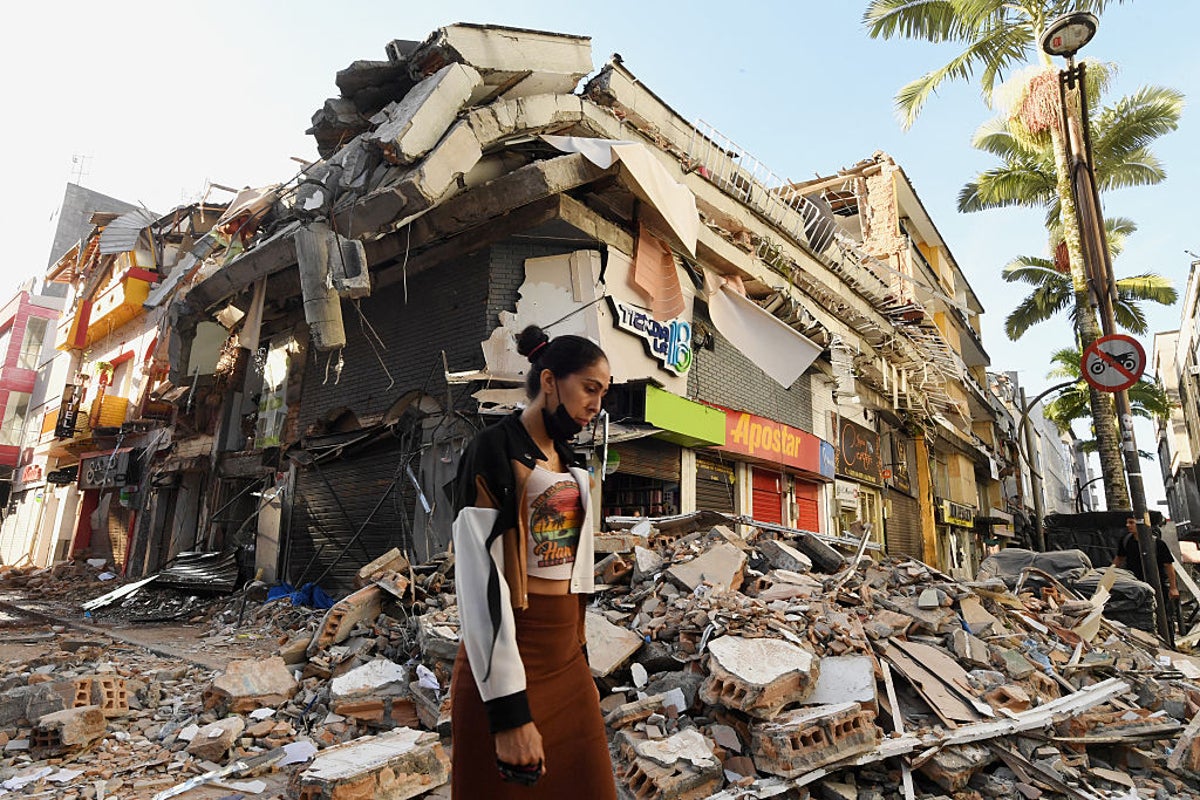
Rescue crews and local civilians worked painstakingly through heavy wreckage Tuesday, seeking to locate survivors trapped beneath debris after a powerful earthquake left thousands missing across dozens of cities and towns in western Colombia.
Colombian President Abelardo de la Espriella stated that at least 181 people perished in the 7.4 magnitude earthquake that struck Monday. He noted that roughly 2,595 others suffered injuries and at least 195 remained unaccounted for, though civilian-managed records indicate the missing total could reach 3,900.
De la Espriella added that 1,136 homes were destroyed and others damaged.
Officials reported that fatalities were concentrated in urban areas such as Cali, Pereira, Manizales, and Quibdo. However, local leaders and families expressed concern over casualties and destruction across rural regions, where minimal information has surfaced. Relief agencies view the initial 48 to 72 hours as critical for rescuing survivors, though that window can extend if individuals possess food and water.
Troops, emergency responders, and relatives combed through debris Tuesday, manually relaying heavy slabs of concrete down human chains of volunteers.
Waiting beside the ruins of his brother's destroyed apartment building in Pereira, Jairo Vargas explained that he completed the 220-kilometer (135-mile) journey from Medellin in hopes of finding him alive.
"I’m absolutely certain he’s here. Absolutely certain," Vargas said, adding that his brother’s automobile was still parked outside the structure. Even so, he harbors deep fears that his sibling did not survive the disaster.
"The debris surrounding my brother is soft," he said, with heavy equipment rumbling nearby. "It’s possible that it’s protecting him, but we can’t hear any noises anymore. I don’t know. I have little hope."
Colombia's new president faces his first serious challenge
The earthquake presents the first major test for first-time officeholder de la Espriella, who entered office just days before the natural disaster. The leader, who split the country in recent elections, now seeks to unite Colombia in its disaster response.
That challenge was particularly notable in Choco, the region surrounding the quake’s epicenter. It is one of Colombia's poorest and most neglected regions, often beset by warring armed groups. Much of Choco is accessible only by boat, through the jungle or by airplane.
Sterling Palacios, a religious and environmental leader in rural parts of the region, said Choco's capital was devastated along with smaller communities dotting the Atrato River, the region's most important throughway.
Homes there have been reduced to rubble and aftershocks continued to rumble, terrifying residents who slept in the streets overnight.
“There are towns where people have lost everything, where people have died, where homes have been destroyed,” he said. “We don’t have a full panorama of the damage, but we know it’s been massive.”
De la Espriella traveled to Quibdo in Choco on Monday night where he announced he was mobilizing “the entire military and police apparatus,” as well as deploying engineers, rescue workers and search dogs.
“Choco will never again be the ‘land of the forgotten,’” he said.
Palacios said the government's response has so far been “concentrated in the capital,” and that authorities flew the wounded from Quibdo to hospitals in the city of Medellín.
The biggest challenge, he said, remains towns in rural areas only reachable by boat — journeys that can take hours or days. That response is also complicated by a toxic slate of armed groups warring for control of the region who, during the COVID-19 pandemic, blocked healthcare workers from traveling to remote areas.
He said it could take locals and officials weeks to get a full scope of the devastation there.
“It's a risk and it's very difficult to predict” what could happen, he said.
Desperate residents seek news of their loved ones
Families posted information about missing loved ones on citizen-run websites.
Dana Carolina Zamora posted an image of her missing 60-year-old uncle, Miguel Ángel Zamora, cradling his dog. The farmer was living in a rural area of El Cairo, not far from the quake's epicenter in San Jose Del Palmar.
Local authorities said 80% of El Cairo, a town of about 7,000 people, was damaged. Zamora said her uncle lived in a traditional house of sticks and mud.
“We are afraid. We hope that is not the case, that he is all right and that it is only a communication failure. But we haven’t heard anything from him,” Zamora said.
The earthquake left many people unnerved after back-to-back quakes devastated neighboring Venezuela in late June, destroying hundreds of buildings and killing more than 6,300 people.
Mónica Sánchez owns a small company that makes work uniforms. Her home city, Pereira, was one of the worst hit, and a wall inside the factory collapsed. Sánchez and her 12 workers got outside just in time.
“It was shocking — the city fell down around us,” she said.
In Pereira on Tuesday, one military search team shouted, “Can you hear me!” into the rubble of a collapsed building. Excavators and heavy machinery were seen clearing heavy chunks of concrete.
Pereira’s municipal government said at least 58 buildings collapsed, while Cali Mayor Alejandro Eder said at least 40 buildings had collapsed.
Both cities enforced curfews Monday night to prevent looting. And in Pereira, the city government has banned privately owned vehicles from circulating, to clear the way for ambulances, police and rescue workers.
The U.S. State Department has announced it would provide $15.5 million for emergency shelter, food and other aid. Governments across Latin America have also lined up to help.
“This has been a tragedy for the whole city, for thousands of families,” Pereira Mayor Mauricio Salazar told local media, his voice quavering. “But here we are, and we will continue forward with the hand of God.”
Join our commenting forum
Join thought-provoking conversations, follow other Independent readers and see their replies
Comments