
Politics
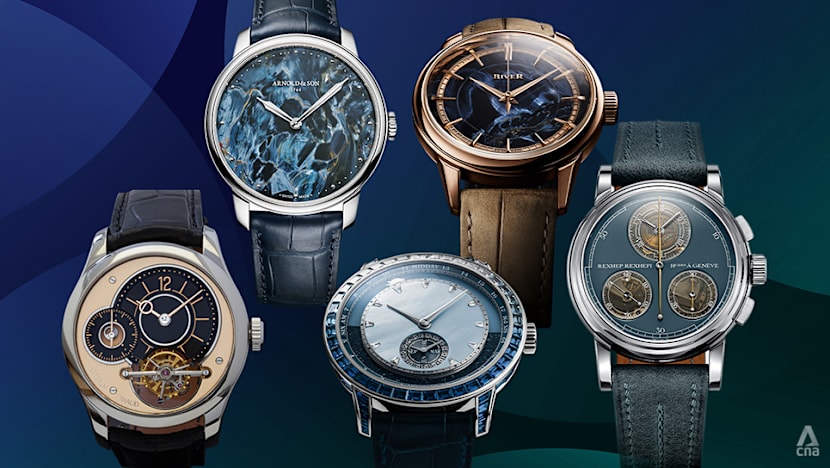
Beyond Rolex and Patek Philippe: The independent watch brands worth knowing
Key Points
Beyond Rolex and Patek Philippe: The independent watch brands worth knowing For seasoned collectors, some of the most exciting watches today come from tiny manufactures producing just a handful of pieces each year. If you’re a watch enthusiast, you’ll be familiar with the drill. Try buying one of the most coveted watches – an Audemars Piguet Royal Oak, a Patek Philippe Nautilus or a Rolex Daytona, for instance – and chances are you’ll end up on a waiting list longer than the queue at Yo-Chi.
Beyond Rolex and Patek Philippe: The independent watch brands worth knowing
For seasoned collectors, some of the most exciting watches today come from tiny manufactures producing just a handful of pieces each year.
If you’re a watch enthusiast, you’ll be familiar with the drill. Try buying one of the most coveted watches – an Audemars Piguet Royal Oak, a Patek Philippe Nautilus or a Rolex Daytona, for instance – and chances are you’ll end up on a waiting list longer than the queue at Yo-Chi.
The recent frenzy over the Audemars Piguet x Swatch Royal Pop collection only reinforced the point: Demand for sought-after watches shows little sign of abating, even amid a broader luxury slowdown.
But speak to seasoned collectors and a different picture emerges. For those who already own the usual grail watches, the names highest on their watchlist – pun intended – may not be the ones splashed across Orchard Road billboards, but tiny independent manufactures, some producing just 10 to 12 watches a year.
These aren’t microbrands chasing Kickstarter fame, either. Many command six-figure prices and years-long waiting lists, with followings that can border on the cult-like. There’s a good chance you’ve never heard of them – it’s all very insider, very IYKYK – which, for some collectors, is precisely the appeal.
Consider this your cheat sheet to seven independent watchmakers worth knowing. Whether you want to venture deeper into this arcane world or simply keep up with that watch nerd in the office who won’t stop talking about his latest weekend discovery, a little horological knowledge can’t hurt.
Akrivia: The wunderkind of independent watchmaking
Ask a younger generation of watch collectors to name their idols, and Rexhep Rexhepi’s name is likely to come up.
His story has all the makings of a Netflix drama: Born in Kosovo, Rexhepi arrived in Switzerland at 11, joining his father as war unfolded in his homeland. A few years later, he began an apprenticeship at Patek Philippe.
While most people his age were still figuring out what they wanted to do, Rexhepi had already worked at Patek Philippe and FP Journe. By 25, he had founded his own Geneva atelier, Akrivia.
In its early years, Akrivia became known for unapologetically modern watches with striking, openworked dials and ambitious complications. It was almost as if Rexhepi wanted to show exactly what he could do.
Then came an unexpected pivot in 2018. Rexhepi unveiled the deceptively simple three-hand Chronometre Contemporain, whose restrained design put his extraordinary hand-finishing and traditional construction methods firmly in the spotlight. Collectors took notice.
Today, Akrivia remains a tiny operation, producing only a few dozen watches a year, each finished and assembled by hand. Demand far exceeds supply, with waits stretching into years and pieces often commanding premiums on the secondary market.
Rexhepi’s most loyal fans debate whether he’s one of the greatest living watchmakers, while his detractors point to inflated prices and increasingly conservative designs. But even they cannot fault the quality of the workmanship.
Armin Strom: The engineers who wear their hearts on their sleeves
Not too long ago, watch movements were kept hidden within their cases, tucked between the dial and caseback like undergarments that were only meant to be seen by the wearer – the watchmaker servicing them.
By the turn of the millennium, more watchmakers were bringing movements into view. After all, why hide something beautiful that you’ve spent years developing, building and finishing?
This is the philosophy that Swiss marque Armin Strom ran with – “transparent mechanics” – and it’s a concept that the brand has stuck with faithfully, ever since businessman Serge Michel and master watchmaker Claude Greisler acquired and revitalised the brand in 2006.
Today, the independent manufacture is known for placing gears, bridges and balance wheels proudly on the dial side while retaining an unexpectedly elegant aesthetic.
Its Mirrored Force Resonance, launched in 2016, remains perhaps its best-known creation. The watch builds on the centuries-old phenomenon of mechanical resonance, whereby two oscillating balance wheels gradually synchronise with each other to improve precision and stability.
This wasn’t an easy feat to accomplish. The phenomenon was first explored by 17th-century Dutch physicist Christiaan Huygens, and later championed by watchmakers like Abraham-Louis Breguet. Translating the principle convincingly to a wristwatch, however, remains exceptionally difficult.
Its watches may look overly technical or industrial to some, but Armin Strom’s appeal lies in pursuing original engineering solutions rather than simply adding complications for their own sake.
Arnold & Son: An English legacy, rebuilt in Switzerland
Arnold & Son is like that impossibly international friend – born in one country, raised in another and now living somewhere else entirely.
The brand has its roots in 18th-century England with its founder John Arnold. It lay dormant for a century before being revived by a Swiss umbrella company in 1995. Later it was acquired by Swiss movement manufacturer La Joux-Perret, before the latter itself was snapped up by Japanese giant Citizen.
The result is a brand with Japanese ownership, Swiss production and an identity rooted firmly in English watchmaking history.
That history is formidable. Arnold was one of the great horological innovators of his era, producing highly accurate marine chronometers that helped navigators determine longitude at sea. He was also a friend and collaborator of Abraham-Louis Breguet and counted royalty as his clients.
Today, that legacy is expressed through technically sophisticated movements and a signature symmetrical dial layout. Notable inventions such as the Constant Force Tourbillon 11 – inspired by one of Arnold’s pocket chronometers – showcase history and modernity at the same time.
Other examples include the Luna Magna, which features one of the largest three-dimensional moonphase displays ever fitted to a wristwatch.
With La Joux-Perret functioning as the exclusive movement supplier for Arnold & Son, the brand boasts an annual production of less than 1,000 pieces. Its focus on astronomy, chronometry (precise timekeeping), and world time is a hat tip to its maritime heritage.
Biver: Jean-Claude Biver finally puts his own name on the dial
With his bald pate, intense, piercing gaze and larger-than-life personality, Jean-Claude Biver has long been one of watchmaking’s most recognisable executives. The former TAG Heuer CEO, who stepped back from operational duties in 2018, is credited with reviving Blancpain, helping to reposition Omega and turning Hublot into a global luxury-watch powerhouse.
After decades spent building other companies, Biver decided to put his own name on a watch. In 2023, he and his son Pierre created Biver, with the aim of building watches coded in the ways of Swiss traditional watchmaking.
That meant traditional movement architecture, meticulous hand-finishing, and craftsmanship of the highest order. With expectations sky-high, Biver’s debut piece, the Carillon Tourbillon, did not disappoint. Featuring no less than a minute repeater with cathedral gongs and a tourbillon regulator, the watch signalled Biver’s ambitions at the highest end of watchmaking.
In the three years since, the brand has become one of independent watchmaking’s most closely scrutinised marques, with an annual production of around 100 to 150 pieces. Part of the fascination lies in seeing a figure who helped shape modern Swiss watchmaking finally create watches under his own name, alongside his son.
Of course, there are sceptics. For them, it’s a question of whether the watches – which are priced well into the six-figure range – have true horological value, or whether they’re simply riding on the coattails of Biver’s celebrity.
Krayon: The watchmaker who reinvented the sunrise
You have to hand it to Remi Maillat. In an age of smartphones, the Swiss watchmaker still insisted on chasing his dream: Creating a mechanical timepiece that tells you the sunrise and sunset times from wherever you are in the world.
In 2017, he achieved his goal with Everywhere, the world’s first wristwatch capable of calculating sunrise and sunset times for virtually any location on Earth. The audacity of that complication quickly established Krayon as one of the more technically inventive names in contemporary independent watchmaking.
Maillat, a movement designer by training, founded his brand in 2013 and now produces around 40 to 50 watches a year. The success of Everywhere was followed by Anywhere, a simplified (and more accessible) version of the same concept; and Anyday, a calendar watch that displays the days of the month, with weekends rendered in a lighter colour. The idea was to let wearers plan their schedules with just a quick glance of the dial.
It is this sense of practical ingenuity that gives Krayon its appeal. The complications feel genuinely useful rather than engineered simply to impress, while the mechanics remain anything but simple.
Krayon is a reminder that even in an industry more than 300 years old, there are still entirely new complications waiting to be invented. That's no mean feat, and why many enthusiasts feel that Maillat has become such a respected figure in contemporary independent watchmaking.
Kudoke: The quiet German craftsman collectors adore
German independent watchmaker Stefan Kudoke has been toiling away in his atelier for more than 20 years, yet his eponymous brand remains little known outside serious collecting circles.
His watches feel like the sort you might stumble across in a small Saxon watch shop – quietly beautiful, deceptively simple and finished with extraordinary care.
But make no mistake – Kudoke is no lightweight. He trained at Glashutte Original, Breguet and Blancpain before striking out on his own, and has since won two prizes at the Grand Prix d’Horlogerie de Geneve.
With less than 100 pieces produced each year, Kudoke’s creations are divided into two broad collections, Handwerk and Kunstwerk. While Handwerk oscillates between Bauhaus minimalism and a steampunk aesthetic, Kunstwerk leans fully into the watchmaker’s artistic side, with engraved, skeletonised movements and the occasional Art Nouveau-style floral motifs.
You won’t find a parade of grand complications here, but that is beside the point. Kudoke offers something increasingly rare: Quiet confidence. Think less blockbuster action film, more arthouse cinema. Not everyone will get it – but those who do tend to become lifelong fans.
Sylvain Pinaud: The industry's best-kept secret?
An obscure name to all but those in the know, this French-born, Swiss-based independent watchmaker has emerged to become one of haute horlogerie’s hottest rising stars – despite a tiny portfolio and annual production reportedly measured in the low double digits.
Pinaud established his namesake atelier after years spent restoring antique clocks, developing movements and honing his hand-finishing skills. His breakthrough came with a monopusher chronograph that earned him the prestigious Meilleur Ouvrier de France title in 2019.
This prestigious accolade is awarded to artisans at the top of their game. Pinaud followed it with the Origine, a time-only watch that won the Horological Revelation Prize at the 2022 GPHG.
Pinaud’s creations are characterised by their multi-level architecture and immaculate finishing. At first glance, the uninitiated might think they were manufactured by a much bigger, more established brand.
That is precisely Pinaud’s appeal: An independent artisan working from a modest workshop can command attention alongside maisons with centuries of history and marketing budgets to match.
The downside? Actually getting your hands on one. With production so limited, securing a Pinaud can feel harder than scoring tickets to a BTS concert.