
Science
Scientists explain why earthquakes in Colombia and Venezuela were so deadly - and what helped avert a worse disaster
Key Points
Scientists explain why earthquakes in Colombia and Venezuela were so deadly - and what helped avert a worse disaster The tremors in both Colombia and Venezuela were ‘strike-slip’ earthquakes, which lead to a type of shaking that is far more dangerous for buildings - Bookmark - CommentsGo to comments Colombia is reeling from one of the strongest earthquakes in its recorded history that killed at least 250 - just weeks after more than 6,000 deaths in twin quakes in neighboring Venezuela. As...
Scientists explain why earthquakes in Colombia and Venezuela were so deadly - and what helped avert a worse disaster
The tremors in both Colombia and Venezuela were ‘strike-slip’ earthquakes, which lead to a type of shaking that is far more dangerous for buildings
- Bookmark
- CommentsGo to comments
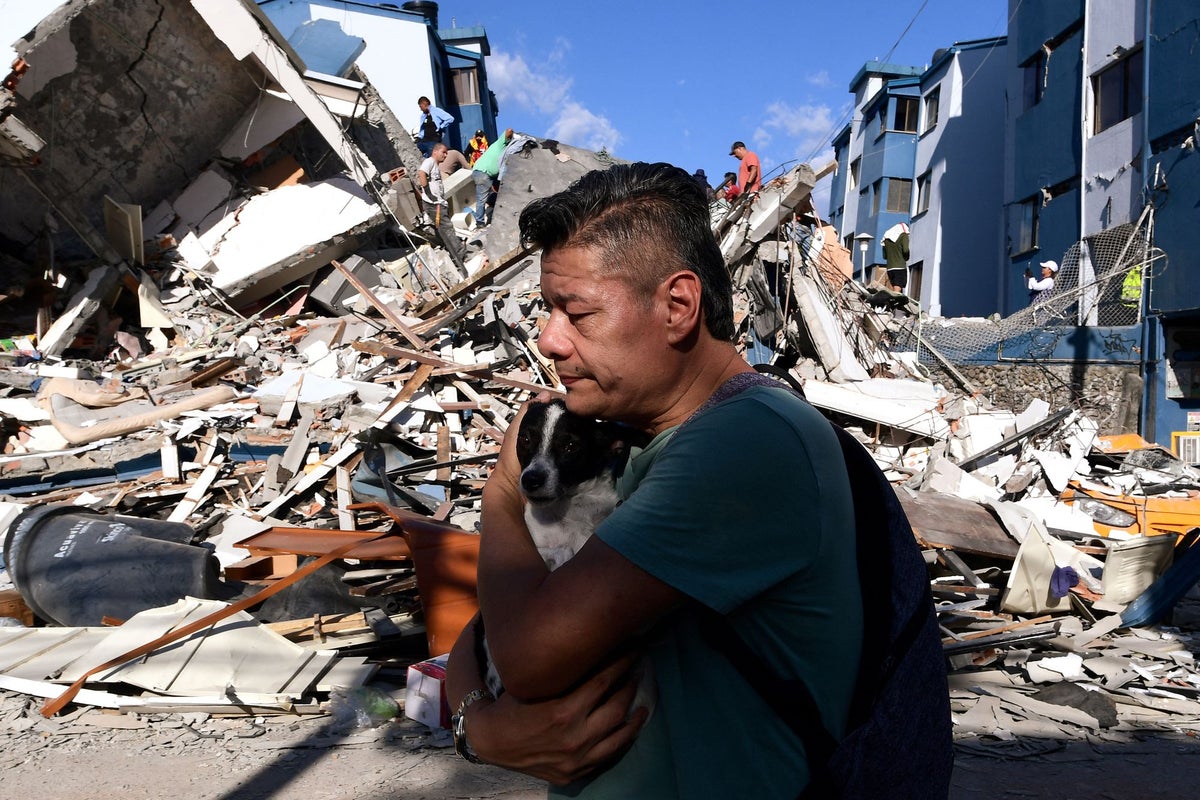
Colombia is reeling from one of the strongest earthquakes in its recorded history that killed at least 250 - just weeks after more than 6,000 deaths in twin quakes in neighboring Venezuela.
As the countries respond to the tragedies, many people are turning to scientists to learn why this series of tremors was so deadly.
TECTONIC BOUNDARIES
Both Colombia and Venezuela sit atop several intersecting tectonic plates. The persistent, slow friction between these massive plates builds up energy until it is suddenly released, triggering seismic activity.
German Prieto, a geologist at the National University of Colombia (UNAL), explained to Reuters that the Colombian earthquake occurred as the Nazca plate slid underneath the South American plate, deep below the crust, which extends roughly 40 km (25 miles) down in the Andean region.
Data from the U.S. Geological Survey placed the magnitude of Monday's quake at 7.4, with a depth of 100 km (62 miles). In contrast, Venezuela's quakes in late June registered magnitudes of 7.2 and 7.5 at much shallower depths of under 20 km (12 miles).
While the deep epicenter of the Colombian earthquake allowed tremors to reach as far as Panama, it also permitted energy to disperse over a greater area, preventing an even worse tragedy.
"Colombia is a seismic country and we have to be prepared for these natural disasters," Prieto said. "You can't predict or prevent them, but their effects can be mitigated."
MAGNITUDE AND MOVEMENT
Earthquake magnitude is recorded on a logarithmic scale that escalates with each whole number, meaning a magnitude 7 event is over 30 times more powerful than a magnitude 6 event.
Colombia's most intense recorded quake—an 8.8 magnitude event off the northern coast of Ecuador in 1906—generated a devastating tsunami that killed hundreds and released 126 times more energy than this week's event.
Ground movement is another critical element. The tremors in both Colombia and Venezuela were strike-slip earthquakes caused by horizontal shifts in the Earth's crust, producing lateral shaking that poses severe risks to structural integrity.
Additionally, large tremors frequently trigger aftershocks, creating significant dangers for residents attempting to re-enter damaged buildings. By Tuesday afternoon, Colombia had recorded more than 100 aftershocks.
Preliminary findings indicate that Venezuela's June earthquakes occurred along a different fault line. Because the second event was stronger, the U.S. Geological Survey designated the initial 7.2 quake as a "foreshock."
INFRASTRUCTURE AND TERRAIN
Highly seismic nations such as Japan and Chile enforce strict building regulations, requiring structures designed to flex and sway under intense shaking rather than fracture.
Informal housing or inadequate engineering investment can prove catastrophic in densely populated areas. For example, the 2010 earthquake in Haiti claimed over 300,000 lives and inflicted damage equal to 120% of the country's annual GDP.
Colombia began developing earthquake-resistant engineering standards in the 1970s, implementing its first official building codes in 1984 following a fatal quake in Popayan, and updating them in 2010.
Prieto noted that structural safety depends heavily on site selection, construction materials, and strict code enforcement, adding that the recent damage should be analyzed to strengthen building laws.
Ground composition also influences damage severity. Mexico City, built upon a former lake bed, experiences heightened shaking even from distant events due to loose soil conditions. Similarly, soft, uncompressed soil magnified destruction in Venezuela's coastal region of La Guaira in June and in Colombia's western valleys this week.
CROSS-BORDER PLANNING
Implementing expensive building codes in regions that rarely experience severe tremors is challenging, as is anticipating unique localized hazards, according to Suzan van der Lee, a seismologist at Northwestern University.
"Our earthquake record is long but not so long that we've seen every possible type of shaking," she told Reuters. "We're often surprised when earthquakes happen in ways we haven't seen before."
Developing international networks of monitoring stations and sharing technical data across borders remains essential for reducing disaster risks, van der Lee added.
"Global sharing of data is very, very important because most earthquakes occur on tectonic plate boundaries that are always near political and continental boundaries."
Join our commenting forum
Join thought-provoking conversations, follow other Independent readers and see their replies
Comments