
Business & Finance
US inflation slows slightly in July despite elevated fuel prices
Key Points
US inflation slows slightly in July despite elevated fuel prices US inflation eased slightly to 3.4 per cent in July, potentially giving the Federal Reserve more flexibility on interest rates ahead of the midterm elections. US consumer inflation slowed slightly in July, government data showed, with a virtual stalemate in the US-Iran war giving consumers some respite from sharp price increases at the gasoline pump. The consumer price index (CPI) rose 3.4 per cent on a year-on-year basis,...
US inflation slows slightly in July despite elevated fuel prices
US inflation eased slightly to 3.4 per cent in July, potentially giving the Federal Reserve more flexibility on interest rates ahead of the midterm elections.
WASHINGTON: US consumer inflation slowed slightly in July, government data showed, with a virtual stalemate in the US-Iran war giving consumers some respite from sharp price increases at the gasoline pump.
The consumer price index (CPI) rose 3.4 per cent on a year-on-year basis, slowing from a 3.5 per cent increase a month ago, according to data released by the US Bureau of Labor Statistics on Wednesday (Aug 12).
The data was in line with the expectations of economists polled by Dow Jones Newswires and the Wall Street Journal.
US households have been battered by more than five years of elevated prices since the pandemic hit, and the July data is still well above the Federal Reserve's long-term two-per cent target.
Still, with last month's inflation data also showing some easing in prices, the latest reading may give the central bank some room to manoeuver ahead of potential rate hikes.
US President Donald Trump's Republicans are facing a stern test in upcoming midterm elections, with Democrats seeking to wrest control of Congress over his handling of the world's largest economy.
The consumer price index (CPI) rose 3.4 per cent on a year-on-year basis, slowing from a 3.5 per cent increase a month ago, according to data released by the US Bureau of Labor Statistics on Wednesday (Aug 12).
The data was in line with the expectations of economists polled by Dow Jones Newswires and the Wall Street Journal.
US households have been battered by more than five years of elevated prices since the pandemic hit, and the July data is still well above the Federal Reserve's long-term two-per cent target.
Still, with last month's inflation data also showing some easing in prices, the latest reading may give the central bank some room to manoeuver ahead of potential rate hikes.
US President Donald Trump's Republicans are facing a stern test in upcoming midterm elections, with Democrats seeking to wrest control of Congress over his handling of the world's largest economy.
ENERGY PRICES DECLINE
Inflation has surged since Trump launched the war on Iran in late February, with Tehran's retaliatory action virtually blocking the critical Strait of Hormuz through which a fifth of global energy supplies normally transit.
Consumer inflation came in at 2.4 per cent in February, before spiking to a three-year high of 4.2 per cent in May.
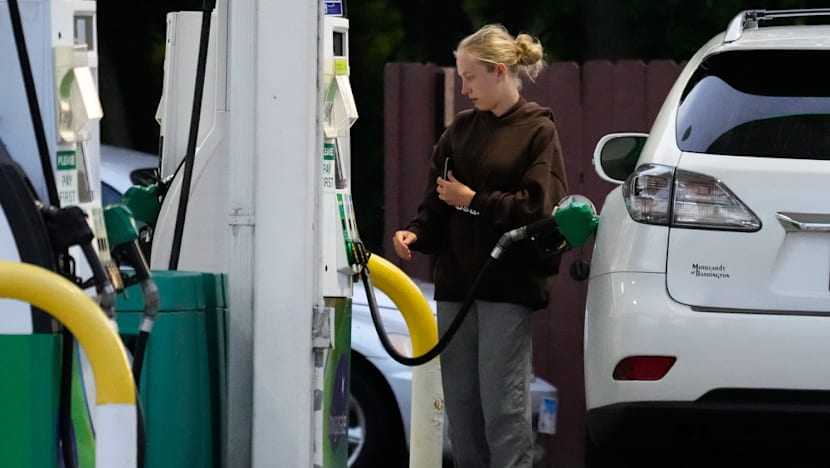
In July, energy prices continued to be a major driver of price increases, with gasoline prices - a sensitive political issue - up 24.6 per cent from a year ago.
Fuel oil, used by households for heating and in various industrial applications, was up 39.1 per cent from the year before.
Still, the energy index overall was 1.5 per cent lower than a month ago, indicating a downward trajectory for prices of those commodities as talks to end the war continue.
Core CPI, which excludes volatile food and energy prices, rose 2.5 per cent from a year ago.
Consumer inflation came in at 2.4 per cent in February, before spiking to a three-year high of 4.2 per cent in May.
In July, energy prices continued to be a major driver of price increases, with gasoline prices - a sensitive political issue - up 24.6 per cent from a year ago.
Fuel oil, used by households for heating and in various industrial applications, was up 39.1 per cent from the year before.
Still, the energy index overall was 1.5 per cent lower than a month ago, indicating a downward trajectory for prices of those commodities as talks to end the war continue.
Core CPI, which excludes volatile food and energy prices, rose 2.5 per cent from a year ago.
"STILL TOO HIGH"
Elevated prices will be a key issue in the midterms, and on Wednesday Democratic Senator Elizabeth Warren slammed Trump on the latest inflation figures.
"Inflation is still too high. Prices are up 4.4 per cent since Trump took office, and paychecks aren't keeping up," she said in a statement.
Last week, fresh official data showed wage growth coming in at 3.2 per cent year-on-year, lagging inflation and meaning that most people were seeing their income shrink in real terms.
White House spokesperson Kush Desai, however, said the slowing inflation figures were "further proof that President Trump's long-term agenda is delivering."
"Despite temporary disruptions stemming from Iran, core CPI is near the Fed's two-per cent target rate," he said.
July's price data offered some respite for households, with grocery prices dropping 0.1 per cent over the month, with three of the six major grocery food group indexes showing declines.
Analysts expect Wednesday's data will give the US central bank room to breathe on the timing of potential rate hikes to curb inflation, with several Fed policymakers indicating the need for such a move.
"We expect the debate at the September FOMC meeting to be lively as the economy experiences a tight labor market while the inflation picture is quite blurry," said Jeffrey Roach, chief economist for LPL Financial, referring to the Fed's next rate-setting meeting.
Bill Adams, chief US economist at Fifth Third Commercial Bank, said July's CPI data was "modestly better" and kept a "narrow path open for the Fed to hold rates steady in September."
Oren Klachkin of Nationwide agreed, saying the data was exactly what "the market was hoping for."
"It keeps the disinflation trend intact and so should lower the volume of the alarm bells at the Fed and allow policymakers to keep interest rates steady in September - contingent on the August CPI and employment reports."
"Inflation is still too high. Prices are up 4.4 per cent since Trump took office, and paychecks aren't keeping up," she said in a statement.
Last week, fresh official data showed wage growth coming in at 3.2 per cent year-on-year, lagging inflation and meaning that most people were seeing their income shrink in real terms.
White House spokesperson Kush Desai, however, said the slowing inflation figures were "further proof that President Trump's long-term agenda is delivering."
"Despite temporary disruptions stemming from Iran, core CPI is near the Fed's two-per cent target rate," he said.
July's price data offered some respite for households, with grocery prices dropping 0.1 per cent over the month, with three of the six major grocery food group indexes showing declines.
Analysts expect Wednesday's data will give the US central bank room to breathe on the timing of potential rate hikes to curb inflation, with several Fed policymakers indicating the need for such a move.
"We expect the debate at the September FOMC meeting to be lively as the economy experiences a tight labor market while the inflation picture is quite blurry," said Jeffrey Roach, chief economist for LPL Financial, referring to the Fed's next rate-setting meeting.
Bill Adams, chief US economist at Fifth Third Commercial Bank, said July's CPI data was "modestly better" and kept a "narrow path open for the Fed to hold rates steady in September."
Oren Klachkin of Nationwide agreed, saying the data was exactly what "the market was hoping for."
"It keeps the disinflation trend intact and so should lower the volume of the alarm bells at the Fed and allow policymakers to keep interest rates steady in September - contingent on the August CPI and employment reports."
Source: AFP/fs
US (LOCATION)
the Federal Reserve (ORG)
WASHINGTON (LOCATION)
Iran (LOCATION)
the US Bureau of Labor Statistics (ORG)
Dow Jones Newswires (ORG)
the Wall Street Journal (ORG)
the Federal Reserve's (ORG)
Donald Trump (PERSON)
Republicans (ORG)
Democrats (ORG)
Congress (ORG)
Trump (ORG)
Tehran (LOCATION)
Strait of Hormuz (LOCATION)