
Environment
Bird flu threat to endangered native wildlife spurs contingency plans
Key Points
Bird flu threat to Tasmania's endangered native wildlife spurs contingency plans From ferocious devils ambling through the bush to colourful birds found nowhere else in the world, Tasmania is renowned for its unique wildlife. These animals are now under threat following the detection of the H5N1 bird flu strain in the carcass of a brown skua on the state's north-west coast. The arrival follows months of careful planning and triggers a suite of protection measures, including increased...
Bird flu threat to Tasmania's endangered native wildlife spurs contingency plans
From ferocious devils ambling through the bush to colourful birds found nowhere else in the world, Tasmania is renowned for its unique wildlife.
These animals are now under threat following the detection of the H5N1 bird flu strain in the carcass of a brown skua on the state's north-west coast.
The arrival follows months of careful planning and triggers a suite of protection measures, including increased surveillance and a vaccination program.
Species that gather in dense colonies, scavenge carcasses or already face extinction pressures are being prioritised as authorities work to limit mortalities.
Here is a look at which animals are considered most at risk, and what is being done to protect them.
Tasmanian devil
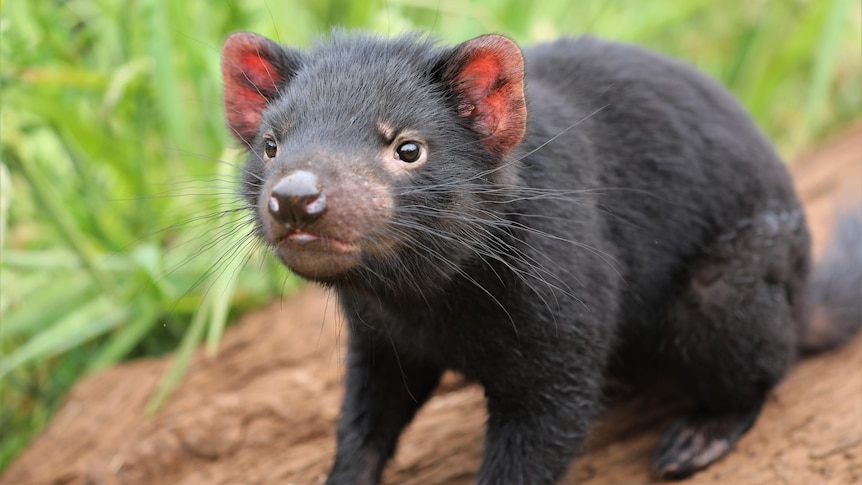
One of the biggest unknowns is how the virus will impact the state's most iconic animal — the endangered Tasmanian devil.
As carnivorous marsupials, devils regularly scavenge on the carcasses of other animals, meaning it is almost a certainty some will eventually eat infected birds.
But whether the virus will then infect the devils is still unknown, according to Rachael Alderman from Tasmania's Department of Natural Resources and Environment (NRE).
"That's an uncertainty but something we're very concerned about so we're watching, monitoring and preparing as much as we can,"Dr Alderman said.
"An additional threat is going to add pressure to their safety and long-term survival, so we are worried, but we're not necessarily expecting it to happen."
To help protect the species, work is taking place to strengthen captive populations of Tasmanian devils by reducing disease and boosting genetic diversity.
There is currently no H5 bird flu vaccine for mammals, but Dr Alderman said there was "a lot of work being done" in that space.
Orange-bellied parrot
The critically endangered orange-bellied parrot is one of Australia's most threatened bird species, with only 88 detected in the wild last year.
Tasmanian Deputy Premier Guy Barnett said H5 bird flu posed a "significant risk" to the species, so the state government was planning to roll out a vaccination program.
Once approved by the state government, the H5 bird flu vaccine will be administered to 350 orange-bellied parrots within a captive breeding centre at Five Mile Beach near Hobart.
"We cannot eliminate the risk entirely, but we're taking action to give our orange-bellied parrots the best possible chance in the event of an outbreak," Mr Barnett said.
Additional protective measures, such as specialised shade cloth infrastructure, will also be implemented at the facility to reduce the risk of disease transmission.
It is hoped the vaccination program will begin in September to coincide with parts of the breeding program and sequencing in the captive population.
Australia's Threatened Species commissioner Fiona Fraser said she was "really thrilled" that Tasmania would be looking to run a vaccination program for the orange-bellied parrots.
"Of course, vaccination alone is not sufficient to really build the resilience of our species to H5 bird flu, but it is a very important tool for some of those species,"Dr Fraser said.
Little penguin
Tasmania's coastlines and nearby islands are dotted with colonies of little penguins, which are at risk of experiencing significant mortalities following the arrival of H5 bird flu.
Mr Barnett said while the birds were "much-loved" and "treasured", they were not being considered a priority species for a vaccination program.
This is because of their large population numbers, the fact they are not a threatened species and because of the strict conditions required to receive a permit for the vaccine.
"Two doses are required, separated by a period of one or two weeks, and you need to be able to monitor those individuals after you have vaccinated them," Dr Alderman said.
"We can do orange-bellied parrots because we have the ability to comply really easily with all those conditions; we couldn't do that with little penguins."
Victorian authorities are planning to round up 5,000 little penguins on Phillip Island to administer the H5 bird flu vaccine.
Dr Alderman said the situations were not comparable, as Victoria could meet the permit requirements with the Phillip Island population.
Instead, efforts to preserve little penguin populations in Tasmania will include the removal of weeds on beaches and work to reduce the impact of pests.
Native seabirds
Wild aquatic birds have undoubtedly been the wildlife group most heavily impacted by the H5 bird flu pandemic as it has spread across the world.
BirdLife Australia senior advisor Sean Dooley said the arrival of the virus in Tasmania was particularly concerning, as it is a "really important migratory shorebird and seabird area".
The state government has identified the shy albatross, the short-tailed shearwater, the white-fronted tern, the fairy and little terns, and the Australasian gannet as species at high risk.
Albatross Island, where about 40 per cent of shy albatross come to breed, is only about 100 kilometres from where the infected brown skua was found, something Mr Dooley said was concerning.
He said terns often suffered "the most severe consequences" during an outbreak of H5 bird flu and that the virus could be "catastrophic" if it hit a breeding colony of gannets.
"It's not only about dealing with the threat of trying to limit the spread of bird flu, it's also making sure that our unique wildlife is in the best position to recover,"Mr Dooley said.
"So we need to be able to ensure that colonies of seabirds in particular are free from threats like feral animals or weeds invading their area."
The seasonal harvesting of short-tailed shearwater chicks, known as muttonbirding, is one of the oldest enduring cultural practices for Tasmania's Aboriginal people.
NRE secretary Jason Jacobi said if an outbreak was detected within a colony, the department may work with the Aboriginal community to impose a temporary suspension on muttonbirding.
Some of the other seabirds that Mr Dooley said he was particularly concerned about included the white-bellied sea eagle and the Tasmanian wedge-tailed eagle.
Seals
Some of the most devastating images of the national H5 outbreak were seen on Heard Island in the Southern Ocean, when thousands of baby seals were killed by the virus.
As the deadly strain reaches Tasmania, the state government has identified the Australian and long-nosed fur seals as two species at high risk.
Dr Alderman said this was partly because of the way the seals gathered in large groups, which made it easier for the disease to transmit.
As they are mammals, there is no vaccine available for seals. However, Dr Fraser said work was being done to build the resilience of wild populations.
The arrival of H5 bird flu in Tasmania is potentially bad news for Neil the seal — a juvenile elephant seal famous for causing havoc on his semi-annual visits to the island.