
Politics
Fidel Castro’s divisive legacy looms over crisis-hit Cuba as nation marks his 100th birthday
Key Points
Fidel Castro’s divisive legacy looms over crisis-hit Cuba as nation marks his 100th birthday Cuba has marked Fidel Castro’s 100th birthday with a series of events this week - Bookmark Fidel Castro would have reached the age of 100 on Thursday, and his long shadow continues to cast over the island. While he remains revered by some who miss him amid a severe US energy blockade, others view him as the architect of the system that brought about Cuba’s current crisis. This week, Cuba marked...
Fidel Castro’s divisive legacy looms over crisis-hit Cuba as nation marks his 100th birthday
Cuba has marked Fidel Castro’s 100th birthday with a series of events this week
- Bookmark
Fidel Castro would have reached the age of 100 on Thursday, and his long shadow continues to cast over the island.
While he remains revered by some who miss him amid a severe US energy blockade, others view him as the architect of the system that brought about Cuba’s current crisis.
This week, Cuba marked Castro’s centenary through events such as the International Book Fair, art exhibitions, concerts and assemblies bringing together delegates from left-wing organisations across the continent.
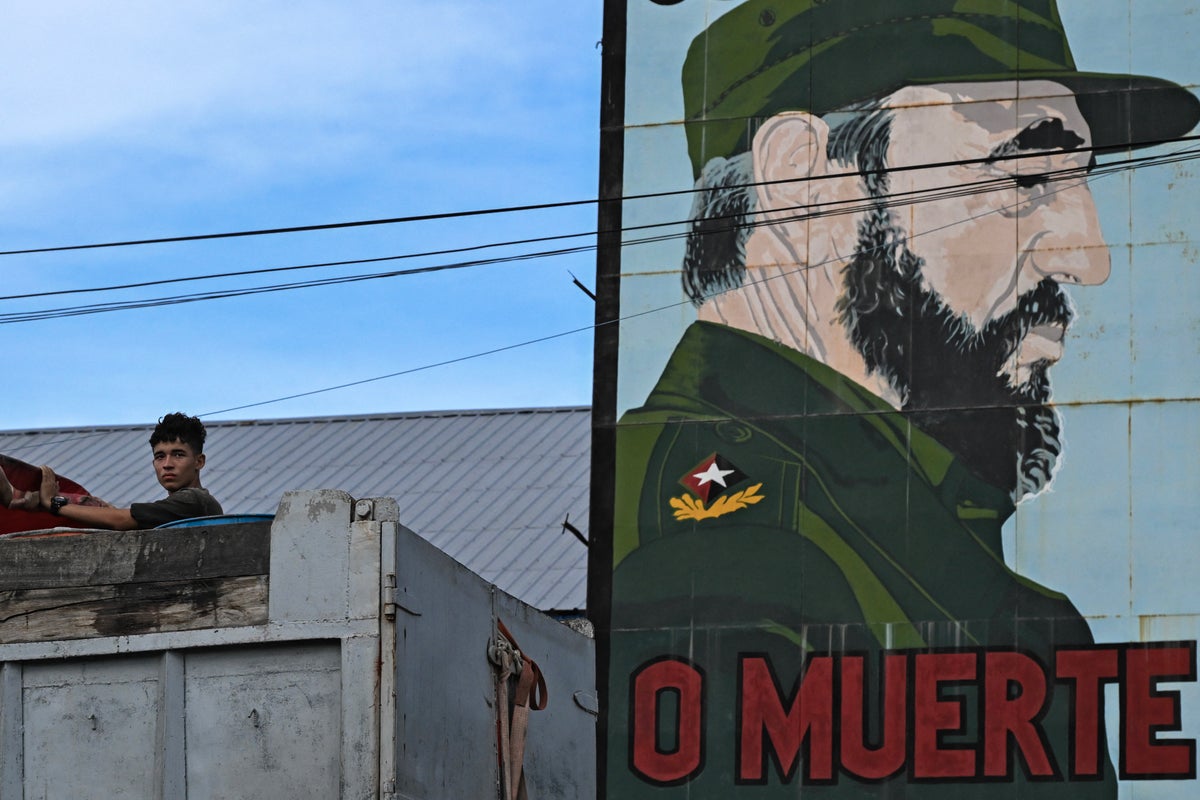
Posters displaying his face are hung throughout hospitals, while road billboards feature his famous slogans — including his widely known "Homeland or Death". His presence remains so familiar that many Cubans simply refer to him as Fidel.
"I believe (Fidel Castro) leaves Cuba a legacy of dignity, morality, tireless work and concern for the poor," writer and essayist Miguel Barnet, who also is a member of the National Assembly, told The Associated Press. "And a philosophy that was translated into concrete policies in areas such as culture, education and public health."
Castro’s centenary arrives as Cuba experiences an escalating economic squeeze that began when the Trump administration enforced a fuel blockade in January, subsequently introducing further sanctions intended to press the communist government into political and financial reforms. The measures have compounded a five-year economic slump triggered by previous US sanctions and a failed domestic monetary reform.
For ordinary Cubans, the impact has been severe: prolonged power cuts, shortages of fuel and medicine, declining industrial and tourist output, flight cancellations, transport limits and reduced working and school hours.
Castro ruled Cuba for nearly five decades, from 1959 until he transferred executive power to his brother in 2008, a tenure marked by huge public gatherings and speeches lasting several hours. He retained significant authority until his death in 2016.
"Fidel left us everything, everything good that came from Cuba’s revolutionary process," said Argelia Mustelier, a 61-year-old retiree who lives in Old Havana. "In these difficult times we’re living through, he would have found a way to bring some happiness to his country and his people."
Fidel Castro Ruz was born on 13 August 1926 in eastern Cuba’s sugar-growing region. His father, a Spanish immigrant, initially recruited labour for American sugar enterprises before establishing a successful plantation. After graduating as a lawyer, Castro quickly became politically active.
In 1953, Castro and more than 100 fighters launched an attack on the Moncada Barracks in Santiago de Cuba in a failed bid to depose dictator Fulgencio Batista. Captured and later released, Castro went into exile in Mexico before returning alongside fellow rebels to lead a guerrilla war that culminated in Batista’s overthrow in 1959 and Castro’s accession to power.
Upon taking control, Castro radically reshaped Cuba through land redistribution, a national literacy drive and the nationalisation of private enterprises — policies that placed his government on a direct collision course with Washington.
Throughout Latin America and the developing world, Castro emerged as a symbol of anti-colonial and revolutionary movements. However, his policies also generated intense opposition, initially among wealthy Cubans who fled to the United States, and later among citizens resisting the Communist Party’s monopoly on political rule.
"He is a controversial figure," said historian Manuel Cuesta Murúa, president of the opposition Council for the Democratic Transition in Cuba.
"There was no justification for sacrificing freedoms… There was no justification for preventing the rest (of the Cuban people) — and the country’s political diversity and plurality — from expressing themselves," Cuesta said. "That created a rift whose consequences we are still living with today."
For many younger Cubans, Castro remains a historical icon, though his influence is less tangible than it is for older generations who lived through his leadership.
"Our generation didn’t experience him as an active leader. What we saw was a less visible Fidel, one who rarely appeared in public," 27-year-old Cristian Cohello said. "What remains of Fidel Castro right now, of what he left behind, is nothing; absolutely nothing."
Regarding the island's current situation, Cohello added that there is no solution: "Right now, even if they brought another Fidel, they wouldn’t be able to fix this."
Fidel Castro’s (PERSON)
Cuba (LOCATION)
Fidel Castro (PERSON)
US (LOCATION)
Castro (PERSON)
the International Book Fair (ORG)
Cubans (ORG)
Fidel (PERSON)
Miguel Barnet (PERSON)
the National Assembly (ORG)
The Associated Press (ORG)
Trump (ORG)
Argelia Mustelier (PERSON)
Old Havana (LOCATION)
Fidel Castro Ruz (PERSON)