
Environment
When is the next solar eclipse? Mark your calendar for an upcoming 'ring of fire' and the 'eclipse of the century'
Key Points
When is the next solar eclipse? Mark your calendar for an upcoming 'ring of fire' and the 'eclipse of the century' You thought 2026 was a good year for solar eclipses? Just wait until 2027… Yesterday (Aug.12), millions of people enjoyed a total solar eclipse as it swept across parts of Greenland, Iceland and Spain, while a partial solar eclipse was visible across much of Europe and northwest Africa.
When is the next solar eclipse? Mark your calendar for an upcoming 'ring of fire' and the 'eclipse of the century'
You thought 2026 was a good year for solar eclipses? Just wait until 2027…
Yesterday (Aug.12), millions of people enjoyed a total solar eclipse as it swept across parts of Greenland, Iceland and Spain, while a partial solar eclipse was visible across much of Europe and northwest Africa.
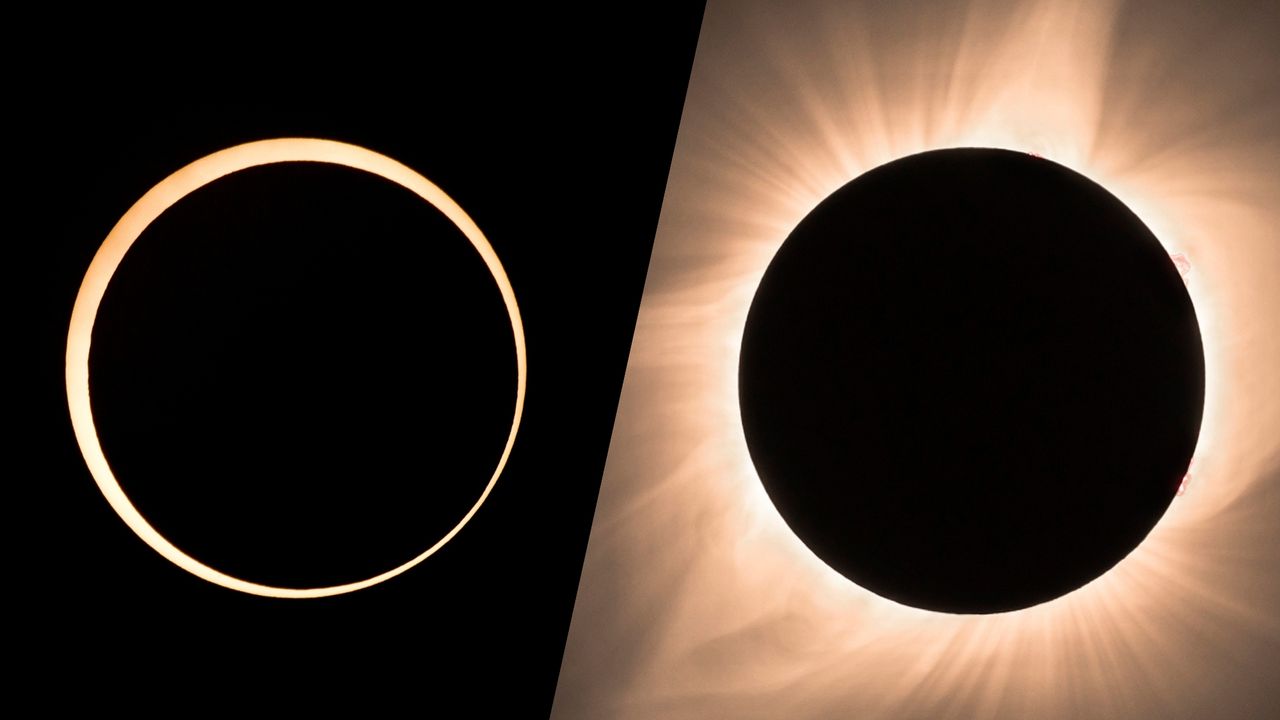
If all that eclipse excitement has you eager for more, the good news is you won't have to wait long, because two remarkable solar eclipses are coming in 2027. First comes a dramatic "ring of fire" annular solar eclipse on Feb 6, followed six months later by the total solar eclipse on Aug. 2 — an event many eclipse chasers are already calling the "eclipse of the century".
First up, a dazzling "ring of fire"
On Feb. 6, 2027, an annular solar eclipse will be visible across parts of Chile, Argentina and the coastal parts of West Africa, while the partial phase of the eclipse where the moon takes a "bite" out of the sun will be visible across South America and West Africa.
An annular solar eclipse happens when the moon passes directly in front of the sun when it is slightly farther away from Earth than during a total solar eclipse. As such, the moon appears a little smaller in the sky and doesn't completely cover the sun, leaving a brilliant ring of sunlight around the moon's silhouette, the "ring of fire".
The "eclipse of the century"
If the "ring of fire" eclipse wasn't enough, 2027 serves up another, even more spectacular eclipse.
On Aug. 2, 2027, the moon's shadow will race across southern Europe, North Africa and the Middle East, treating skywatchers with one of the longest total solar eclipses of the century. At its greatest point, totality will last an extraordinary 6 minutes and 23 seconds — more than twice as long as many other total solar eclipses.
View Original
View Original
View Original
View Original
Combined with favorable August weather across parts of North Africa, it's easy to see why many eclipse enthusiasts are already planning their trips in advance.
If you're thinking about experiencing the Aug. 2, 2027 total solar eclipse for yourself, now is the perfect time to start planning. We've rounded up expert travel tips to help you choose the best viewing location and avoid common pitfalls, as well as 10 unforgettable tours and experiences that will put you right in the heart of one of the greatest celestial events of the century.
You must confirm your public display name before commenting
Please logout and then login again, you will then be prompted to enter your display name.
Daisy Dobrijevic joined Space.com in February 2022, having previously worked as a staff writer for All About Space magazine. She completed an editorial internship with BBC Sky at Night Magazine and worked at the National Space Centre, communicating space science to the public.
Daisy holds a PhD in plant physiology and a Master's in Environmental Science. Based in Nottingham, U.K., she covers all things space, with a special focus on solar activity and space weather. She also has a keen interest in astrotourism and is always on the lookout for the next northern lights adventure.
She will be a guest speaker aboard HX's Solar Eclipse Expedition in August 2026 and will join Hurtigruten as an onboard astronomer for a northern lights sailing in January 2027.
Greenland (LOCATION)
Iceland (LOCATION)
Spain (LOCATION)
Europe (LOCATION)
Africa (LOCATION)
Chile (LOCATION)
Argentina (LOCATION)
West Africa (LOCATION)
South America (LOCATION)
Earth (LOCATION)
North Africa (LOCATION)
the Middle East (LOCATION)
Daisy Dobrijevic (PERSON)
Space.com (ORG)
All About Space (ORG)