
Politics
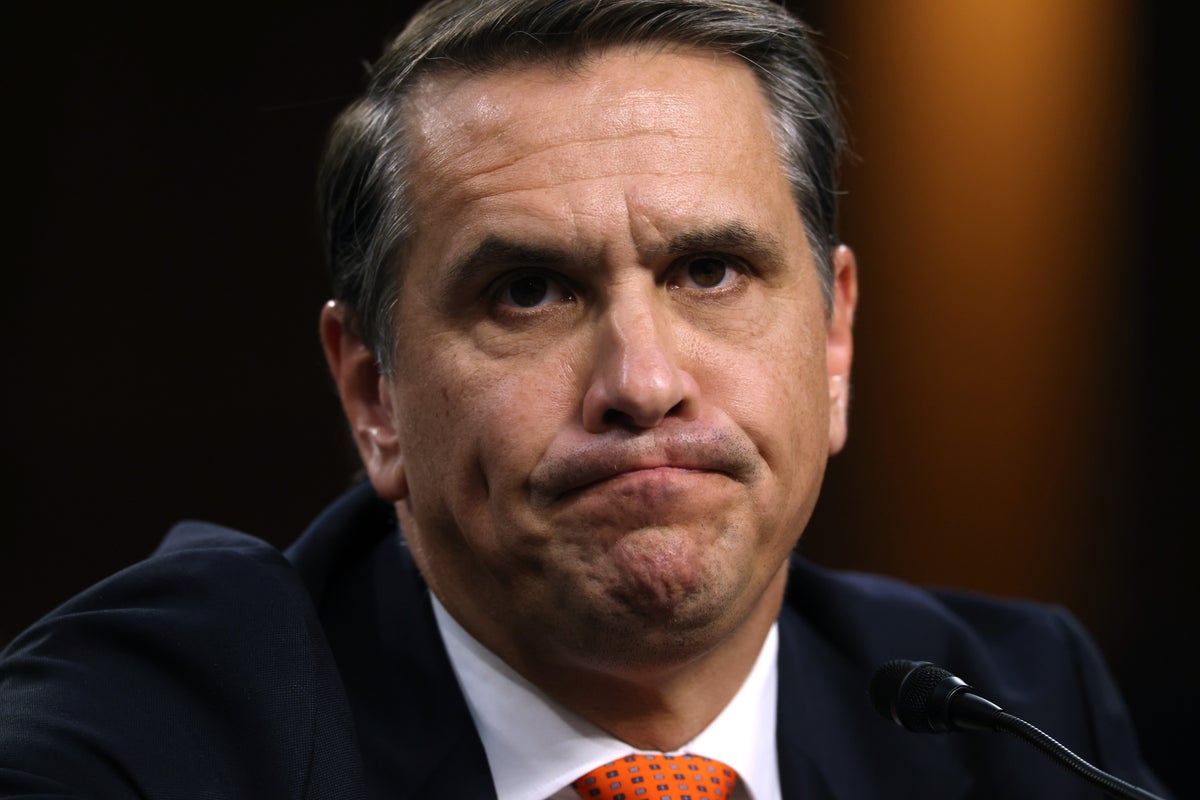
Trump’s DOJ could be held in contempt over unredacted Epstein files, judge says: ‘It’s not a threat. It’s a promise’
Key Points
Trump’s DOJ could be held in contempt over unredacted Epstein files, judge says: ‘It’s not a threat. It’s a promise’ Federal judge holds public hearing in lawsuit over withheld documents to hear ‘what the hell is going on in this case’ - Bookmark - CommentsGo to comments A federal judge suggested that government lawyers could be held in contempt after he repeatedly pressed the Department of Justice to explain redactions in a tranche of challenged documents from investigations into Jeffrey...
Trump’s DOJ could be held in contempt over unredacted Epstein files, judge says: ‘It’s not a threat. It’s a promise’
Federal judge holds public hearing in lawsuit over withheld documents to hear ‘what the hell is going on in this case’
- Bookmark
- CommentsGo to comments
A federal judge suggested that government lawyers could be held in contempt after he repeatedly pressed the Department of Justice to explain redactions in a tranche of challenged documents from investigations into Jeffrey Epstein.
In June, Washington, D.C. District Judge Emmet Sullivan sided with journalist Katie Phang after she filed a lawsuit against Attorney General Todd Blanche accusing Donald Trump’s administration of violating the Epstein Files Transparency Act, which the president signed into law last year, by failing to release all of the files in its possession or adequately explain why they were withheld.
Justice Department lawyers have repeatedly delayed or rebuffed the judge’s orders, culminating in a frustrating Thursday court hearing in which an exasperated but reluctant Sullivan floated the possibility of contempt proceedings.
“I just don’t want anyone to be blindsided if we have to go down that road,” he said. “It’s not a threat. It’s a promise. I have a job to administer justice, and I take that very seriously.”
Sullivan has asked the Justice Department to provide additional proof to continue withholding the files despite the judge’s previous orders. The judge is expected to review those materials behind closed doors with attorneys present before any additional documents are released.
Earlier in Thursday’s hearing, which was open to the public through a conference line, the judge explained why he held a public hearing rather than a sealed one.
“The public has a right to know what the hell is going on in this case,” Sullivan said. “The victims have a right to know. The public deserves to know.”
Phang’s lawsuit accuses the government of obstructing the public’s right to access materials connected to investigations into the wealthy and well-connected sex offender, who died in prison while awaiting trial on trafficking charges in 2019.
The Justice Department says it has never “knowingly violated, nor has it ever acknowledged violating” the law, which compelled the release of millions of documents stemming from law enforcement investigations into Epstein and his associate Ghislaine Maxwell.
Among the challenged documents are interview notes from investigators who spoke to a woman who made unsubstantiated assault claims about Donald Trump, which Justice Department officials have “deemed duplicative of the typewritten reports memorializing the interviews.”
The president has not been accused of criminal wrongdoing, and one’s appearance in the Epstein files does not suggest otherwise.
Other redacted documents allegedly include the names of Epstein’s interlocutors and potential co-conspirators.
Redactions were also made to protect the names of survivors, including communications that “can appear disturbing on their face,” according to the Justice Department.
Sullivan’s order, however, did not order the release of survivors’ names. He asked the Justice Department to justify certain redactions, produce any additional records supporting them and publish the redaction log as required by law.
Complicating matters was the late addition of Justice Department lawyer Andrew Block, who was added to the case less than 24 hours earlier. Throughout Thursday’s hearing, Block frequently appeared to be unprepared to discuss the case or a timeline for compliance with the judge’s orders.
Last month, Justice Department officials wrote that the government is “committed to transparency and compliance” but “strongly disagrees” with the judge’s orders to share the documents or additional evidence to support the redactions.
“As will become apparent, it would contravene the settled application of [the law] for the Department to produce unredacted versions of many of the records at issue, and nothing requires that result,” officials wrote in court filings.
Last week, the Justice Department asked the judge to freeze deadlines in the case in what attorneys for Phang characterized as a bad-faith stalling tactic.
“Defendant’s request lacks any legal basis, and it also has no basis in reality,” lawyers for Phang wrote Tuesday. “The Attorney General is obviously trying to delay this case, and this Court should not condone his tactics.”
Blanche, Trump’s former criminal defense attorney, was sworn into office this week after surviving a protracted confirmation battle that focused in part on his role in the release of the Epstein files.
The administration published millions of pages of documents but has been accused of withholding records related to people within Epstein’s orbit, including Trump, and shielding a wider network of powerful figures.
Join our commenting forum
Join thought-provoking conversations, follow other Independent readers and see their replies
Comments
Trump (ORG)
DOJ (ORG)
Epstein (PERSON)
the Department of Justice (ORG)
Jeffrey Epstein (PERSON)
Washington (LOCATION)
D.C. (LOCATION)
Emmet Sullivan (PERSON)
Katie Phang (PERSON)
Todd Blanche (PERSON)
Donald Trump (PERSON)
Justice Department (ORG)
Sullivan (PERSON)
the Justice Department (ORG)
Phang (PERSON)