
Environment
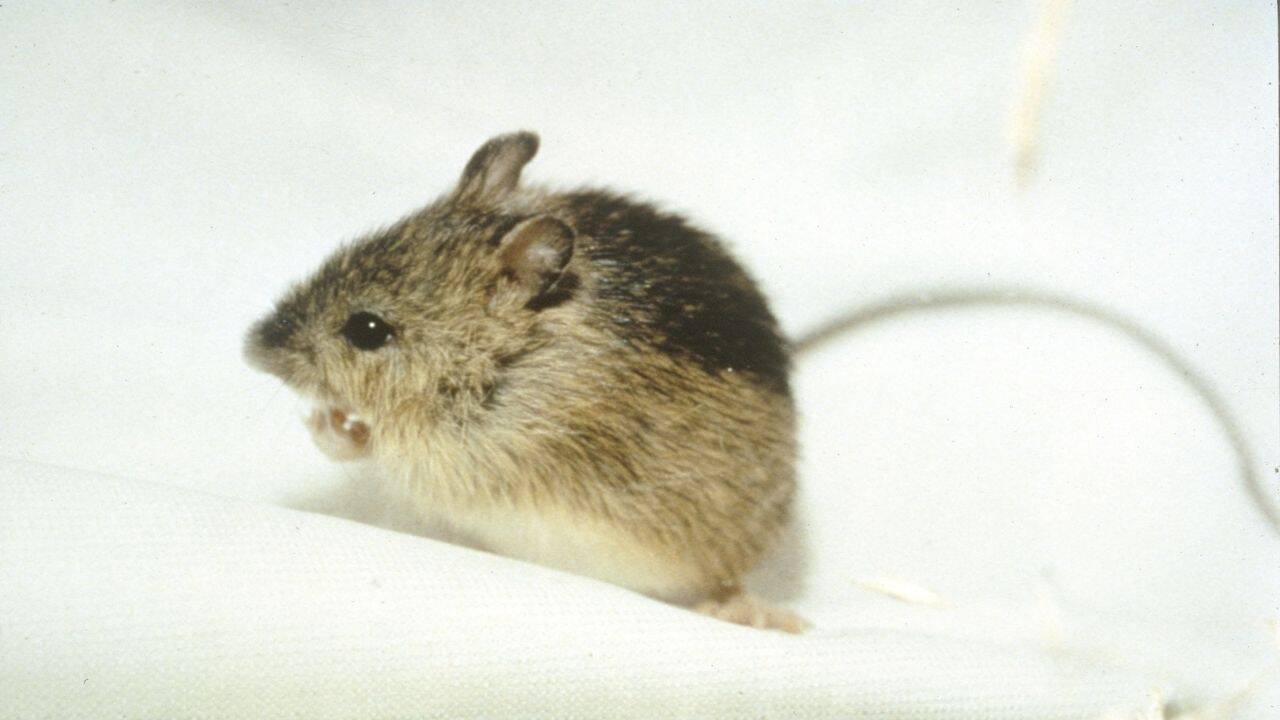
Colorado expands habitat protection for endangered Preble's jumping mouse
Key Points
Colorado’s efforts to protect the threatened Preble’s meadow jumping mouse are gaining momentum as conservationists work to restore the streamside habitat the tiny species depends on. In northern Colorado, restoration has focused on improving riparian areas, reconnecting streams with their floodplains and encouraging landowners to protect suitable habitat. A 2025 study published in Frontiers in Conservation Science documented these efforts in the North Fork Poudre watershed, where...
Colorado’s efforts to protect the threatened Preble’s meadow jumping mouse are gaining momentum as conservationists work to restore the streamside habitat the tiny species depends on. In northern Colorado, restoration has focused on improving riparian areas, reconnecting streams with their floodplains and encouraging landowners to protect suitable habitat. A 2025
study published in Frontiers in Conservation Science documented these efforts in the North Fork Poudre watershed, where conservation partners had identified 102 stream miles as potential habitat. The work expanded further in 2024 with the development of a conservation bank, while a new initiative in 2026 is creating additional opportunities for landowners to support habitat protection.
Protecting a fragile habitat
The Preble’s meadow jumping mouse (Zapus hudsonius preblei) is a small rodent found mainly in riparian and wetland habitats along Colorado’s Front Range and into southeastern Wyoming. It was listed as threatened under the U.S. Endangered Species Act in 1998, with habitat loss, degradation and fragmentation among the concerns affecting its survival.
The mouse depends heavily on healthy streamside environments, where vegetation provides food, shelter and places for nesting.
Because these habitats are vulnerable to changes in grazing, water management, development and other disturbances, protecting the animal also means protecting the streams and vegetation around them.
A 2025 study in Frontiers in Conservation Science examined a community-led conservation approach in Colorado’s North Fork Poudre watershed. The U.S. Fish and Wildlife Service established the North Fork Poudre Site Conservation Team in 2019, bringing together private landowners, government agencies, conservation groups, researchers and local stakeholders.
Rather than relying only on regulations, the team focused on voluntary conservation, restoration and incentives that could encourage landowners to participate. The study identified 102 stream miles as potential habitat capable of supporting a recovery population of about 4,000 adult mice. Of this area, 31% was considered high-suitability habitat, 52% medium suitability and 17% low suitability.
Representative Image (AI-generated)
Restoration across the watershed
The restoration work has focused on improving both existing habitat and areas that could become suitable for the mouse. One important part has involved changing grazing practices so livestock spend less time in sensitive stream corridors, allowing vegetation to recover. Other projects have used post-assisted log structures in streams. These structures can slow water, reconnect streams with their floodplains, stabilise banks and encourage riparian and wetland vegetation to grow. Such improvements can create better conditions for the mouse while also supporting broader watershed health.
The team deliberately identified a larger network than the minimum habitat considered necessary for a recovery population. According to the study, having additional connected habitats could make the population more resilient to disturbances such as wildfire and flooding.
Monitoring is another important part of the effort. The conservation team planned a 10-year program to track population status and trends. In 2023, only seven mice were captured at four of 12 sampling locations, making it impossible to estimate the population size. By 2024, private landowners were providing access to 56% of sampling sites, compared with 17% the previous year, highlighting the growing role of private properties in the research and conservation effort.
From 2024 to a new opportunity
The conservation strategy expanded in 2024 with the development of a conservation bank near Livermore, according to the North Fork Poudre Site Conservation Team. The bank was intended to provide payments to landowners who protect and restore riparian areas below 7,600 feet in elevation where the Preble’s meadow jumping mouse occurs. This created another way for private landowners to contribute to species recovery while continuing to manage their properties.
The effort has continued into 2026. The North Fork Poudre Site Conservation Team has highlighted a new opportunity for Larimer County landowners, building on the idea that people already caring for creeks, cottonwoods and riparian corridors can play a direct role in conservation.
The North Fork Poudre experience shows why protecting the Preble’s meadow jumping mouse requires more than restoring isolated stretches of stream. Its habitat crosses public and private lands, making cooperation essential. By combining habitat restoration, scientific monitoring and financial incentives for landowners, Colorado’s approach is attempting to create a more connected and sustainable landscape for the threatened mouse.
The work could also benefit far more than one species. Healthier stream corridors can support other wildlife, improve watershed conditions and strengthen the ecological resilience of the landscape. For the Preble’s meadow jumping mouse, the hope is that these combined efforts will eventually turn fragmented habitat into a connected network capable of supporting a stable, recovering population.