
Weather
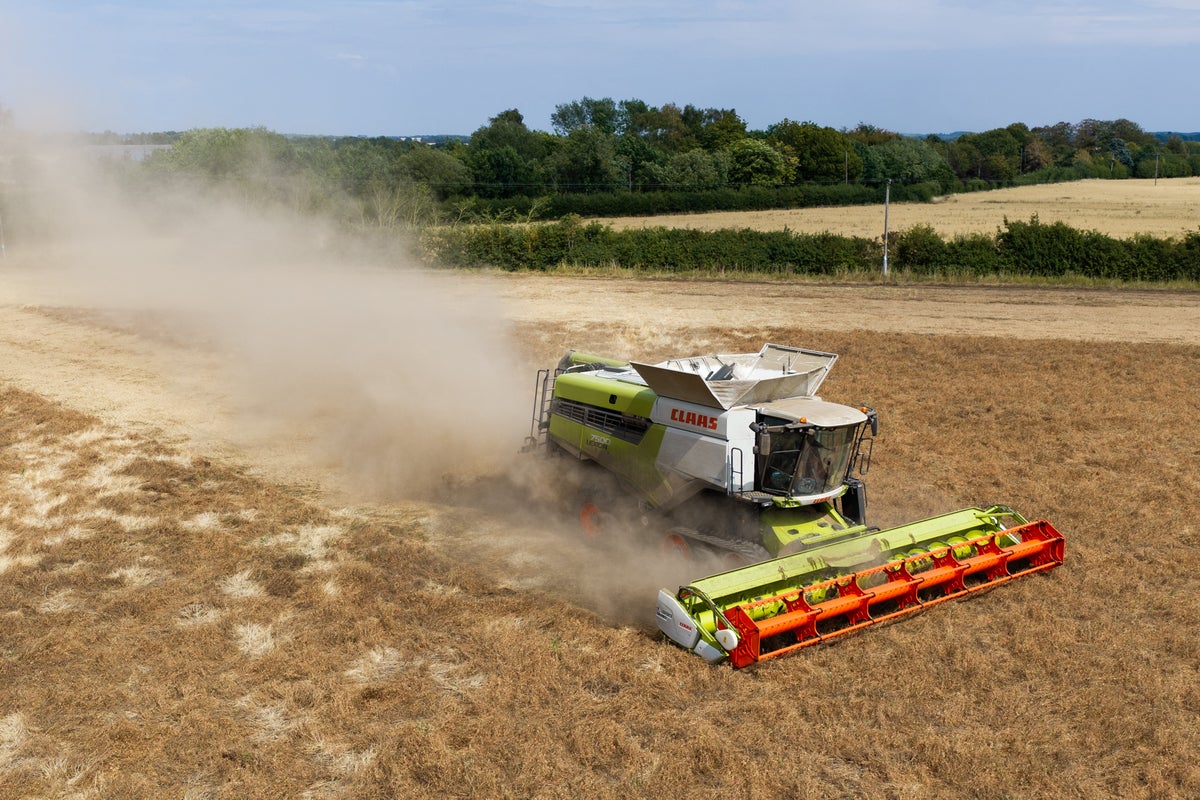
Farmers at ‘breaking point’ as heatwave Britain puts livelihoods under threat
Key Points
Farmers at ‘breaking point’ as heatwave Britain puts livelihoods under threat The risk of wildfires, water shortages, poor harvests and escalating fuel and fertiliser prices have plunged many into financial difficulty – prompting calls for emergency cash support - Bookmark - CommentsGo to comments Farmers say they are at “breaking point” as a summer of record heatwaves and drought impacts crops and livestock, putting livelihoods under threat. The risk of wildfires, water shortages, poor...
Farmers at ‘breaking point’ as heatwave Britain puts livelihoods under threat
The risk of wildfires, water shortages, poor harvests and escalating fuel and fertiliser prices have plunged many into financial difficulty – prompting calls for emergency cash support
- Bookmark
- CommentsGo to comments
Farmers say they are at “breaking point” as a summer of record heatwaves and drought impacts crops and livestock, putting livelihoods under threat.
The risk of wildfires, water shortages, poor harvests and escalating fuel and fertiliser prices have pushed many into financial difficulty prompting calls for the government to provide emergency cash support.
Those in needs say they are struggling to access the government’s Sustainable Farming Incentive, which was introduced to provide relief after the UK lost access to EU subsidies after Brexit and provides payments to farmers to sustainably improve their land. It was abruptly closed in 2025 due to overwhelming demand and only reopened in June to small farms under 50 hectares.
Andy Burnham has been urged to “cut the red tape” facing farmers who want to build reservoirs to irrigate crops and protect themselves against wildfires, with one farming organisation accusing the government of years of “diminishing direct financial support” for the sector.
Martin Lines, an arable farmer in Cambridgeshire and CEO of the Nature Friendly Farming Network, said that the profitability forecast within farming for the next five years was looking “terrible” and warned that smaller family businesses were struggling to survive.
“We’ve had five years on the bounce now where weather has had a big impact on our cashflow and crops,” he told The Independent. “Climate change is coming quicker and harder than anyone else ever told us.”
The 54-year-old, who runs his 165-hectare farm with his son, said they had been forced to make significant business decisions on how to manage their land ahead of next year. “We haven’t made money for the last year few years from growing our crops, it’s a heavy mental strain. We’re just trying to cope with the lack of predictability in weather and our crop yields.”
Farmers say recent high temperatures have created a “hairdryer” effect, evaporating moisture in the air, causing heat stress to animals, impacting root vegetable growth and risking fruit and potato shortages.
Poor grain harvests are also driving up the cost of animal feed, with predictions that this could in turn push up the cost of meat as farmers are forced to reduce herd sizes.
Meanwhile, the Agriculture and Horticulture Development Board (ADHB) has warned that milk production has already been impacted by the extreme hot weather, with production yields impacted by heat-stressed cows and poor conditions for grass grazing.
James McCulloch, head of feed at the Agricultural Industries Confederation (AIC) said that while farmers had enjoyed a decent silage season during the wet spring, the last six weeks have “gone from bad to worse”.
Many are now reliant on their winter feed supply, or are making challenging and costly decisions about purchasing supplementary feeds or keeping their livestock in sheds.
He called for better support within the planning applications system, to make it easier and quicker for farmers to build reservoirs on their land or to construct glass houses to protect food from the elements.
“We are a very resilient industry and I think if there is anxiety, it is about not being able to put in place the solutions and measures needed.
“We all know we need to conserve water, we’ve got the capability of building reservoirs on farms but are we allowed to and is there support for that?”, he said.
Following Mr Burnham’s emergency Cobra committee on Wednesday, climate advisers urged the government to take steps to prepare the UK for worsening extremes by making it easier for farmers to build reservoirs.
“No farmer can stay in business between generations without protecting their soil and their crops,” Gavin Lane, the president of the Country Land and Business Association said.
“However, access to water abstraction and permission to build on-farm reservoirs remains costly and time consuming. This means farmers who want to invest are failing to collect abundant water in the winter, and then watching their crops shrivel and die in the summer. Eventually, that means less British food on our shelves and a higher price at checkout.
“Government must act now and start with what we know already works: cutting red tape on farm reservoirs, giving land managers every tool to reduce wildfire risk and incentivising farmers to protect soil and water via adequate funding of the Sustainable Farming Incentive.
“Farmers are resilient people. But resilience cannot mean absorbing year after year of losses. Eventually something will give.”
Baroness Brown, who chairs the independent advisory Climate Change Committee’s adaptation work, pointed to farmers warning of hits to milk yields and harvests, and the Europe-wide impact on food production likely to put up prices.
“The evidence is screaming at us that we have to do something,” she said.
Mr Lines said that major retailers also needed to assess the resilience of their supply chain, while the government needed to make long-term commitments for funding in order to provide farmers with the confidence to invest in their businesses and their changing needs due to climate change.
“When I hear politicians and other people saying ‘it’s just natural warming and we can’t do anything about it’, the reality is that we can do something about it and we must do something about it
“The cost to the nation in the future is far more than investing in it now,” he said.
Conservatives spokesman Ashely Fox said: "Labour’s record farm closures and this year’s extreme heat are pushing British farming to the brink.
“The Conservatives have urged the secretary of state to support farmers through this drought and take real action on bluetongue [virus, which is spreading faster this year with more midges infecting sheep] in the rather than providing more empty platitudes. Government must step up and deliver immediate help, starting with axing the Family Farm, Family Business, and Fertiliser taxes."
A Defra spokesperson said: “We know how hard this summer has been for our farmers. We are working closely with farmers, the Environment Agency and the water sector during this exceptionally dry weather to find additional ways to support the sector.
"We are making it easier for farmers to build more on-site irrigation reservoirs and helping the sector build greater resilience to climate shocks through our farming schemes, the new Farming Roadmap and our work with the National Drought Group."
Join our commenting forum
Join thought-provoking conversations, follow other Independent readers and see their replies
Comments
Britain (LOCATION)
Farmers (ORG)
Sustainable Farming Incentive (ORG)
UK (LOCATION)
EU (ORG)
Brexit (PERSON)
Andy Burnham (PERSON)
Martin Lines (PERSON)
Cambridgeshire (LOCATION)
the Nature Friendly Farming Network (ORG)
The Independent (ORG)
the Agriculture and Horticulture Development Board (ORG)
James McCulloch (PERSON)
the Agricultural Industries Confederation (ORG)
AIC (ORG)