
Health
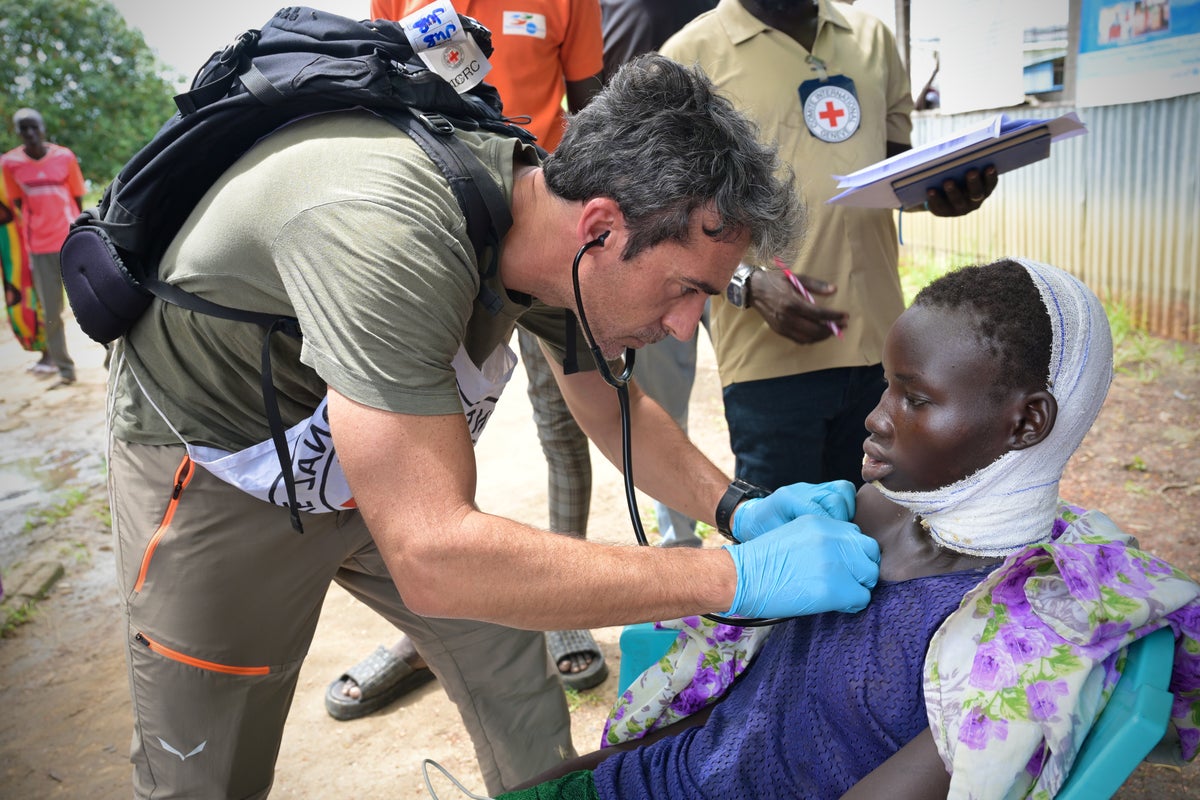
Surge of casualties in South Sudan as conflict intensifies: ‘It’s heartbreaking’
Key Points
Surge of casualties in South Sudan as conflict intensifies: ‘It’s heartbreaking’ Doctors tell Liz Cookman that they are seeing a surge in gunshots wounds and hospitals are struggling to cope with the rise in cases as aid cuts continue to bite - Bookmark - CommentsGo to comments Kol is one year and eight months old, but already he has been both shot and orphaned. Sleeping beside his grandmother, Nyayuel, at Juba Military Hospital, he is recovering from a bullet wound in his upper right thigh....
Surge of casualties in South Sudan as conflict intensifies: ‘It’s heartbreaking’
Doctors tell Liz Cookman that they are seeing a surge in gunshots wounds and hospitals are struggling to cope with the rise in cases as aid cuts continue to bite
- Bookmark
- CommentsGo to comments
Kol is one year and eight months old, but already he has been both shot and orphaned.
Sleeping beside his grandmother, Nyayuel, at Juba Military Hospital, he is recovering from a bullet wound in his upper right thigh. Both his parents were killed in crossfire during fighting in Uror County, part of South Sudan’s Jonglei state.
"When I heard shooting, I rushed over and saw that [his mother] was dead,” Nyayuel says. “Kol had been shot in the leg, so I wrapped a piece of cloth around the wound and ran. I couldn’t find my son. I found out later he was killed, too.”
They are among a growing number of civilians caught up in escalating violence across South Sudan. The International Committee of the Red Cross (ICRC) says they have seen admission rise by more than 50 per cent during the first six months of this year compared to 2025.
As South Sudan marks 15 years of independence, fighting within the country is intensifying. The UN has warned of a possible return to full-blown civil war in the world’s youngest nation, and it is placing growing pressure on trauma services. Clashes between government and opposition forces have been increasing in the central Jonglei state and nothern Upper Nile states, with other central areas such as Unity state also affected. Intercommunal violence between tribes and communities has also increased.
More than 90 per cent of patients arrive with gunshots wounds, doctors say, usually to the chest, legs, abdomen – but sometimes to the head. There are also stab wounds. Since the beginning of the year, the hospital, one of South Sudan's main trauma referral centres, has treated four mass casualty incidents, defined as the arrival of more than 15 patients from a single event.
"It’s heartbreaking. We see men, women, children who have been shot. The bullet doesn’t discriminate,” adds Angeth Majok, the ICRC’s head physiotherapist.
The caseload is becoming so high that meeting demand for medical evacuations has become a struggle, despite multiple flights a week by both plane and helicopter.
"The last few months have been very busy, far more so than in previous years. It just keeps getting worse," says Paul Abraham, the ICRC’s assistant head nurse, who has worked at the hospital since 2016. "In a week we receive a huge number of weapon-wounded patients, maybe 20 or 30.”
Surgeries at Juba Military Hospital are up 30 per cent on last year, with the surgical department consistently operating beyond its maximum capacity.
Needs in what was already one of the world’s worst humanitarian crises are deepening, with conflict compounded by climate shocks and the arrival of more than 1.2 million returnees and refugees from neighbouring Sudan. It also comes amid shrinking funds to help those in need in the wake of global aid cuts.
“Service provision at all levels of healthcare is reduced, and this causes a lot of strain in the hospital levels,” says Rose Ochieng, ICRC health coordinator in South Sudan.
It is putting huge strain on already fragile health infrastructure, with access to life-saving health-care remains severely limited in many parts of the country. Under supplied and understaffed clinics in remote areas struggle to cope with the casualties.
Infected wounds are common, exposed to dirt and mud or a contaminated bullet. Infection can spread easily. and patients might stay for a long time in remote places with no medical facilities.
“The pressure is very high. Sometimes the workload is too much. The staff don’t get a break. The increase in the number of deaths and patients can be challenging,” says Abraham.
There have also been attacks on humanitarian workers – last month, five were killed and four injured in an ambush in Jonglei State.
Yet among those recovering is Gum, a father of two from Lake state who was shot in the hip during fighting in neighbouring Warrap state last October. He spent a night in a local clinic before being transferred to Juba, where he has undergone surgery, physiotherapy and mental health support.
“This has had a big impact on me mentally,” he says. “I felt hopeless, but slowly I’m recovering.”
This article has been produced as part of The Independent’s Rethinking Global Aid project
Join our commenting forum
Join thought-provoking conversations, follow other Independent readers and see their replies
Comments
South Sudan (LOCATION)
Liz Cookman (PERSON)
Kol (PERSON)
Nyayuel (PERSON)
Juba Military Hospital (ORG)
Uror County (LOCATION)
South Sudan’s (LOCATION)
Jonglei (ORG)
The International Committee of the Red Cross (ORG)
ICRC (ORG)
UN (ORG)
nothern Upper Nile (LOCATION)
Unity (ORG)
South Sudan's (LOCATION)
Angeth Majok (PERSON)