
Business & Finance
Expensive earbuds: When and why it's worth paying more
Key Points
Expensive earbuds: When and why it's worth paying more Will you notice the difference if you buy an expensive pair? By the mid-2000s, earbuds were tangled in pockets across the globe. The iPod and other portable media players had revolutionized the music business.
Expensive earbuds: When and why it's worth paying more
Will you notice the difference if you buy an expensive pair?
By the mid-2000s, earbuds were tangled in pockets across the globe. The iPod and other portable media players had revolutionized the music business. Digital music distribution quickly relegated the local record shop to a relic, while downloaded MP3s from iTunes (or other, less-than-legal sources) allowed listeners to cram more music into their pockets than most people had in their homebound physical collections. Music had become truly mobile, and easily pocketable earbuds symbolized that freedom.
But while music became more accessible than ever, the same cannot be said for sound quality. Each iPod came with a pair of plastic white earbuds, so ubiquitous that the stark lengths of cord swung wildly from dancing silhouettes in one of Apple's most memorable ad campaigns. The only problem? Those earbuds were absolute garbage. Audio enthusiasts would ditch Apple's free earbuds without even wearing them, but most people didn't understand what a poor listening experience Steve Jobs had subjected them to.
Today, even as wired earbuds come back into vogue, things are much different. For one, new devices don't have a headphone jack to begin with, let alone earbuds in the box (or a charger, for that matter). But the average pair of cheap earbuds in the 2020s delivers a much better experience than those old, tangly iPod earbuds.
The word 'earbud' technically refers to a bud that rests on the outer ear. Old iPod earbuds or today's basic AirPods are the quintessential examples. On the other hand, buds that protrude into the ears with silicone or foam tips are known as in-ear monitors, or IEMs. But since most people use the word 'earbud' to refer interchangeably to both fits, and since high-end buds are almost invariably in-ears, that's the style on which this article is focused.
Whether wired or wireless, it's hard to find a pair of modern earbuds that don't sound at least somewhat decent, and if you're not an audiophile, you don't need to shell out too much cash for a pair that'll have you shaking your hips while you do the dishes. While the high-end market continues to flourish, offering premium sound and smart features, here's what you need to know before you shop.
Which kinds of earbuds are the most expensive?
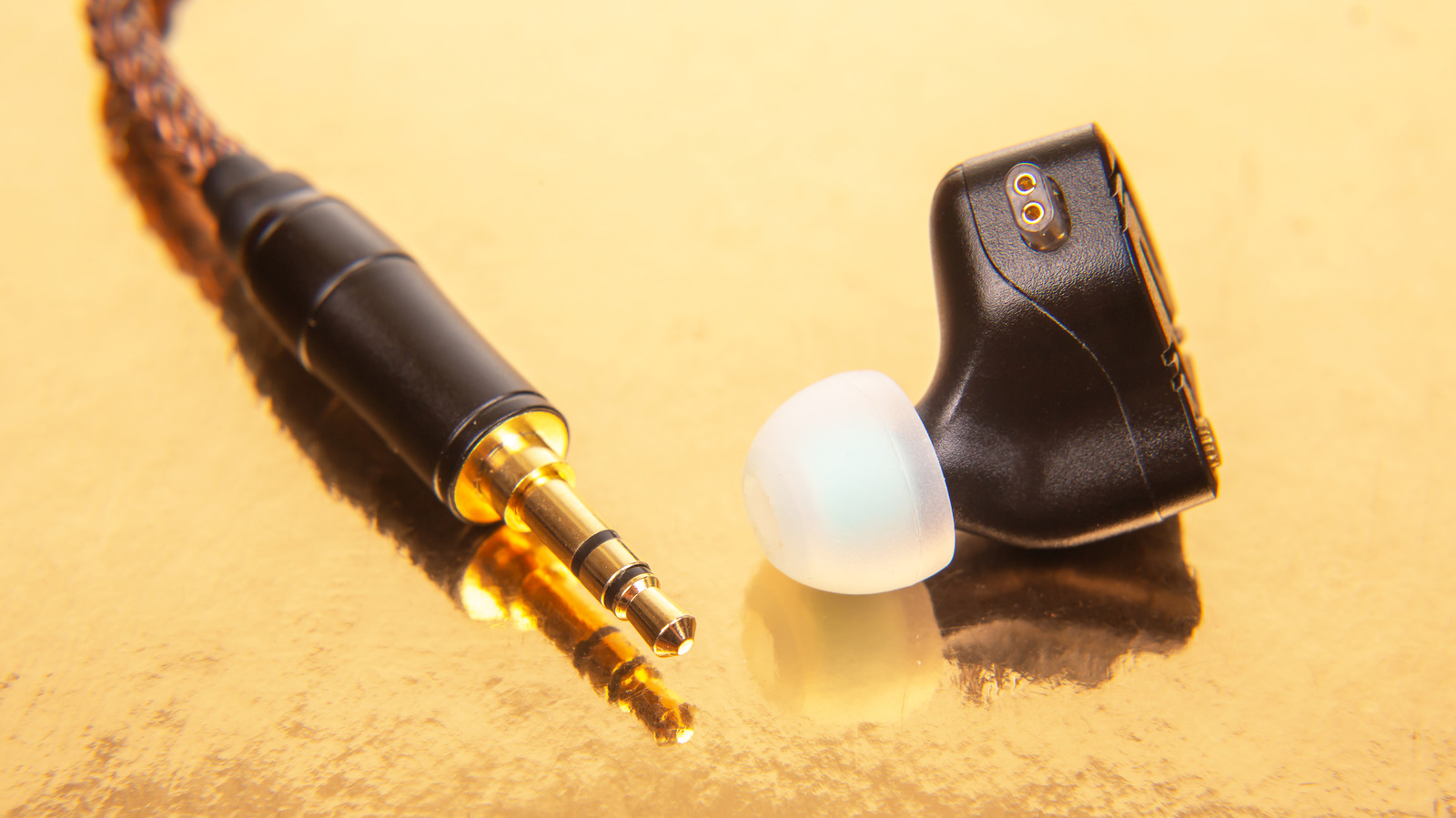
The most expensive earbuds nowadays tend to be in one of two categories. The first are the in-ear variety. These are usually wired earbuds meant for audiophiles, musicians and audio engineers, and they are designed to deliver unparalleled sound quality with no other frills. By contrast, other expensive earbuds are high-end, true wireless stereo (TWS). These are your AirPods Pro 3, your Sony WF-1000XM6, and so on. These buds market themselves as high-tech lifestyle accessories, and they are often packed with smart features like active noise cancellation (ANC), ambient audio passthrough and spatial audio. While premium true wireless buds are often designed with more emphasis on their sound quality than you'll find on cheaper earbuds, sound quality is not their primary selling point. Technically, any buds that seal inside the ear with silicone or foam tips are a subset of IEMs, including TWS buds, but most people do not use the term IEM to refer to them.
For most listeners looking to drop a Benjamin or two on a pair of buds, the adaptive functionality of premium wireless models makes them an attractive choice. Even the best wireless earbuds won't be turning many audiophile heads, but they still sound great for blocking out the ruckus of a train, airplane or coffee shop. Even audio-forward models like the Bose QuietComfort Ultra (2nd Gen) and the aforementioned Sony WF-1000XM6 are geared toward sound profiles tuned for recreational listening, at least out of the box, with their real claim to fame being that both are contenders for best-in-class ANC performance and their ability to pack a lot of tech into a pocketable package. Again, these earbuds often sound excellent, but they're made for a wider range of uses.
IEMs, meanwhile, are for transparent or analytical listening. They are designed to fit deeper into the ear canal, creating superior passive noise canceling as opposed to ANC. This means they won't be a good choice for the noisy environments in which premium true wireless earbuds thrive. Most of their cost stems from the use of high-end audio components and acoustic tuning, with prices increasing the more complex that craftsmanship becomes. You might find an audio engineer making use of them while mixing music from a hotel room, a player tracking instruments in a studio or a stage artist monitoring their band while singing in a packed arena. IEMs are also the province of audiophiles, who are likely to pair them with a portable music player packed with lossless music files, the better to enjoy a more precise listening experience.
Affordable earbuds are better than ever
Although more expensive earbuds can be justifiably pricey, that doesn't mean they're automatically a good choice for everyone. If you're the sort of person who's never even thought about adjusting the sound quality settings in Spotify, you won't benefit much from the subtle sound quality of top-shelf earbuds. And if it's ANC you're after, it can be had for far less.
On our roundup of the best wireless earbuds for 2026, Engadget chose the Anker Soundcore Space A40 as our budget pick. For just about $55, they pack in most of the marquee features of their more expensive and well-known competitors, including very serviceable ANC and a highly adjustable EQ. There's a vast middle ground between the Anker buds and the most expensive options, with true wireless buds that bring something to the table at every price point.
As for IEMs, while they can soar into the mid-four-figures, most audiophiles and musicians tend to stick below $500 when selecting a pair. And for budget-conscious shoppers, Headphones.com has recommendations reaching as low as $20. If you're really feeling strapped for cash, my personal recommendation has long been the JVC Gumy in-ear earbuds, which provide the best sound I've found for under $10.
Long gone are the days where cheap earbuds are a death sentence for audio quality. Today, decent audio can be had for less than a chicken sandwich, and the gains you'll make as you climb the price ladder are diminishing. At the top end, you pay for true wireless convenience or IEM precision and craftsmanship, but the vast majority of people will find their best buds by browsing with a strict budget.