
Weather
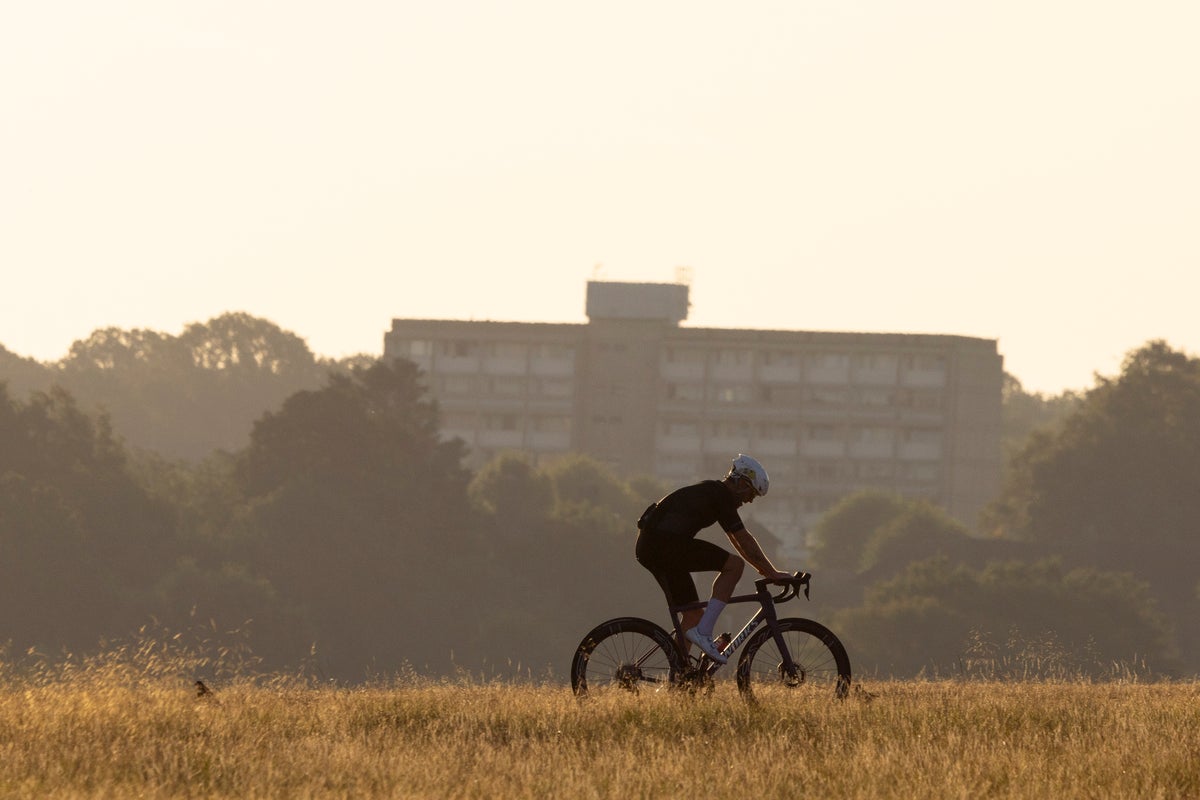
Met Office warns rainfall may not be enough to reverse drought effects
Key Points
Met Office warns rainfall may not be enough to reverse drought effects The chief meteorologist said that rain is on its way, but a question mark remains over how much will fall - Bookmark - CommentsGo to comments The chief meteorologist at the Met Office warns autumn rainfall is not guaranteed to reverse the drought conditions affecting most of England and all of Wales. According to Will Lang, while wet weather is on its way, a question mark remains over how much will fall. Rainfall totals...
Met Office warns rainfall may not be enough to reverse drought effects
The chief meteorologist said that rain is on its way, but a question mark remains over how much will fall
- Bookmark
- CommentsGo to comments
The chief meteorologist at the Met Office warns autumn rainfall is not guaranteed to reverse the drought conditions affecting most of England and all of Wales.
According to Will Lang, while wet weather is on its way, a question mark remains over how much will fall.
Rainfall totals for July ranged from 26 per cent of the expected average for North West England to as little as one per cent in the South East.
In areas including Hampshire, West Sussex and the Isle of Wight, 59 consecutive days passed without a single day of rain.
These conditions have brought 71.3 per cent of England into drought, including major cities such as London and Birmingham, and holiday hotspots such as Devon, Cornwall and Norfolk, according to the Environment Agency.
Natural Resources Wales has declared a drought across the whole of Wales.
Asked whether the Met Office expected rainfall, Mr Lang said: “Having seen virtually no rainfall in southern parts of the UK, we will see some rainfall.
“‘How much?’ is the question. The answer is probably not too much compared with our forecast.
“It’s looking like the overall amount of rain will still be below normal for the time of year.”
He continued: “Looking forward into the autumn, though, that’s when we’d normally see a change of conditions.
“We do see wetter and windier conditions and we will see more rainfall.
“Again, ‘how much?’ is the question – and whether that’s enough to alleviate things like the current drought problems, we don’t know yet.”
Mr Lang made the comments following a visit to the Met Office in Exeter, Devon, by Prime Minister Andy Burnham, who met apprentices and staff at the centre.
Earlier on Friday, Mr Burnham was at the scene of a wildfire in Stourbridge in the West Midlands where 54 people have been treated by paramedics, including 19 who were admitted to hospital.
The Prime Minister told broadcasters: “We might be in for a wet autumn and winter straight after this, because of El Niño and some of the issues there, which was reported to Cobra.
“So, after fire could come floods.
“We have to face up to the changing climate. I think we need a different debate about that.
“There’s no point denying where we are – we need to face up to it, we need more clean energy, we need to see that transition accelerate.
“Those are all of the issues that, you know, are right now in discussion.”
El Niño is declared when sea temperatures in the tropical eastern Pacific rise 0.5C above the long-term average.
The Met Office’s Professor Adam Scaife previously said that this year’s El Niño will likely cause “a temporary spike in global annual temperature with the residual heat potentially making next year the hottest in the global series from 1850”.
Chris Hinchliff, the Labour MP for North East Hertfordshire, last week wrote to Mr Burnham urging him to take “urgent action” to prepare for the hotter weather.
“Climate breakdown is the greatest threat to our way of life since the Second World War,” he wrote in his letter.
“If we do not prepare in the short window available to us, the looming El Niño will compound these challenges and inflict devastating consequences on our already struggling country.”
Mr Hinchliff called for a national “nature restoration workforce” to plant trees and restore wetlands to bolster water storage, a review of how resilient national infrastructure is in the face of heat, and an acceleration of “food security planning, including measures to support domestic food production, particularly at a local, community scale”.
Asked what sort of effects El Niño might have on the country’s weather, Mr Lang replied: “El Niño can start to have an effect on the UK winter.
“So, one of the things it can do is give a little bit of a boost to rainfall in the latter part of the autumn and as we head into early winter.
“We’re not sure that that will happen at this stage, but it’s something that can happen in El Niño conditions.
“So, that’s one thing we’re looking out for in our forecasts and our models.
“Beyond that, it’s really too early to tell.”
Join our commenting forum
Join thought-provoking conversations, follow other Independent readers and see their replies
Comments
Met Office (ORG)
the Met Office (ORG)
England (LOCATION)
Wales (LOCATION)
Will Lang (PERSON)
North West England (LOCATION)
the South East (LOCATION)
Hampshire (LOCATION)
West Sussex (LOCATION)
the Isle of Wight (LOCATION)
London (LOCATION)
Birmingham (LOCATION)
Devon (LOCATION)
Cornwall (LOCATION)
Norfolk (LOCATION)