
Entertainment
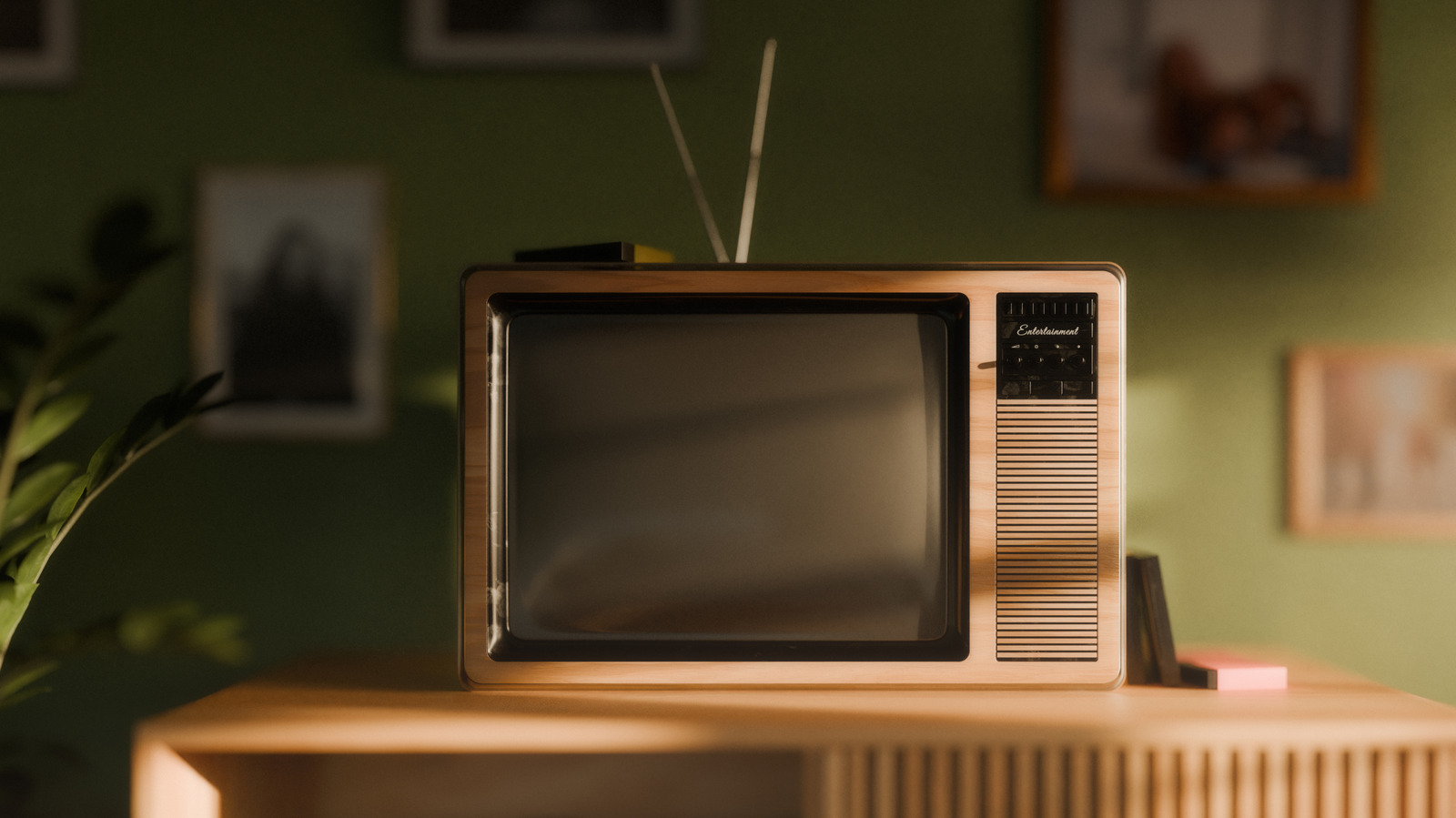
What is analog TV and how is it different from digital TV?
Key Points
What is analog TV and how is it different from digital TV? Going analog is all the rage, but does it apply to the small screen? The television industry continues to be in flux.
What is analog TV and how is it different from digital TV?
Going analog is all the rage, but does it apply to the small screen?
The television industry continues to be in flux. As the streaming revolution continues to push viewers away from traditional cable broadcasts, consumers have more options than ever when looking to enjoy their favorite programming. In April 2026, for instance, Nielson found that streaming had risen to roughly 47.6% of US viewing habits, over double the combined total of broadcast and cable viewers. Gone are the days of analog television, when families would huddle around a massive console to enjoy a static-riddled broadcast of The Dick Van Dyke Show. And while over-the-air (OTA) broadcasts continue to be in roughly 20% of homes, the technology behind these broadcasts has progressed far beyond its predecessors.
For younger audiences, parsing the differences between television broadcast technologies can be difficult. Analog, for instance, seems something born of an imagined past. But the technology persisted beyond the era when television boxes were the size of small sedans, as America's broadcasting network hadn't fully transitioned from the technology until 2009. Incredibly, this means that some users likely watched an analog broadcast while texting on their iPhone.
The transition to digital, meanwhile, has brought a host of improvements, ranging from high definition television to more consistent feeds. As it stands, television broadcasts are undergoing a similar evolution with the introduction of NextGen Television, or ATSC 3.0, which adds internet protocols to digital television broadcasting. Promising 4k resolution, enhanced multicasts, better audio and expanded channels, the NextGen TV transition looks to mirror the analog-to-digital move nearly two decades earlier. However, accessibility concerns plague the transition, with many advocates worrying that a hasty transition could strip millions of free television services. To put these changes in context, let's take a look back at the rise and fall of television technology that started it all: analog.
What is analog television?
Think of analog television as a return to the earliest days of visual broadcasting. Gaining popularity in the wake of World War II, analog television transmits video and audio signals via Very High Frequency and Ultra High Frequency channels. These signals were broadcast via local television stations, which your parents and grandparents' television sets would receive via antennas that tapped into analog broadcasts the same way your car does a radio station. When households transitioned to cable, the transition came using analog cables, allowing for analog to remain the predominant form of television broadcast for roughly 6 decades until the FCC mandated that all stations fully transitioned to digital television by 2009. Since then, analog television has gone by the wayside.
Analog video cameras convert light into electrical signals. Typically capturing these images at 30 frames per second in the US, the camera then converts these electric pulses into rows of pixels, which represent the colors and intensity of the visuals in the frame. These are then combined with horizontal and vertical synchronization signals to inform a television set where the transmitted rows should be displayed and when to start drawing a new frame. The signal that relays this arrangement, known as a composite video signal, is then broadcast over the airwaves on specific frequencies, which determine their corresponding channel. Sound was transmitted separately.
How these broadcasts make their way to your television mirrored the processes of traditional radio stations. Ultimately, each television station broadcast a paired visual and sound signal over ultra high and very high radio frequencies, with the AM channel carrying visual signals and the FM channel its sound. These combined frequencies make up the channel your analog television would tune into to watch.
At first, viewers could tap into television broadcasts via antennas that intercepted these broadcasted signals. Early cable, meanwhile, delivered these signals via coaxial cables directly to viewer's television sets. Analog cables transmit information via electric pulses whose amplitudes correspond to specific light or sound signatures.
How does digital television differ from analog?
The best way to understand the difference between analog and digital is to view analog signals as continuous relays of information in which values can take on any number within a specific range. Digital transmissions, meanwhile, are known as discrete, meaning that they convert images and sounds into a binary code of ones and zeros, like code to program computer software. For the visual learners out there, imagine the peaks and valleys of your classic radio wave converted into something visually akin to a bar graph. These signals are then compressed into digital data packets, which broadcasters transmit via radio waves for over-the-air and satellite television. Cable, meanwhile, transmits these signals through cables, while streaming services transmit data via a remote server.
Your television receives these packets of data similarly as your computer might an internet connection, with the information being relayed through both a visual and audio information stream. Your television, formed of tens of thousands of pixels, then converts these digital codes into the corresponding shades and intensities of blue, red, and green, ultimately forming the picture on your screen. If you were to use an analog television, signal is then decoded and converted into an analog signal through a digital to analog converter, which translates the binary code into a continuous analog signal. True digital televisions accomplish this task through a modem that unpacks these digital packets into their corresponding visuals.
Using a digital signal delivers several benefits, such as sharper images and more efficient use of the airwaves, allowing more channels to be broadcast over the same frequency range. Compression is also employed to help digital broadcasts use less bandwidth, with early efforts often using MPEG-2 and Next-Gen TV utilizing H.265. It also drastically cuts down on potential interference while increasing signal strength. By transitioning to digital, stations could also broadcast in high definition (HDTV), which dramatically enhanced broadcasters' picture resolution. At their best, digital HDTV broadcasts can achieve more than 10 times the resolution of an NTSC analog broadcast. Digital TV also allowed for television broadcasts to move away from their predecessor's 4:3 aspect ratios, allowing for wider screens that better mimic both human eyesight and the moviegoing experience. Multicasting was another added benefit, with stations able to broadcast multiple signals. On balance, the move meant clearer pictures and more channels.
The death of analog and the birth of a new era
The move to digital took longer than you likely expect. In 1996, Congress pushed the US towards digitized broadcasts by authorizing additional broadcast channels for TV stations. The decision, known as the Digital Television Transition, allowed stations to broadcast digital channels alongside their analog ones. By 2009, all full power television stations were mandated to transition to a digital format. For consumers with older analog televisions, this meant adding a digital-to-analog converter box to their set, while newer televisions came with built-in tuning systems. Luckily, the majority of American households were well prepared for the transition. According to Nielson Media Research, roughly 97.5% of American television-viewing households were ready for the transition to digital at the time of the FCC's deadline.
Of course, this didn't mean that over-the-air (OTA) television broadcasts were fully killed in 2009. Instead, broadcasters were required to adhere to the first digital television standard, known as ATSC 1.0, which preserved over-the-air broadcasting as a key aspect of the US television diet. Today, roughly a fifth of viewers continue to receive free broadcasts of local stations via antennas.
Now, however, the FCC is pushing to adopt a new standard. Dubbed ATSC 3.0, or NextGen TV, this new form of digital television promises to enhance the quality broadcasts and add advanced features by incorporating internet protocols (IP) into station's signals. Much like the transition from analog to digital, viewers moving from a standard digital format to NextGen television should expect a leap in television quality. However, unlike the previous transition, consumers have been less willing to shell out for the new format, despite widespread industry support. To receive ATSC 3.0 broadcasts, consumers must use televisions compatible with NextGen TV or purchase an adapter.
Some argue that the FCC's approach to the transition could strip millions of consumers of access to free public television, and transform public broadcasts from a free service into yet another subscription. Concerns stem from a pending FCC decision to allow companies to fully transition to the new standard, and cut off ATSC 1.0 broadcasts in the process. Unlike the shift from analog to digital, however, the FCC is neither proposing a Congress-regulated transition timeline nor investing in state-funded educational or coupon efforts to ease the transition. Moreover, broadcasters have advocated for adding digital rights management (DRM) encryption to signals, a move that the Electronic Frontier Foundation warns could privatize public airwaves.
Advocates worry that such a shift could bar viewers' from critical emergency warnings, news and public service announcements. As expected, the growing pains of such a transition will likely occur along stark societal lines, further exacerbating inequality concerns. As John Bergmayer, legal director at digital rights advocacy group Public Knowledge, wrote in an op-ed on the FCC's ATSC 3.0 transition, the people most negatively impacted will likely be those who most depend on these services. If the FCC wants the transition to NextGen TV to go as smoothly as its move from analog nearly two decades earlier, it should take care to preserve television broadcasts' status as a an essential public service.