
Health
How Singapore’s Ascott grew from its first serviced residence into a global hospitality business
Key Points
How Singapore’s Ascott grew from its first serviced residence into a global hospitality business Founded in Singapore in 1984, Ascott now operates more than 1,000 properties worldwide – while continuing to test new ideas in its home city. Not too long ago, a hotel room had a very specific purpose. You would check in, deposit your luggage, then disappear for the rest of the day – only returning to bed down for the night.
How Singapore’s Ascott grew from its first serviced residence into a global hospitality business
Founded in Singapore in 1984, Ascott now operates more than 1,000 properties worldwide – while continuing to test new ideas in its home city.
Not too long ago, a hotel room had a very specific purpose. You would check in, deposit your luggage, then disappear for the rest of the day – only returning to bed down for the night. The cycle would likely repeat itself for the duration of your trip.
The room might have been functional, comfortable, occasionally luxurious – but ultimately a place to pause briefly between work and leisure. Somewhere along the way, the lines between hotels, residences and workspaces began to blur.
A business trip might stretch into a long weekend. Remote working and digital nomadism became commonplace. That meant having a proper desk in the room, rather than a dressing table or TV console doubling as a workspace. And with the advent of food delivery apps, staying in became an attractive alternative to dining out – putting pantries, kitchenettes and dining spaces into the equation.
Increasingly, travellers aren’t just looking for somewhere to stay; they’re looking for somewhere to live, however briefly.
It’s one of the biggest shifts that hotel operators, serviced residence providers and other hospitality players have had to navigate over the past decade. Few companies, however, have had a better vantage point than The Ascott Limited.
While global hotel groups such as Accor, Hilton and Marriott built their businesses around traditional hotels before expanding into apartments, serviced residences and other long-stay options, Singapore-born Ascott took a different route.
Founded in 1984 with the opening of The Ascott Singapore – Asia Pacific’s first international-class serviced residence – the company spent the next four decades refining a model built around flexibility and residential comfort. This was well before terms such as “bleisure”, digital nomadism and remote work became mainstream.
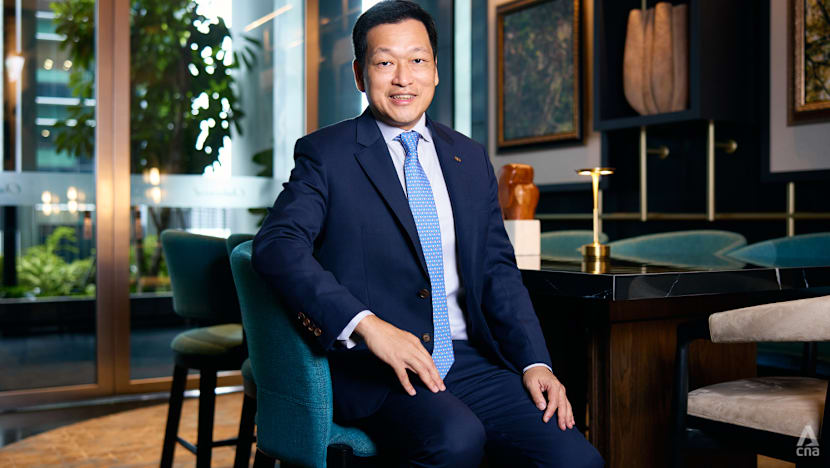
“We weren’t ahead of our time as much as we stayed close to something fundamental,” said Ascott CEO Kevin Goh. “People away from home want more than a room. They want a space that works around their life. That need existed in 1984 and is far more widespread today.”
Today, Ascott’s portfolio spans more than 1,000 properties in over 230 cities across more than 40 countries. These range from hotels and serviced residences to social-living properties and branded residences, under brands including Oakwood, Somerset, Lyf, The Unlimited Collection and Yello.
Ascott’s growth today is largely asset-light, with the company managing and franchising properties rather than relying on direct ownership. Yet despite its global scale, it remains something of an under-the-radar success story in its homeland.
MORE THAN JUST SOMEWHERE TO SLEEP
Ascott may be a hospitality giant, but its business has also evolved around changing human behaviour. And while corporations often like to describe themselves as having anticipated the future, Goh resists that narrative.
“We did not set out to anticipate remote work, digital nomadism or extended-stay travel as trends,” he maintained. “We simply kept asking what guests needed and built around that.”
The fundamentals have remained remarkably consistent: People still want space and flexibility, and to feel settled rather than transient
The biggest difference is that those expectations are no longer confined to expats or long-stay corporate travellers. These days, holidaymakers, young families and remote workers increasingly expect the same comforts.
Parents appreciate being able to prepare breakfast for young children before heading out for the day. Longer-stay guests, including remote workers, value having a washing machine instead of returning home with a suitcase full of laundry.
These aren’t glamorous additions; they’re practical considerations. Together, however, they can change how a stay feels.
The common thread is guests who want to arrive somewhere and actually live in it, not just pass through,” explained Goh. “They want to feel connected to where they are – to a neighbourhood, a community, a shared experience with people around them.”
This might mean discovering cafes where residents linger over breakfast, neighbourhood markets away from the main tourist trail or independent bookstores down a side street. Increasingly, travellers want want stories, not souvenirs.
Goh said Ascott’s properties are typically located in city neighbourhoods close to where residents live, eat and go about their daily lives.
“That proximity, combined with the time a longer stay affords, allows guests to experience a destination rather than just visit it,” he said. Accommodation then becomes a base from which travellers can settle into the rhythms of a destination.
HOSPITALITY'S NEW LUXURY? BELONGING
There was a time when luxury hospitality was measured in thread counts, marble bathrooms and whether someone greeted you by name. Those things still matter, but more and more, they are simply the price of admission.
The real differentiator today is far less tangible: connection.
Increasingly, luxury is being defined less by excess in design, service or facilities than by a sense of immersion. That helps explain why the serviced residence – once regarded as a niche product for expats on long-term postings – has become relevant to a broader audience.
That’s also changing how hospitality brands see their role. Beyond providing accommodation, they are increasingly curating experiences.
At Ascott, those experiences range from neighbourhood-led programming at Lyf properties to member events offered through its loyalty programme, Ascott Star Rewards (ASR), including courtside access at Roland-Garros, the F1 Singapore Night Race and culinary experiences hosted by celebrated chefs.
Other partnerships, including one with Chelsea Football Club, give ASR members access to experiences beyond the hotel stay itself.
The point, however, isn’t football, tennis or F1; it’s the memory attached to the trip. The experience can linger long after checkout.
According to Goh, more than 60 per cent of bookings made through ASR come from returning guests. With more than nine million members, repeat business has become an increasingly important part of Ascott’s strategy.
Goh said the company is now turning to technology to sharpen that personalisation. “We are investing in AI and agentic commerce capabilities to make that personalisation smarter and more anticipatory, so that what we offer each member feels less like a recommendation and more like something chosen specifically for them.”
WHY ASCOTT HAD TO THINK GLOBALLY
Building a global hospitality business is challenging enough. Doing so from a small home market like Singapore presents another set of constraints. Unlike hospitality giants headquartered in countries with vast domestic tourism markets, Ascott could not rely on local travellers alone to sustain its growth.
Instead, it had to compete internationally almost from the outset. That demanded a different mindset. “We had to be nimble in adapting to different market conditions,” Goh explained.
For Ascott, that need to adapt across markets would eventually become a defining part of its operating model.
Rather than sticking to a single type of stay, the company evolved what Goh describes as a “flex-hybrid operating model”, allowing properties to respond to changing travel patterns.
That flexibility proved particularly useful during the pandemic. As international leisure travel ground to a halt, hotels around the world struggled to fill their rooms. Ascott pivoted towards demand for longer stays while converting some properties into quarantine facilities, helping to keep them operating as international travel remained severely restricted.
During that period, the company maintained overall occupancy at about 50 per cent.
The pandemic ultimately put that flexibility to the test. For Ascott, a model designed around different lengths and types of stay offered some resilience at a time of extraordinary disruption. It was also an extension of what the company had spent decades doing: adapting to changes in how people live, work and travel.
WHY ASCOTT TESTS NEW IDEAS IN SINGAPORE
For all its global reach, Ascott continues to use Singapore as a testbed for ideas before taking them overseas – a strategy that says as much about its home city as it does about the company.
After all, few cities compress such a diverse mix of business travellers, leisure visitors, expatriates and locals into such a compact urban landscape.
“Singapore gives us something rare: a concentrated, internationally diverse and highly discerning guest base in a single city,” Goh said. “When a concept works here, it has earned its place before it travels further.”
The company’s latest openings reflect this approach. In April, Oakwood Premier Raffles Place Singapore opened in the CBD, marking a more premium positioning for the Oakwood brand.
July witnessed the debut of Lyf Chinatown Singapore, the fifth local outpost of Ascott’s social-living brand – where communal kitchens, co-working spaces and lively programming matter just as much as the rooms themselves.
Later this year, Somerset Clarke Quay Singapore is expected to open with a nature-inspired concept aimed at families and longer-stay guests.
WHY ASIA IS WRITING HOSPITALITY’S NEXT CHAPTER
For decades, much of the global hospitality industry’s growth and influence was centred on North America and Europe. Today, Goh believes more of that momentum is shifting towards Asia.
“The most exciting opportunities in hospitality today are in experience,” he said. “Compared to more mature markets like the US and Europe, the Asia-Pacific is where that shift is now happening at speed and at scale.”
A growing middle class, rising disposable incomes and younger consumers prioritising travel have helped fuel hospitality growth across the region.
But Goh is careful not to treat Asia-Pacific as a single market. Singapore, Tokyo and Sydney are mature gateway cities where expectations continue to rise, while fast-growing secondary cities and emerging leisure destinations are creating new sources of demand.
Vietnam, in particular, stands out. Already a major leisure destination, the country is also seeing growth in business travel, wellness tourism, MICE and extended stays, Goh said.
Infrastructure investment continues at pace, while new coastal destinations are steadily moving onto travellers' radar.
For Ascott, which has operated in Vietnam for more than three decades, the opportunity extends well beyond adding pins to a map. It recently signed management agreements for eight new properties in a single month, bringing its portfolio in the country to more than 40 operational and pipeline properties.
“The pipeline reflects where we think Vietnam is heading, and we are building ahead of that curve,” Goh said.