
Technology
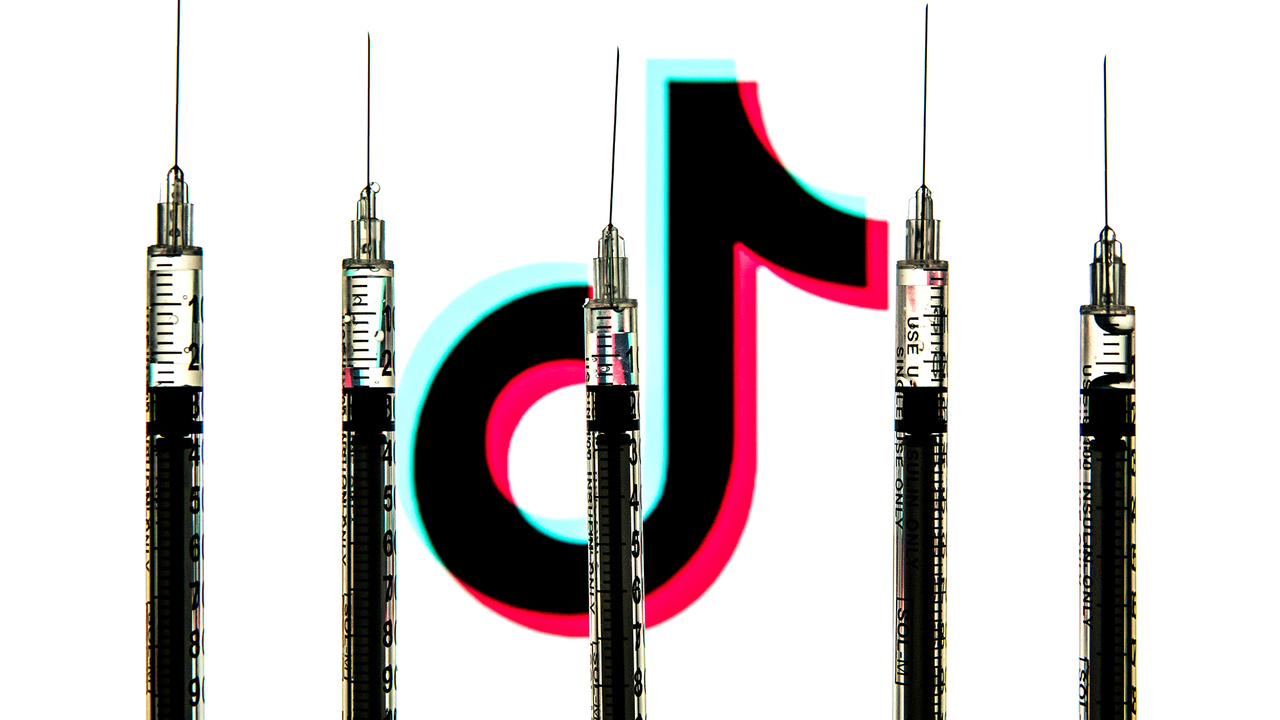
'There's a sense that these algorithms are objective and they get to know you': How social media warps our understanding of healthcare
Key Points
'There's a sense that these algorithms are objective and they get to know you': How social media warps our understanding of healthcare Editor Hannah Osborne spoke with investigative journalist Dr. Deborah Cohen about her new book, "Bad Influence: How the Internet Hijacked Our Health." Social media has upended how people engage with healthcare, as it provides a platform for people to share their experiences, find support groups, and learn more about symptoms and conditions. But it's also...
'There's a sense that these algorithms are objective and they get to know you': How social media warps our understanding of healthcare
Editor Hannah Osborne spoke with investigative journalist Dr. Deborah Cohen about her new book, "Bad Influence: How the Internet Hijacked Our Health."
Social media has upended how people engage with healthcare, as it provides a platform for people to share their experiences, find support groups, and learn more about symptoms and conditions. But it's also given nefarious actors a platform to promote products, spread misinformation and prey on people's fears. Meanwhile, algorithms deliver users an individually tailored stream of content, promoting and prioritizing the most engaging posts with little oversight.
In her book "Bad Influence: How the Internet Hijacked Our Health" (Oneworld Publications, 2026), author Dr. Deborah Cohen, a broadcaster, journalist and editor who has a medical degree from the University of Manchester in the U.K., examines how social media platforms and influencers have transformed people's views of healthcare, from the proliferation of weight-loss drugs and hormone therapies to billionaires seeking immortality.
Cohen spoke with Live Science about her book, the shifting landscape of healthcare discussions moving online, and how health literacy is now key. "Bad Influence" has been short-listed for the 2026 Royal Society Trivedi Science Book Prize.
Read an excerpt: 'A fine line between reducing stigma and trivialising conditions': Social media, self-diagnosis and the glamorization of ADHD
Dr Deborah Cohen is an award-winning broadcaster, journalist and editor, who has worked across mainstream and academic print, digital, TV and radio. Previously Science Editor for ITV News and Health Correspondent for BBC Newsnight, leading their COVID-19 coverage, she established the investigations unit at the BMJ, one of the world-leading medical and health policy journals.
Hannah Osborne: You wrote in the book that we're in the middle of a global experiment in public health that will take years to understand. What do you think the results are going to be?
Deborah Cohen: What we know about healthcare is our ideas, concerns and expectations shape health. So if you go to a doctor, what they're trying to establish is what your ideas might be about your particular condition, your concerns and what you want to take away from that particular consultation. Obviously, our ideas and concerns or expectations are very much shaped by the information environment, and this is going to change again when we're adding large language models [LLMs] into the mix. We're going to have a new wave of health literacy.
My concern from writing the book is there's possibly a lack of understanding of what healthcare can always deliver. One of the challenges I felt was when you go to social media and it provides you with certainty and often quick fixes, but then you go to the Health Service [the National Health Service (NHS), the U.K.'s health system], where they can't really provide you with certainty, and there's complex solutions or there isn't an obvious solution. You're balancing competing risks, benefits and harms.
I do wonder about how realistic our expectations [are] about what health and science can actually deliver — our expectations about what a health professional should do, or how much time they have available. You know, our tech is available 24/7. And particularly with large language models, you can query that at any time of the day or night. What does that do to trust? We think there are quick fixes for stuff where inherently there isn't.
I think our experiment really underpinning all of that is, what do we want from our Health Service? What do we want health to look like or to be? What do we want from our doctors or our therapists? What do we want those relationships to do or be, on top of the tech that is going to be more and more widespread? What's going to be the role of the doctor in all of this? These are very live questions.
I suspect it's going to be different for different generations, different cultures, different within different health services as well. If you've got an abundant Health Service, which no country has, perhaps there's less need for these tools to bridge the gaps.
HO: We have strained healthcare systems. Is the gap between doctors and patients widening because of social media, or is social media filling a gap?
DC: It's both. And that's what the problem is — the gap is filled, but not necessarily by the right things. If you are looking for support, does it have to be on TikTok? Are there other ways of having forums and that kind of support delivered on a digital device? Are there other, safer ways of doing this online?
Equally, there's something about the way the content is delivered there that appeals. It's the short storytelling, and [health authorities are] having to compete against that. What's the solution? It's multifaceted, but if people are used to getting their information on TikTok or Instagram, and then you look at the NHS website, which is as dull as dishwater, it's no wonder social media is more appealing.
You've probably got to change how you deliver information. Maybe you need more storytelling rather than really dry content. If people are used to getting that, and that's what they respond to, then you need to think about that. It's a connection. What does that tell us more broadly about our society? How do we better deliver information in the way people need? That might be an LLM, [but] again, that's a whole other debate.
HO: You spoke to a lot of people about how they use social media for their health. Did you find an overriding theme in what they were looking for?
DC: It was women. It was a lot of feeling unseen and unheard. You have whacking great lists of gynecological issues. There's a sense that female health has been massively underfunded — and it has. But I guess it's, what fills the gap? That doesn't mean "femtech" in all its glory fills that gap. Empowerment isn't fully evidenced interventions. It's like, we've got this app, no idea what it does; it actually might do you harm, but it's filling a gap. That's not good healthcare.
It's a variety of issues. One of the issues of social media is that people passively consume information — health information as well — so it will bring up information you didn't even know you were necessarily interested in. You hear repeatedly that "the algorithm knows me better than me." There's a sense that these algorithms are objective and they get to know you.
One psychologist told me, "they know your neurosis better than you do." But is that really true about the algorithm? That's where one of the challenges of diagnosis is. These will be questions for large language models for diagnostic purposes.
Then, for others, it's more active. They'll have active people that they follow who provide health information, particularly around menopause, longevity, ADHD — stuff like that.
HO: In terms of those algorithms and how they increase anxieties, is there any way of backpedaling when, as an industry, it's making people a lot of money?
DC: What was interesting was how people now do ADHD on TikTok according to what's going viral, because they want more engagement — and we know engagement drives money. It's as linear as that in many ways. Part of the problem, then, is if you start to see a particular condition on social media, what does that do to our understanding of that particular condition?
They're all the broader questions about how the algorithm behaves. But what do you do about it? The algorithm needs sorting. When we talk about what tech companies can do, I think the algorithm potentially is one of the more harmful aspects of social media.
HO: While you were researching and writing, was there anything that really surprised or shocked you?
DC: I've been an investigative journalist for so long that little shocks me these days. Where there's a gap, people will step in and make money. We live in a capitalist society.
For me, as someone with a medical background, it's the behavior of doctors who should know better. That is the bit that doesn't sit very well with me. I think the GMC [General Medical Council, an independent regulator of doctors, physician associates and anesthesia associates in the U.K.] needs to start thinking about what to do because one of the techniques that influencers use is parasocial relationships, where they lean into the artificial relationships that feel real to the followers, and there's all sorts of techniques they do to enhance that. There are doctors doing that.
Then, they lean into authority bias and say, "Well, actually, I'm a doctor, and this is what I do, and this is how I use my treatment; this is how I treat myself." Using that to promote a product is really uncomfortable.
Yet that is employed on social media. They tell the similar hero's journey. "I have terrible symptoms; then I did this, and it totally transformed me and changed my life." It's when it's a health professional and they use social media as a front gate to their clinics, and advertising their platform to their clinics to offer interventions that lack an evidence base or are potentially harmful.
It's not shocking, because I've been in the depths of all sorts of investigations — but I thought that was pretty ick.
HO: The book isn't all negative. There are positive stories about support groups and help groups. Is there any way to separate the bad from the good?
DC: It's really hard. What I say to people is to ask why that person on the platform is telling you what they're telling you. What's this person trying to tell me? There's a lot of people on there who are genuinely trying to do good, who want to either share their journey or help people understand the complexities of health and science.
But ask, are they trying to sell me something? How are they making their money? Are they promoting something? Just ask yourself, why should I believe you? Why should I listen to you? Why should I trust you? What are they getting? Is it fame? Are they getting their 15 minutes and more on social media? Are they getting a little bit of a dopamine hit from that?
I use the dopamine here advisedly because hormones and neurotransmitters are totally misused on social media — we're just a bag of hormones or neurotransmitters when we're far more complicated, really.
If they're telling you about the benefits of the treatment, are they telling you about the harms? Because nothing is harm-free. What's the risk of doing this thing, or what happens if I do nothing? What are the alternatives to what I'm being sold? It's just basic health literacy and skepticism.
HO: We've touched on this a bit, but with the emergence of LLMs, how do you see the landscape shifting in the next five to 10 years?
DC: We're still working out how the information environment fits together. There are potential benefits with LLMs — we've got to know where the information is provided, and we all know about the hallucinations. But can they help people interpret medical information, medical jargon better? Can they use them to sort of brainstorm what treatment they want?
Related stories
- 'A dangerous proposition': How AI is warping the social fabric and the ways we collectively imagine the future
- What is Moltbook? A social network for AI threatens a 'total purge' of humanity — but some experts say it's a hoax
- 'When people gather in groups, bizarre behaviors often emerge': How the rise of online social networks has catapulted dysfunctional thinking
On the other hand, are they more uncertain? We know there's been concerns over them [AI chatbots] being sycophantic. How does this all fit together?
When I wrote the book, I thought it's going to be out of date because LLMs have come along and no one's going to be using social media. But then research from about a month ago found that 50% of Americans under 50 use social media as a source of information about health.
It's going to fit together in different, complex ways for different people. They might hear about something on social media and then use LLMs to explore it further, and then use that to help guide treatment or diagnosis.
How it all fits together is still a bit of a conundrum.
This interview has been condensed and edited lightly for clarity.
"Bad Influence" is an eye-opening look at the way online platforms have changed — and in many cases, exploited — our perception of healthcare, with little overview or regulation to prevent harm. Cohen reveals the insidious ways our anxieties are being amplified and manipulated by algorithms and influencers, highlighting the need for us to discern where online information crosses the line from helpful support to dangerous misinformation.
Hannah Osborne is the planet Earth and animals editor at Live Science. Prior to Live Science, she worked for several years at Newsweek as the science editor. Before this she was science editor at International Business Times U.K. Hannah holds a master's in journalism from Goldsmith's, University of London.
You must confirm your public display name before commenting
Please logout and then login again, you will then be prompted to enter your display name.
healthcare (ORG)
Hannah Osborne (PERSON)
Deborah Cohen (PERSON)
Oneworld Publications (ORG)
the University of Manchester (ORG)
U.K. (LOCATION)
Cohen (PERSON)
Live Science (ORG)
Royal Society Trivedi Science Book Prize (ORG)
Science (ORG)
ITV News (ORG)
COVID-19 (PERSON)
BMJ (ORG)
the Health Service (ORG)
the National Health Service (ORG)