
Politics
Rep. Ro Khanna calls for ‘Data Center Bill of Rights’ and says the industry needs regulation
Key Points
Rep. Ro Khanna, D-Calif., called for a “Data Center Bill of Rights,” arguing in an interview on NBC’s “Meet the Press” that data centers needed to be regulated so local communities have a larger say on where to build them. Earlier this month, Khanna introduced a Data Center Bill of Rights resolution laying out a series of suggested guardrails on data centers, which have become a prominent issue in elections across the country. Asked by moderator Kristen Welker whether the U.S. could lead the...
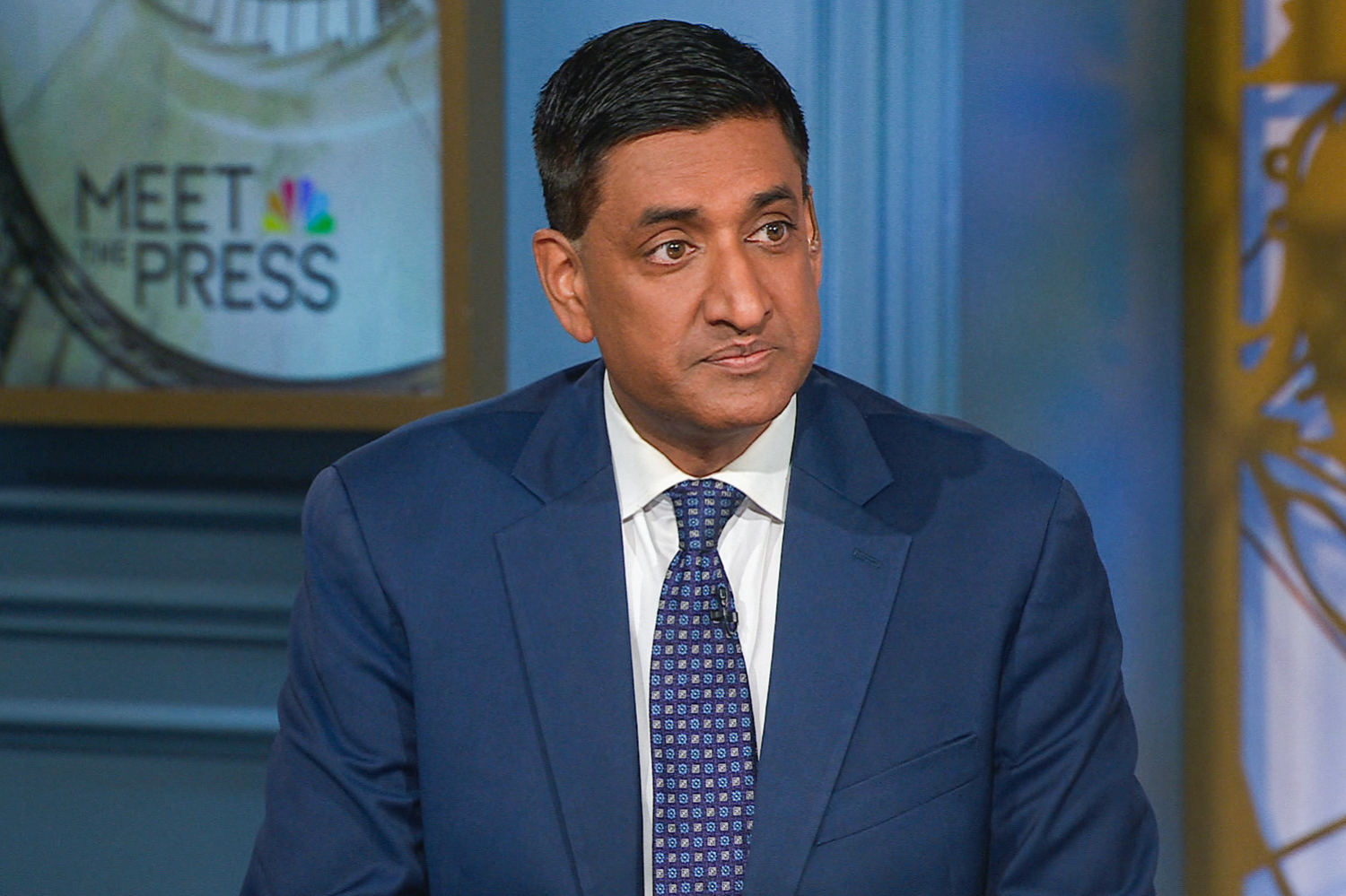
Rep. Ro Khanna, D-Calif., called for a “Data Center Bill of Rights,” arguing in an interview on NBC’s “Meet the Press” that data centers needed to be regulated so local communities have a larger say on where to build them.
Earlier this month, Khanna introduced a Data Center Bill of Rights resolution laying out a series of suggested guardrails on data centers, which have become a prominent issue in elections across the country.
Asked by moderator Kristen Welker whether the U.S. could lead the world in artificial intelligence if it opposes data center infrastructure, Khanna argued that “you can’t shove a data center down the throats of a local community without any say that that community has.”
“You can’t be jacking up electricity prices,” he said. “Even the technology leaders understand that there needs to be a pause so that we can get this right.”
Asked to clarify that he was not opposed to data centers but believes they need to be regulated, Khanna said, “I believe it needs regulation.”
“I introduced a Data Center Bill of Rights, saying it should never be in a residential community or farmland, and a local community should have the say of whether to do it,” he said.
Khanna’s resolution would affirm that communities can ban data centers in residential areas, reject increases in electric bills and require data centers use clean energy, among other provisions.
Data centers have cropped up across the country to support the rise in artificial intelligence, but the centers have created controversy in local communities, where residents have raised concerns over the centers’ water and energy consumption, noise and air pollution.
Now, candidates have had to grapple with data centers as an electoral issue. A March Gallup survey found that 71% of Americans somewhat or strongly opposed local construction of AI data centers.
Khanna, a progressive who has been floated as a potential 2028 presidential contender, did not close the door on a future run for the Oval Office.
Asked why he believes he would be a better progressive leader in 2028 than Rep. Alexandria Ocasio-Cortez, D-N.Y., Khanna called the congresswoman “a phenomenal talent.” Ocasio-Cortez has also been floated as a potential presidential candidate.
Khanna said he believes the progressive movement is going to have different voices across all levels of government but highlighted that he’s “focused on a national economic vision for this country.”
Asked how he believes he is different from Ocasio-Cortez, Khanna said that “we have different things that we’re offering the country,” adding, “for me, it is an economic vision.”
“I have a clear economic vision,” Khanna told Welker. “I call it ‘economic patriotism,’ and I believe that this is what the Democratic Party needs: a new national economic project to make sure every person has a stake in the country.”
“And we’ll see whether that it’s me or not,” he continued. “But I will tell you this: The Democrats’ path back out of the wilderness is to have a clear national economic message.”
[Image text:] MEET
HE
PRESS
002
1802
SEO