
Education
The psychological reasons people can’t stop watching true crime
Key Points
The psychological reasons people can’t stop watching true crime A couple of weeks ago, Netflix released The Idaho Murders: College Nightmare, a documentary revisiting the 2022 killings of four University of Idaho students - Bookmark A couple of weeks ago, Netflix released The Idaho Murders: College Nightmare, a documentary revisiting the 2022 killings of four University of Idaho students — Ethan Chapin (20 years old), Kaylee Goncalves (21), Xana Kernodle (20) and Madison Mogen (21). The...
The psychological reasons people can’t stop watching true crime
A couple of weeks ago, Netflix released The Idaho Murders: College Nightmare, a documentary revisiting the 2022 killings of four University of Idaho students
- Bookmark
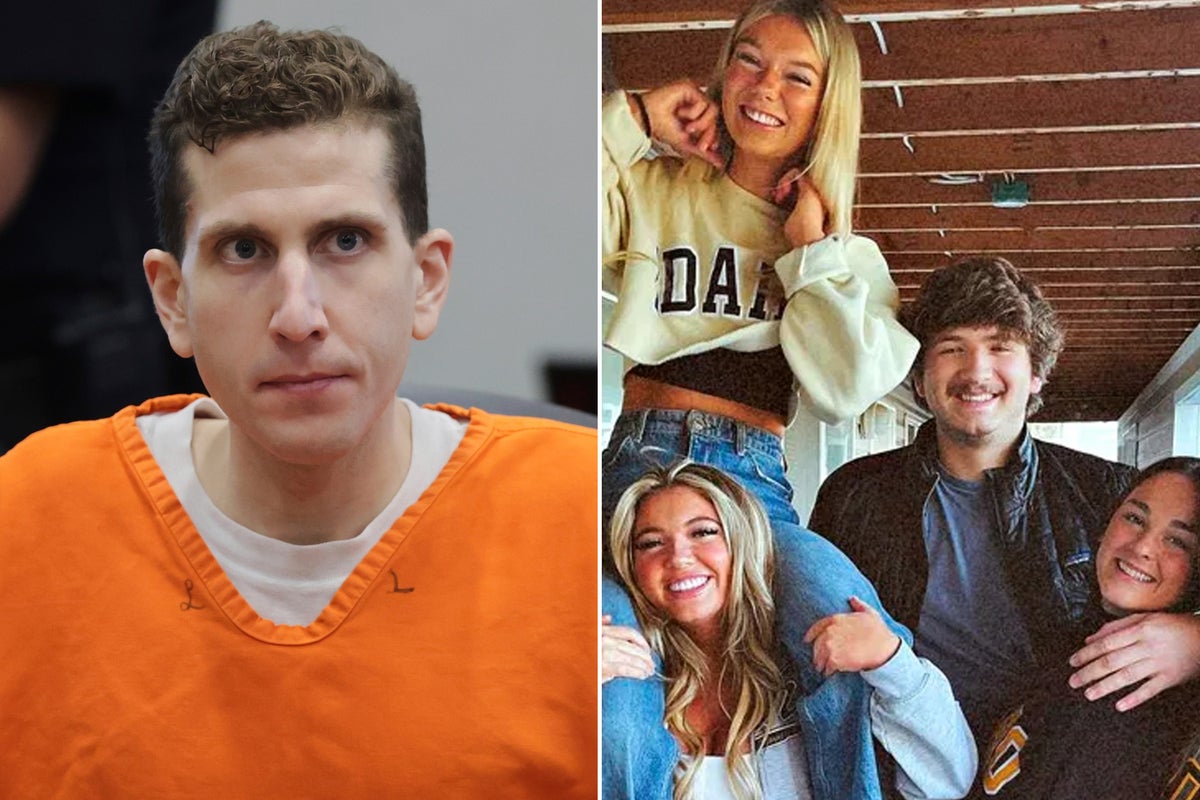
A couple of weeks ago, Netflix released The Idaho Murders: College Nightmare, a documentary revisiting the 2022 killings of four University of Idaho students — Ethan Chapin (20 years old), Kaylee Goncalves (21), Xana Kernodle (20) and Madison Mogen (21).
The case, which seemed closed when Bryan Kohberger pleaded guilty in 2025 and was sentenced to life in prison, isn’t actually closed. Kohberger has since petitioned the court to withdraw that plea, arguing coercion and bad legal advice. The victims’ families are ready and unfraid to face him in court again.
The three-part series, detailing the grisly mass slaying, is doing exceptionally well. In its first five days on the streamer, it had brought in 18.2 million views and outperformed other Netflix titles.
And this has revivified ongoing questions about why this type of programming is so alluring. What does it say about us as a society when lurid content like this is so central to our cultural milieu?
The psychology of fear
Although true crime feels current, it is the fourth iteration of the genre under one name or another since the mid-19th century. In terms of explaining it’s appeal, no one explanation suffices. It may be best understood as a system of complex processes, with each of the following mechanisms operating simultaneously at different levels: individual psychology, moral reasoning and social belonging.
Foremost among these is a phenomenon known as benign hedonic masochism. Masochistic behaviours, or enjoyment derived from self-suffering, can, in extreme forms, be pathological and even dangerous. But it’s the “benign” part that provides us the intellectual licence to enjoy content about murder and mayhem.
The Idaho Murders: College Nightmare trades on exactly this: dramatized crime-scene reconstruction and survivor interviews, all consumed from the safety of a couch.
Drawing on Paul Rozin’s pioneering theory of hedonic reversal, benign hedonic masochism describes a paradoxical psychological condition through which people acquire pleasure from simulated aversive experiences that generate fear, anxiety and emotional discomfort, all while remaining fundamentally safe.
The maladaptive and self-deprecating language that often surrounds true crime consumption, such as “binging,” “obsession,” “addiction” and being a true crime “junkie,” reflects a certain self-awareness of this reality.
More than just a voyeuristic exercise, true crime offers controlled encounters with uncertainty, danger and moral disorder, while simultaneously reassuring audiences of closure and finality.
In an era characterized by declining institutional trust and heightened perceptions of crime, the genre functions as an emotionally charged but socially acceptable means of indulging those same anxieties. Psychologists have a name for it: opponent-process theory.
The theory proposes that intense emotional experiences trigger a secondary, opposing emotional response. Dread, tension and even revulsion can give way to relief; anxiety to reassurance. With repeated exposure, the negative reaction may weaken while the positive after-effect, or the high, becomes more predictable and prolonged.
This is likely why true crime is especially prevalent on streaming and podcasting platforms that are built for continuous, immoderate consumption or “binging.”
Didactic storytelling
One of the other recurring explanations for true crime’s enduring popularity has to do with who’s actually consuming it. Adult women, in particular, are consistently identified as the target demographic for cable and streaming true-crime series, and the pattern holds even more strongly in podcasting.
One explanation for that skew is that the genre serves a didactic function: it imparts factual and moral lessons.
Rather than consuming crime narratives solely for entertainment, audiences may be using them as informal lessons in vulnerability, risk and survival. They watch series and listen to podcasts about sadistic psychopaths like Ted Bundy and Richard Ramirez to know how to spot them, how to thwart a possible kidnapping and how to avoid becoming a victim in a way the women in those cases so often couldn’t.
Originally coined by communications professor George Gerbner as “mean world syndrome,” the theory holds that repeated exposure to mediated violence can cultivate heightened perceptions of danger, vulnerability and interpersonal threat. Audiences, in the grip of that same syndrome, may then use crime narratives to gradually build a repertoire of mental scripts regarding warning signs, predatory behaviour and situational risk.
In this respect, consuming true crime resembles a form of low-stakes threat simulation, allowing the rehearsal of responses to hazards they hope to never encounter in real life.
Whether these lessons are empirically valid or merely produce an exaggerated sense of danger remains subject to some debate.
A true crime community
There are certainly other theories, too, about the psychological undergirding of this current true-crime zeitgeist. Some researchers point to morbid curiosity. Others frame it as a form of boredom-induced sensation-seeking or what’s been called negative information seeking (an appetite for unsettling information for its own sake).
And in some cases, the fascination with male offenders in particular has been linked to a disordered erotic interest known as hybristophillia. But the one thing these theories tend to converge on is that true crime, in its current form, provides a sense of community.
The barriers to membership in this community are remarkably low. Listeners can move effortlessly from consumers to contributors through message boards, Facebook groups, TikTok communities and even their own DIY podcasts.
In contrast to traditional media, true crime in its current form invites collective interpretation: armchair sleuthing, theory-crowdsourcing, shared meaning-making. It fosters a participatory culture in which audiences do not merely follow cases; they also actively help retell them.
That the path to community, in an increasingly segmented and partisan reality, includes a road paved by serial killers and cold cases may say less about our fascination with death than it does about our enduring need to find one another through stories.