
Science
NASA spots new crater on the moon created when a SpaceX rocket crashed
Key Points
A NASA spacecraft in orbit around the moon captured dramatic images of the impact crater left when a SpaceX rocket smashed into the lunar surface this month. The defunct upper stage of a Falcon 9 rocket crashed uncontrolled into the moon on Aug. 5 at an estimated 5,400 mph. The roughly 10,800-pound booster had launched two landers to the moon in January 2025, then remained adrift in orbit until the impact.
A NASA spacecraft in orbit around the moon captured dramatic images of the impact crater left when a SpaceX rocket smashed into the lunar surface this month.
The defunct upper stage of a Falcon 9 rocket crashed uncontrolled into the moon on Aug. 5 at an estimated 5,400 mph.
The roughly 10,800-pound booster had launched two landers to the moon in January 2025, then remained adrift in orbit until the impact.
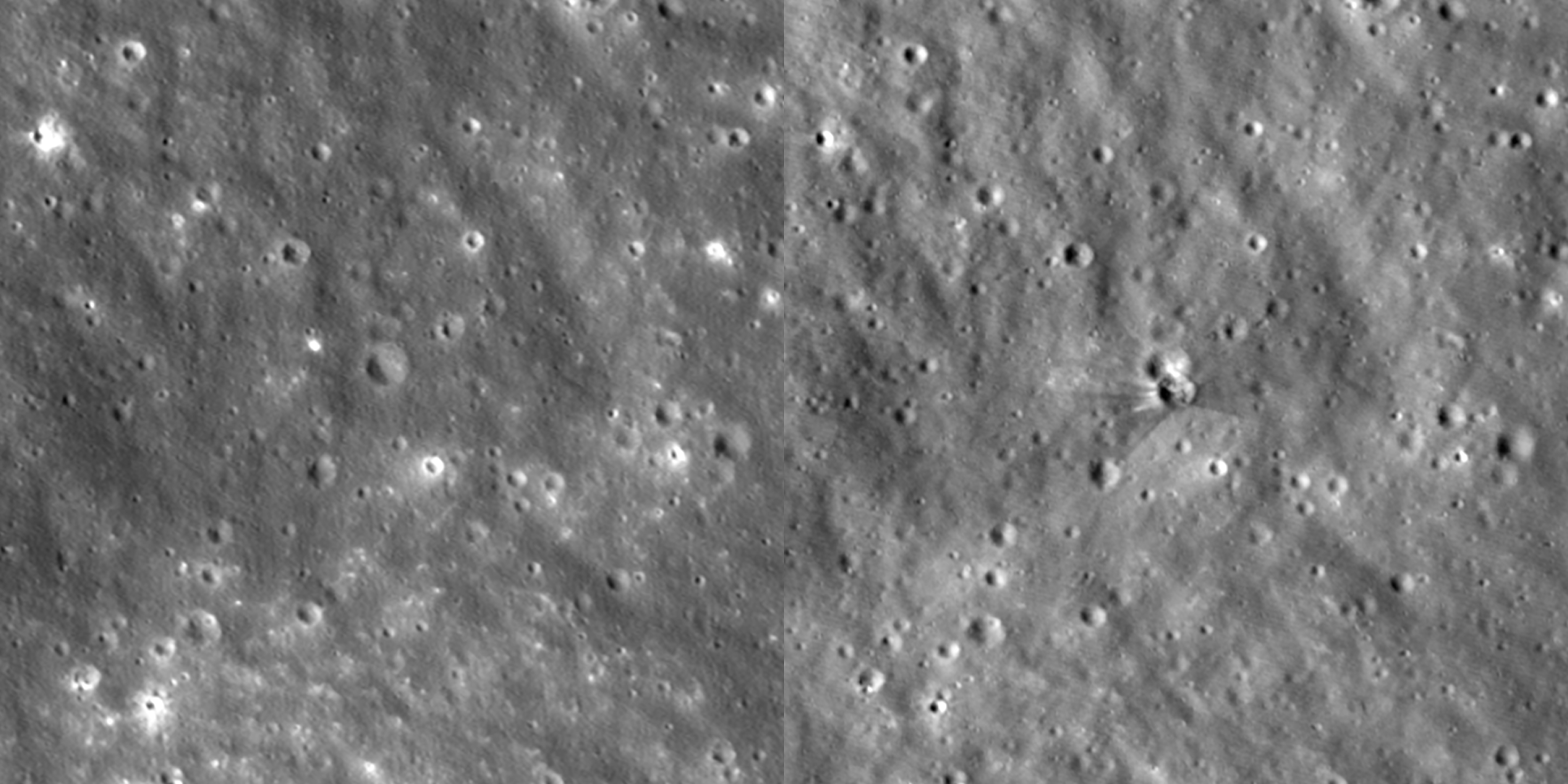
NASA on Tuesday released new images of the crash site taken by its Lunar Reconnaissance Orbiter on Aug. 11 and 12. Before-and-after views reveal a bright divot in the moon’s already-pockmarked terrain.
Although there were no live views of the Aug. 5 impact, researchers were able to track the rocket’s trajectory and pinpoint the expected site of the new crater along the western edge of the moon’s sunlit side.
NASA’s Lunar Reconnaissance Orbiter cannot easily pick a precise spot to photograph because it circles the moon from pole to pole every two hours, while the moon rotates on its axis. That means the spacecraft must wait for its orbit to line up with a specific location as it rotates into view.
NASA said it took six days for the orbiter to fly over the SpaceX crash site.
Engineers had to tilt the spacecraft so its cameras would point toward the crater as it flew 60 miles above the lunar surface at 1 mile per second.
The new photos reveal that the crater measures about 60 feet across. Based on the length of its shadow, scientists found that it is most likely less than 10 feet deep, according to NASA.
The images also show bright and dark streaks emanating from the crater. The darker rays are surface dust and rocks that were kicked up by the collision from a depth of around 1.5 feet, according to NASA. The brighter streaks near the crater rim were formed by fresher material excavated from deeper underground after the booster smacked into the moon’s surface.
NASA said the crater center is at an elevation of roughly 1,700 feet.
Shortly after the crash, a telescope in Chile spotted a debris plume from the cosmic collision. Later, the Korea Pathfinder Lunar Orbiter, which launched in 2022 as South Korea’s first moon mission, flew over the impact site and snapped photos of the crater and the ejected material in its vicinity.
The Falcon 9 crash was only the second known case in which a rocket h unintentionally hitting the lunar surface. The moon has withstood countless impacts from asteroids and other cosmic objects over its life, but it is very rare for a human-made object to slam uncontrolled into its surface.
In 2022, what was thought to be the upper stage of a Chinese rocket that sent a test capsule to the moon in 2014 smacked into the far side of the moon, carving out a snowman-shaped double crater that the Lunar Reconnaissance Orbiter spotted months later. China has denied that its spacecraft was involved.
The SpaceX crash ignited fresh debates about sustainability issues in space, particularly as countries like the U.S. and China race to put their astronauts and infrastructure on the moon.
In a statement on Aug. 5, SpaceX said it tries to properly account for its hardware after missions.
“We actively work to be as responsible as possible with hardware left in space to ensure space safety, including for more complex missions,” it said. “In this case, over time, solar activity and gravity led the second stage toward the Moon. Impacts like this are rare, but they can happen with objects in these types of orbits, and we worked with NASA on the optimal disposal solution.”