
Health
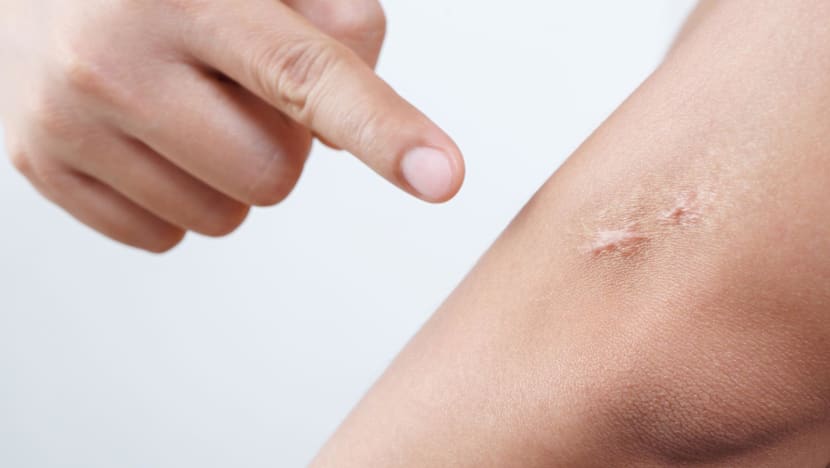
Can you make scars fade? Doctors explain why they form and what works – from silicone sheets to Vitamin E
Key Points
Can you make scars fade? Doctors explain why they form and what works – from silicone sheets to Vitamin E Dermatologists explain why certain wounds leave more noticeable marks, when scars are easiest to treat, and which over-the-counter remedies actually help. In our pursuit of a glass skin-like complexion and blemish-free body, we forget one thing: the scar that forms on our skin after an injury is our body’s way of healing and protecting us.
Can you make scars fade? Doctors explain why they form and what works – from silicone sheets to Vitamin E
Dermatologists explain why certain wounds leave more noticeable marks, when scars are easiest to treat, and which over-the-counter remedies actually help.
In our pursuit of a glass skin-like complexion and blemish-free body, we forget one thing: the scar that forms on our skin after an injury is our body’s way of healing and protecting us. Sure, the end result isn’t pretty but scars have their purpose and that’s to keep infection-causing microbes out. And sometimes, our skin can go overboard and create a thickened, raised scar known as a keloid.
But is there anything you can do to minimise a scar’s appearance? And if you’re not a fan of needles and lasers, what about those over-the-counter, scar-reducing products such as silicone sheets, petroleum jelly, Vitamin E and topical steroid? We find out.
HOW DO SCARS FORM IN THE FIRST PLACE?
Scars form when skin grows new tissue – primarily a protein called collagen – to pull together the wound and fill in any gaps caused by an injury. How a scar ends up looking depends on a few factors such as wound depth, injury type and location, said National Skin Centre’s senior consultant Dr Suzanne Cheng.
“The deeper the injury extends into the dermis (about 1mm to 3mm deep, depending on body part), the greater the chances of scarring,” she said. Similarly, a jagged laceration, crush injury or burn – as opposed to a clean, surgical cut – is more likely to scar. This also applies to wounds left to heal by themselves, especially if they gape or have uneven edges, said Dr Cheng.
“The face generally heals much better because it has an excellent blood supply,” she added. “In contrast, areas such as the legs, chest and shoulders tend to heal more slowly and are more prone to noticeable scars.”
Your skin tone and type also play a role, said Dr Eileen Tan, the dermatologist who heads Eileen Tan Skin Clinic & Associates. “Individuals who have darker skin types are more prone to hyperpigmented scars” as do those with dry skin that is prone to tearing.
Furthermore, “physiological changes such as menopause are associated with slower healing process and hence, affect the scar-healing process”, said Dr Tan.
Lest you think younger people are less prone to scarring (they heal better, don’t they?), it’s often the opposite, according to Dr Gerard Ee, the founder and medical director of The Clifford Clinic.
“Younger skin heals more vigorously but is also more prone to producing excessive collagen,” he said. “As a result, raised scars such as hypertrophic scars and keloids are more common in younger individuals. Keloids are most frequently seen between the ages of 10 and 30, coinciding with periods of increased hormonal activity such as puberty and pregnancy.”
Common types of scars
Atrophic scars: These scars appear sunken due to the loss of collagen beneath the skin, said Dr Gerard Ee of The Clifford Clinic.
They are the most common scars seen at National Skin Centre, especially those caused by acne, said Dr Suzanne Cheng. Acne scars can be further classified as ice-pick (deep, narrow, V-shaped pits), rolling (wide, shallow and wave-like depressions) or boxcar (wide, sunken craters with steep vertical edges) scars.
Atrophic scars can also be caused by chickenpox.
- Keloids: Keloids are bumpy and thickened scars that can be itchy and painful, said Dr Eileen Tan of Eileen Tan Skin Clinic & Associates. They can occur especially after ear piercing, BCG vaccination, or acne on the jawline or trunk, said Dr Cheng. “Keloids extend beyond the original wound boundary and may continue enlarging over time,” said Dr Ee.
- Hypertrophic scars: They are raised, firm, and red or pink scars that stay strictly within the boundaries of the injury. They are more common in individuals with darker skin tones, said Dr Tan.
- Contracture scars: These tight scars develop after extensive burns or significant skin injuries, said Dr Ee. “They may restrict movement when they cross joints or involve large areas of skin.”
- Stretch marks: Skin is stretched rapidly due to factors such as excessive weight loss or gain, or pregnancy, said Dr Tan.
WHY DO ACNE AND CHICKENPOX ALWAYS LEAVE SCARS?
In acne, “severe and prolonged inflammation – especially acne nodules and abscesses – destroys the collagen and forms fibrotic bands that tether the skin down, resulting in atrophic scars”, said Dr Cheng.
“Picking or squeezing the pustules significantly increases this damage,” said Dr Ee. (See "Common types of scars" for descriptions). “Some individuals, particularly those prone to keloids, may instead develop raised scars,” he said.
In chickenpox, severe skin inflammation is also what damages the deeper skin layers, said Dr Cheng, which results in those characteristic boxcar scars. Add scratching and potential secondary bacterial infection to the mix, and you could deepen the tissue damage and increase the likelihood of developing the characteristic pockmarks”, said Dr Ee.
DO PET SCRATCHES OR INSECT BITES CREATE SCARS?
If the wound is superficial, it should heal without scarring – regardless of a scratch, graze or bite.
But there are exceptions to this rule. When it comes to an injury on a joint, such as the knee or elbow, it can be scarring, said Dr Tan, as the wound “tends to heal at a slower pace and has a higher tendency to develop hypertrophic or keloid scars”.
If your skin reacts to an insect bite (usually superficial) and “there is intense skin dermal inflammation from insect saliva, secondary damage from skin scratching can create scarring”, said Dr Tan. “Discoloration (such as red or brown scars) and thickening such as prurigo nodules (hard and extremely itchy bumps or lumps) may develop in severe insect-bite reactions.”
As for pet scratches and bites, Dr Ee highlighted that they “carry a higher risk of infection, which prolongs inflammation, and increases the likelihood of noticeable scarring”.
IF SURGICAL CUTS LEAVE SCARS, HOW DOES PLASTIC SURGERY WORK?
It is true that any surgery will create a new scar, said Dr Cheng. Caesarean sections, for example, are bound to result in scars as they pass through the dermis.
“Caesarean scars are particularly prone to thickening because they lie across a high-tension area of the lower abdomen that experiences repeated stretching during movement," said Dr Ee. According to Dr Tan, these scars are often discoloured and can be hypertrophic or keloid in nature. Still, compared to accidental injuries, surgical incisions generally produce better scars due to “careful surgical technique, precise wound closure and sterile conditions”, said Dr Ee.
While many people turn to plastic surgery for solutions, it can't completely remove scars. "We can often make scars blend in much better with the surrounding skin," said Dr Cheng. "What we are really performing is scar revision – replacing a poor-quality scar with one that is flatter, smoother, less noticeable and easier to conceal, including with makeup."
And no, no plastic is used in plastic surgery. "The word 'plastic' comes from the Greek word 'plastikos', which means to mould or reshape," explained Dr Cheng. "The aim is to reshape tissue to improve both function and appearance by reducing tension, repositioning scars and restoring a more natural contour."
WHY DO NEW WOUNDS RESPOND BETTER TO TREATMENT?
According to Dr Ee, wound healing occurs in three overlapping phases: inflammatory phase (up to about a week), proliferative phase (about one to three weeks), and remodelling phase, which continues for up to a year or longer.
In the inflammatory phase, white blood cells are activated to fight bacteria and clear out dead cells; that’s when you get redness, swelling, heat and pain. The proliferation phase is when your skin starts mending itself by producing collagen to close the wound.
During the remodelling phase (starts about two to three weeks after a wound closes), collagen is not only produced, it is also reorganised and strengthened, said Dr Ee. “The collagen architecture is still evolving, blood vessels remain prominent, and inflammatory signals continue to influence healing. This is the period when scar-minimising treatments are most effective.”
WHEN DO YOU CONSIDER A SCAR AS “OLD”?
A scar is considered immature if it appears red and raised, feels itchy or tender, or continues to change in appearance, said Dr Ee. “Once a scar matures, the collagen fibres become more densely cross-linked, blood supply decreases, and cellular activity slows considerably,” he said.
Scar maturity usually occurs after around 12 months, said Dr Cheng, and the scar becomes much less responsive. “Treatments can still improve its appearance but the degree of improvement is generally less than if treatment had been started earlier.”
However, said Dr Ee, old scars are not a lost cause. “Modern treatments, including fractional laser resurfacing, radiofrequency microneedling, subcision (in-clinic minor surgery to treat depressed scars), dermal fillers and corticosteroid injections, can substantially improve the colour, texture, thickness and contour of mature scars.”
HOW EFFECTIVE ARE THESE OVER-THE-COUNTER PRODUCTS?
- Silicone patches and sheets
How they work: These products hold the skin steady and prevent the edges of the wound from being pulled apart. On raised scars such as hypertrophic scars and keloids, they may also calm them by lowering blood flow, oxygen and moisture to the area to help the red, lumpy skin turn flat and pale.
The ideal use is 12 to 24 hours daily for two to three months to flatten and fade raised scars. “Silicon-based products can be applied to scars once the wound is closed, usually two to three weeks after surgery or injury,” said Dr Tan.
How effective are they: Dr Tan, who co-published a study in 1999, found that the patches and sheets may work better on new scars, especially keloids, than established ones. However, steroid injections were dramatically more effective at shrinking keloids than wearing silicone sheets for 12 hours a day.
Dr Cheng and Dr Ee also agreed that these silicone products have the strongest evidence among over-the-counter products for raised scars. “Multiple randomised trials and systematic reviews support their use in reducing scar thickness, redness, stiffness and itch, particularly for hypertrophic scars and keloids,” said Dr Ee.
- Petroleum jelly
How it works: Keeping a fresh wound moist reduces scab formation, supports faster wound healing, and indirectly reduces the likelihood of excessive scarring, said Dr Ee. “It can be safely applied from the first day on a clean, superficial wound.”
How effective is it: “It is best used while the wound is healing rather than for treating established scars,” said Dr Cheng.
- Vitamin E
How it works: Many believe that Vitamin E’s antioxidants can defend cell membranes from free radical damage and oxidative stress during the healing process – and reduce redness and inflammation around the wound.
How effective is it: Clinical evidence supporting Vitamin E for scar improvement is weak and inconsistent, said Dr Ee. “Several studies have shown little or no improvement compared with placebo, while some patients develop allergic contact dermatitis, which may worsen the scar.”
- Topical steroid
How it works: “Topical corticosteroids suppress inflammation and reduce fibroblast activity, thereby limiting excessive collagen production,” explained Dr Ee.
How effective is it: “Over-the-counter preparations generally have limited penetration and modest effects,” said Dr Ee. “Stronger prescription corticosteroids may benefit selected raised scars under medical supervision but can cause skin thinning, visible blood vessels and pigment changes if overused.”
For hypertrophic scars and keloids, steroid injections are more effective than topical ones, he added.
- Retinoid
How it works: “Retinoid” is the group name for all Vitamin A products, including OTC retinol. “Retinoids increase skin cell turnover and stimulate collagen production, making them useful for improving skin texture and post-acne pigmentation,” said Dr Ee. “They should never be applied to open wounds and are best introduced only after the skin barrier has fully recovered.”
How effective is it: Retinoids do increase “epidermal cell turnover and may improve very superficial skin texture”, said Dr Cheng. However, they do not improve atrophic (or depressed) scars, she said.
- Exfoliant
How it works: Examples of exfoliants include alpha-hydroxy acids (AHAs) and beta-hydroxy acids (BHAs) to improve surface skin texture and help fade post-inflammatory pigmentation by accelerating cell turnover, explained Dr Ee. Only use them after the wound has completely healed, along with diligent sun protection.
How effective is it: “They do not penetrate deeply enough to significantly remodel dermal collagen, making them less effective for raised or deeply depressed scars,” said Dr Ee.
- Aloe vera
How they work: According to Dr Ee, aloe vera does have moisturising and anti-inflammatory properties, and may soothe healing skin.
How effective are they: Unfortunately, “there is little evidence that (aloe vera) improves scars”, said Dr Cheng. Dr Ee advised that these products “may be used as a complementary moisturiser but should not replace treatments with stronger evidence such as silicone”.